The Waxed Cotton Jacket: What Makes Tin Cloth Different?
A closer look at waxed cotton jackets and Filson’s Tin Cloth, how they’re made, what you gain from the heavier fabric and what to consider before choosing one.
Tin Cloth sounds like something you’d roof a shed with. Put it alongside one of Filson’s heavier jackets and the name seems entirely reasonable. There isn’t much about either that suggests delicacy.
There is one slight snag with the comparison, though. Filson’s oil-finish Tin Cloth is waxed cotton. A densely woven, heavyweight version developed for demanding work, but cotton all the same. No tin involved.
We carry both at British Attire, so it seems sensible to explain what separates the familiar British wax jacket from its heavier American relative. Much of it comes down to the cloth and the cut. You might enjoy the reassurance of a substantial jacket; you might also find yourself carrying a substantial amount of coat you probably didn't need.
First, what is a waxed cotton jacket?
You guessed it... cotton treated with wax to repel water. The name is unusually helpful.
Beyond that, there’s plenty of variation. Different weaves and fabric weights produce different results, as do the recipes used for the coating. These can include paraffin-based waxes, natural waxes and blends. Two jackets described as waxed cotton can feel quite different in the hand, even before you put them on.
The people at Halley Stevensons (https://halleystevensons.co.uk/about/about-waxed-cotton/) have spent a considerable amount of time developing different waxed cotton finishes, so there’s plenty of technical variation hidden beneath what sounds like a fairly straightforward description.
Filson adds a small complication of its own by also making Dry Tin Cloth. This is unwaxed, so it needs treating separately from the oil-finish fabric we’re discussing here. Its Dry Tin garments have different care requirements, and some are machine-washable. The same advice emphatically does not apply to an oil-finish Tin Cloth jacket. Those extra words on the label are doing a fair amount of work.
For the rest of this piece, we’re comparing traditional waxed cotton jackets with Filson’s oil-finish Tin Cloth.
How British weatherproofing ended up in the American woods
The manufacturers’ histories take us back to sailcloth. Sailors treated their sails with oils to stop them absorbing water and becoming heavy, then used leftover pieces for protective clothing. A practical bit of recycling by people with plenty of opportunity to test the result.
Linseed oil became a common treatment, although it had its shortcomings. It yellowed and could become brittle in cold conditions, eventually losing the weather resistance it was there to provide.
British Millerain was among the firms that developed paraffin-wax treatments, building specialist machinery and refining the processes needed to produce the cloth commercially.
Across the Atlantic, people working in the wet forests of the Pacific Northwest had a use for it.
Filson’s own account of the Tin Cloth Cruiser describes importing British waxed cotton through suppliers including British Millerain. By the 1920s, it was selling garments made from the fabric as “waterproofed khaki”. British cloth, American workwear. We’ll happily claim a little involvement there.
The Cruiser name came from the timber cruisers who surveyed forests ahead of the logging crews. Their days involved pushing through wet branches and marking areas for harvesting, consulting maps as they went. The large rear pocket was somewhere to keep those maps, which explains a feature that might otherwise look rather excessive on a jacket.
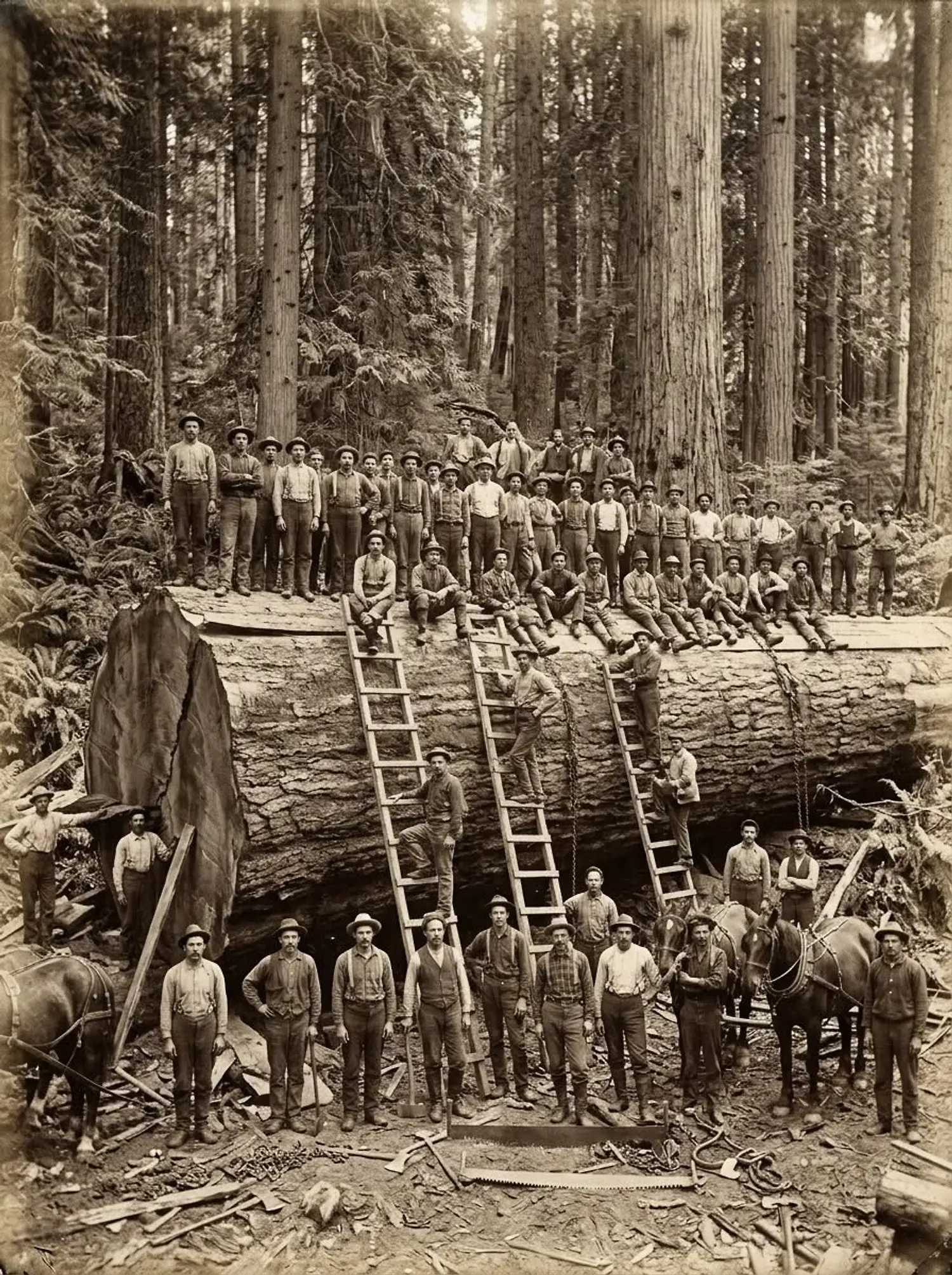 A historical logging crew poses beside an enormous felled tree. The scale gives some idea of the environment that helped shape American workwear.
The fabric changed as well. In the 1990s, Filson replaced its older hard-wax formulation with an oil-finish wax treatment, making the cloth less stiff and easier to maintain. Even a jacket with that much history was allowed to become a little more comfortable.
How waxed cotton and Tin Cloth are made
There’s considerably more involved than rubbing a candle over some canvas.
At Halley Stevensons’ Baltic Works in Dundee, cotton is singed to remove projecting fibres. It then passes through an enzyme bath to break down substances used during weaving, preparing the fabric for dyeing. Other equipment can smooth the surface or raise it, depending on the finish required.
On the hot-waxing line, the cloth travels through a bath at approximately 80–90°C, followed by rollers that cool the wax before the material is wound onto a large frame.
Changing the wax recipe changes the handle, which is the textile term for how the fabric feels. That soft, dry or more obviously waxy surface has been decided upon well before anyone cuts out a sleeve.
Filson’s oil-finish Tin Cloth starts with tightly woven cotton duck canvas. Wax is applied under heat and pressure to penetrate the material. The dense weave is an important part of its resistance to abrasion and punctures; you couldn’t produce the same result by enthusiastically rewaxing a much lighter jacket.
You can get into the finer details of Filson’s Tin Cloth fabrics, including the differences between its oil-finish and dry-finish versions, through the company’s own material information.
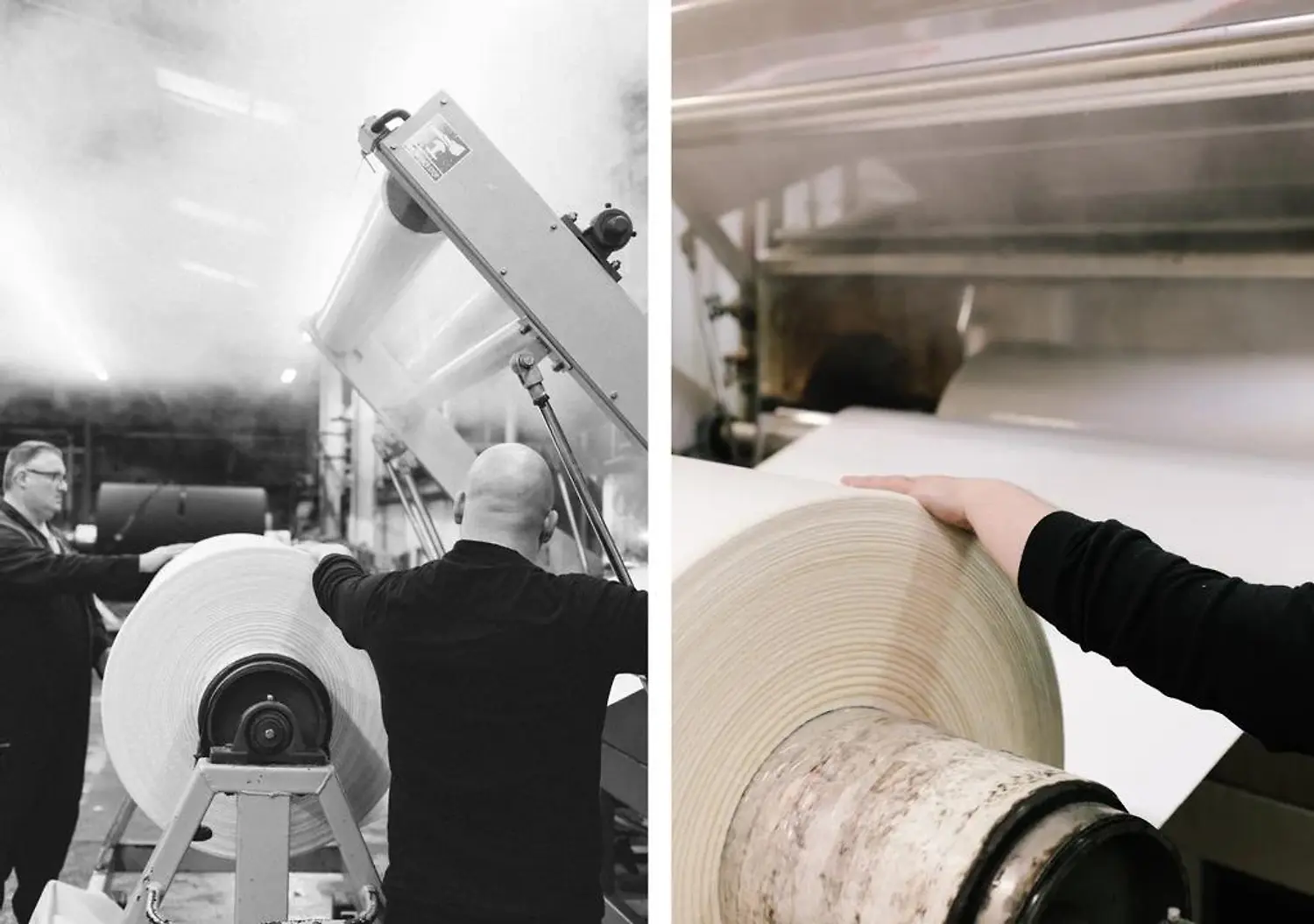 Inside Halley Stevensons’ Baltic Works in Dundee, where the cotton is prepared, dyed and finished.
Six ounces, fourteen ounces and the person wearing them
The Barbour Bedale gives us a useful starting point. Introduced in 1980 for riding, it uses medium-weight 6oz waxed cotton, with a shorter length and relaxed fit.
The Barbour Ashby also uses 6oz cloth, in Sylkoil, but is more tailored. Similar fabric weight, noticeably different jackets.
Filson’s Tin Cloth Short Lined Cruiser uses 14oz oil-finish fabric. Those figures refer to the cloth, not the weight of the finished garment. There’s still a lining to account for, along with pockets and hardware, but they give you an idea of the difference before you try anything on.
How much of that extra substance you need is another matter.
For everyday walking and getting in and out of the car, I’d start by trying the lighter jacket. Regular contact with rough surfaces gives the heavier canvas a clearer purpose. Filson specifically describes Tin Cloth in terms of its resistance to brambles and abrasion, which tells you rather more about its intended use than a photograph of someone looking thoughtful in the woods.
The finish can make a difference to what you enjoy wearing, too. Barbour describes Sylkoil as more flexible, with a drier handle than its traditional Thornproof finish. Someone who likes the look of waxed cotton but isn’t keen on a pronounced waxy feel may find that useful to know.
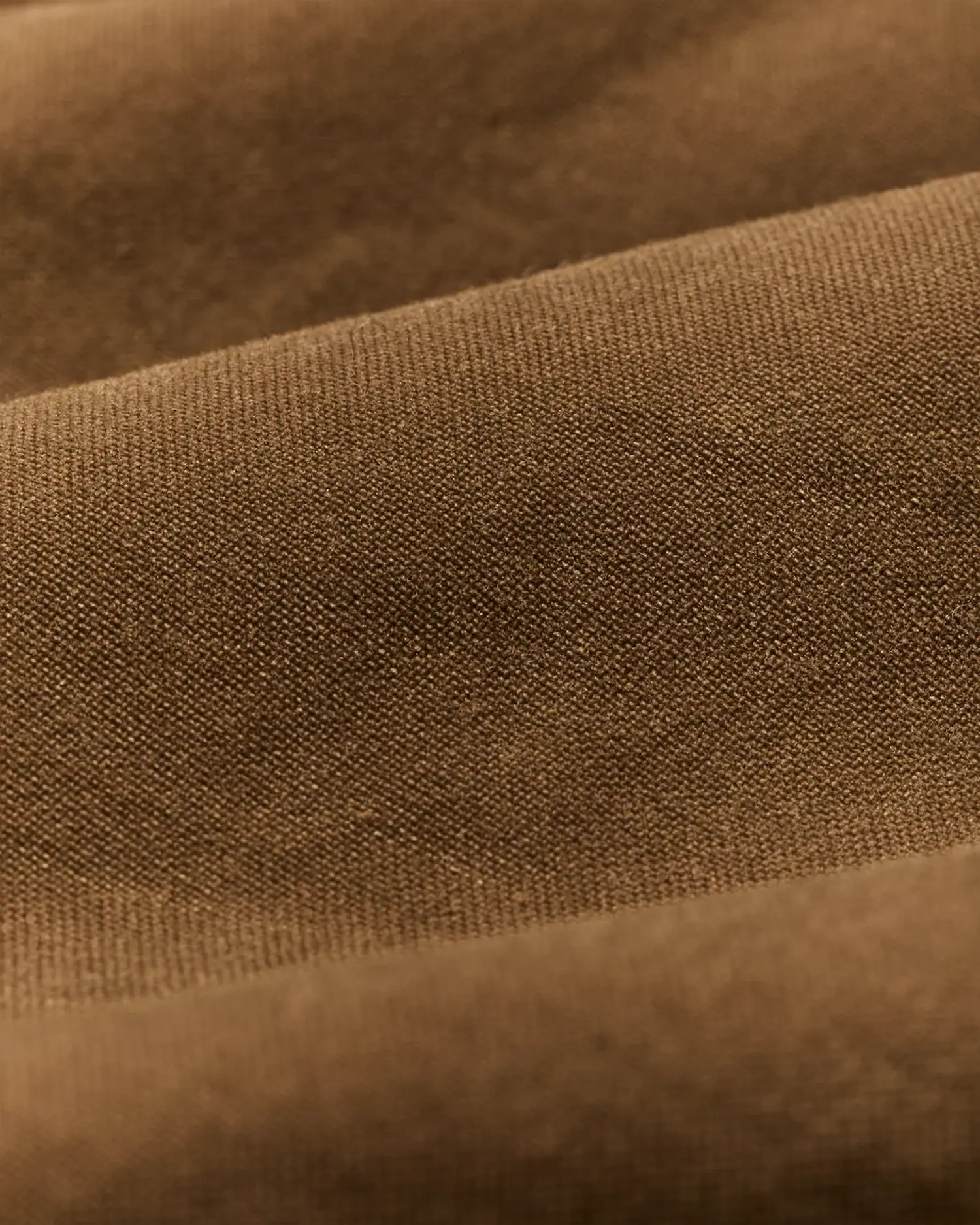 A close-up of woven fabric. Beyond the wax finish, the weave and weight influence how a jacket wears.
Then there’s fit.
The Short Lined Cruiser is cut trim, and Filson advises considering a size up for layering. Try it over the jumper you intend to wear underneath, rather than discovering in November that the two have never actually met.
Sit down in it as well. A jacket can look excellent standing in front of a mirror and become considerably less agreeable behind a steering wheel.
Don’t mistake heavy cloth for insulation. The standard Short Lined Cruiser has a cotton canvas body lining and polyester-lined sleeves, while several Barbour wax jackets accept additional liners. For colder weather, check the lining and leave enough room for the layers you need.
Is a waxed cotton jacket waterproof?
This is where the language on clothing websites can become a little generous.
British Millerain describes its fabrics as water-resistant, and Filson uses the same term for its oil-finish Tin Cloth jackets. That’s the description to work with. A wax coating should not be taken as a promise that a jacket will keep out any amount of rain.
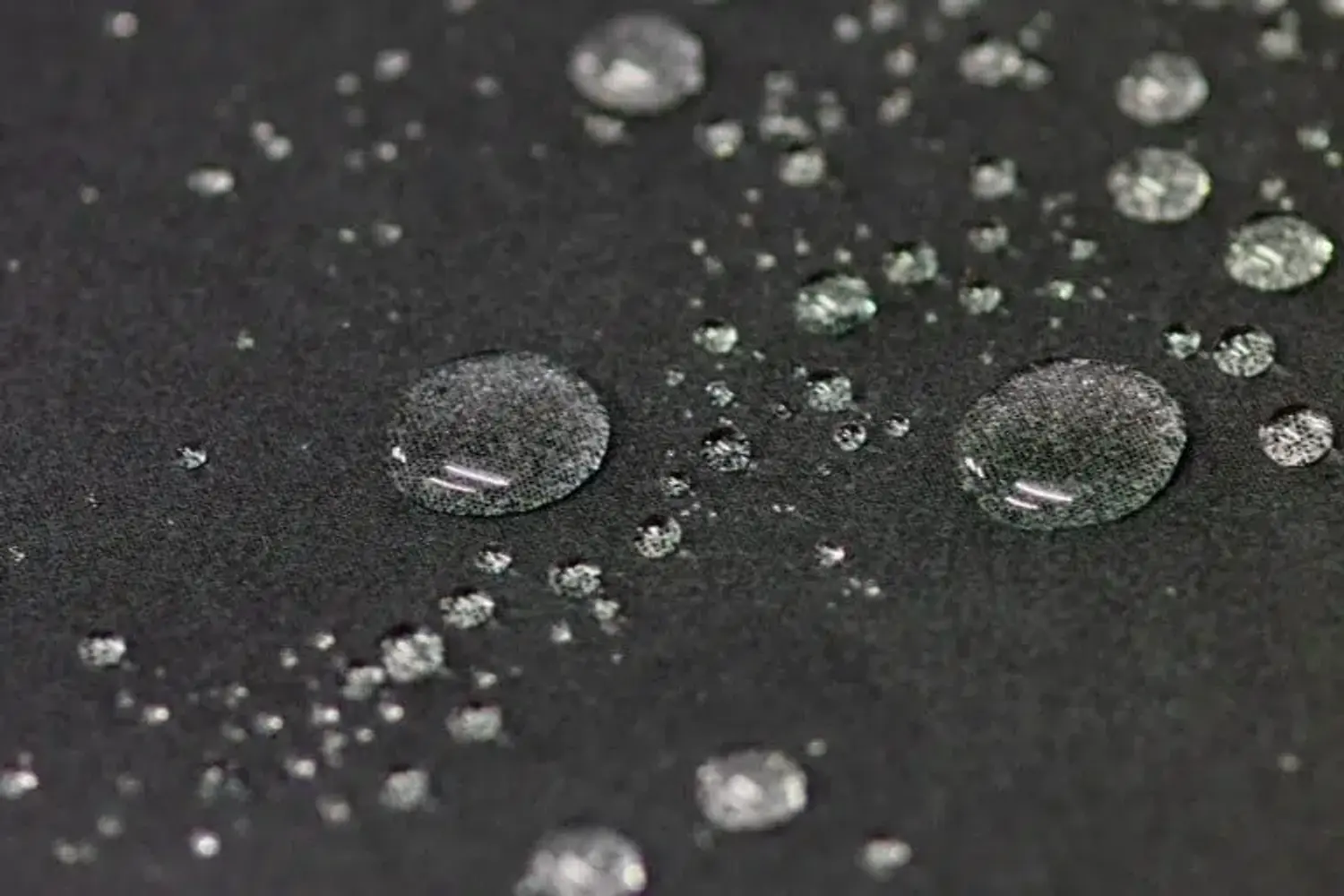 Rain beading on treated fabric. Water resistance is useful, but the finish alone does not make a jacket fully waterproof.
The construction matters as much as the outer cloth. Seams and openings give water places to get in. Waterproof shells address these with features such as taped seams and protected zips, and a well-designed hood makes a considerable difference once the rain stops falling politely downwards.
For a long, exposed walk in sustained rain, I’d take a suitable waterproof hiking shell. Filson itself acknowledges that some conditions call for technical waterproof fabrics. We can be fond of waxed cotton without expecting it to replace every other coat.
Breathability is a separate consideration. Keeping rain out and allowing moisture vapour to escape are different jobs, which is why they’re measured separately.
“Cotton” and “heavy-duty” tell you very little about how comfortable a complete jacket will feel once you’re working hard inside it.
Waxed cotton patina: about those marks
The first crease in a new wax jacket can come as a surprise if you were expecting it to stay looking exactly as it did on the hanger.
Traditional wax isn’t chemically fixed to the fabric. British Millerain explains that handling creates marks and creases, while scuffing can remove wax locally and leave lighter areas.
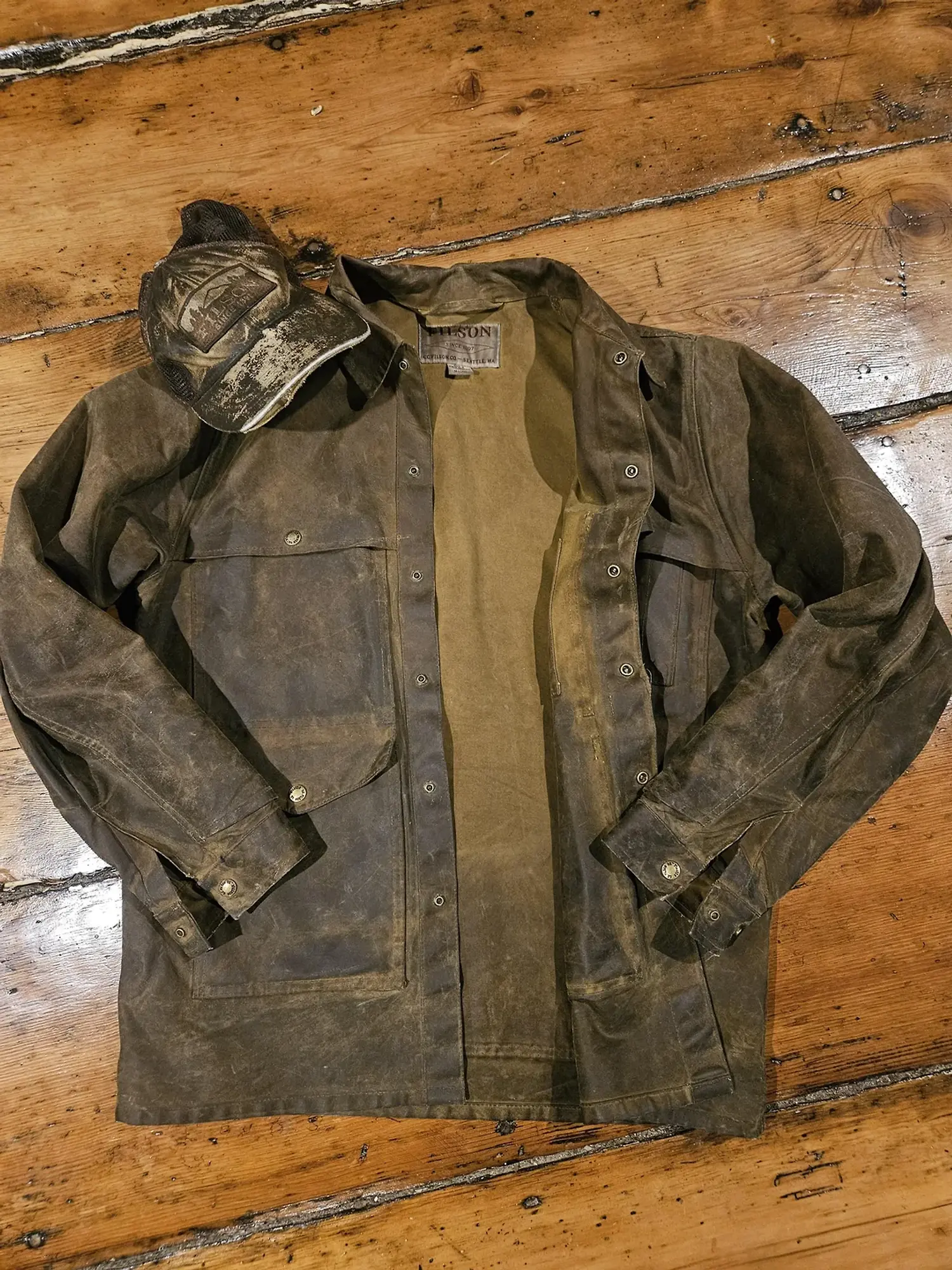 A well-worn Filson jacket, showing the faded creases and surface marks that develop with use.
These can be normal characteristics of the finish, rather than damage to the cotton underneath.
That’s much of what we’re admiring when we talk about patina. The surface changes with use. Some people find that enormously appealing; others would prefer their jacket to remain a uniform shade of olive.
I’d work out which camp you’re in before spending the money, because the marks will be on your coat rather than somebody else’s product photograph.
There is a less romantic practical point.
Filson warns that oils can transfer onto pale fabrics during prolonged contact, particularly in warm weather. Barbour also advises keeping a freshly rewaxed jacket away from leather and upholstery.
The coat may look excellent on a cream sofa. I would still hang it up.
Looking after a waxed cotton jacket
Read the care label before the jacket needs cleaning. Preferably before anyone helpfully puts it in the wash.
British Millerain’s instructions for traditional waxed cotton are fairly firm: no washing, dry-cleaning, tumble-drying or ironing, and no soap or detergents.
Let mud dry, brush it off, then sponge any remaining dirt with cold water. Filson similarly advises brushing or wiping oil-finish Tin Cloth clean, with rewaxing as needed.
For Barbour’s classic wax jackets, the home-rewaxing process involves softening Thornproof Dressing and working it into the cloth, paying attention to seams, creases and dry areas. Wipe away the excess and leave the jacket hanging overnight.
Keep the dressing off the corduroy collar and lining.
Barbour suggests doing this roughly once a year, depending on how often you wear the jacket. A coat that rarely leaves the hallway and one worn outside daily won’t have had the same year.
You can follow the process in our guide to rewaxing a Barbour jacket, or go directly to Barbour’s own care instructions for its traditional 6oz finish.
If you’re doing the job at home, a tin of Barbour Thornproof Wax Dressing is the place to start, provided it’s the correct treatment for your particular jacket.
Barbour has different care instructions for its classic 6oz wax and lightweight 4oz fabrics, so even shopping within the same brand requires a glance at the label.
There are exceptions to the no-washing rule. British Millerain makes machine-washable waxed fabrics, including its Staywax range, and Filson’s unwaxed Dry Tin garments have their own care instructions.
Neither gives you permission to put a traditional oil-finish jacket through a quick cycle.
You can also let someone else handle the maintenance. Barbour offers repairs and professional rewaxing through its South Shields service.
That ability to send a jacket back for attention is a good deal more useful than assuming it will look after itself because the description said “built to last”.
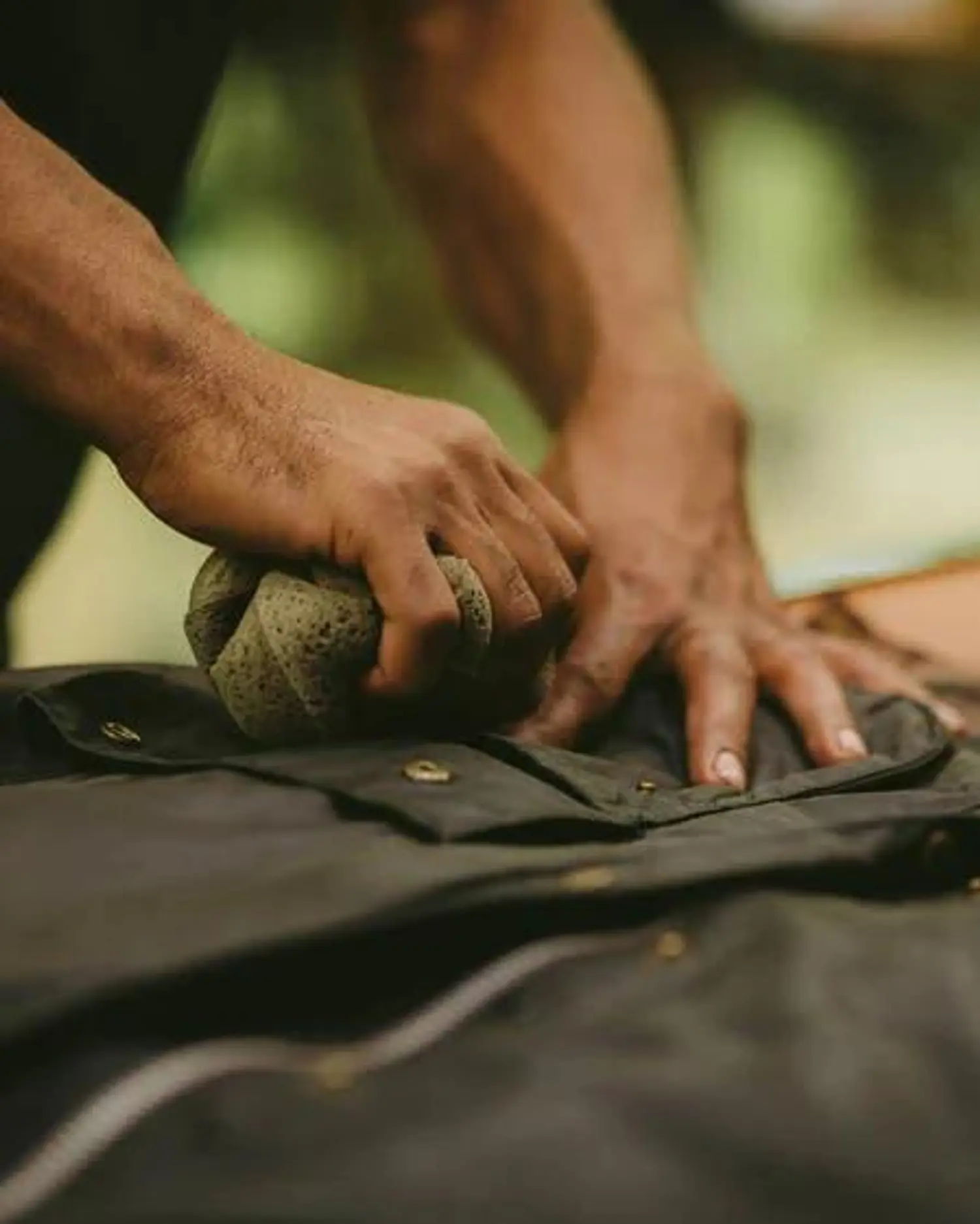 Rewaxing the cotton helps restore water resistance in areas where the finish has worn away.
Which waxed cotton jacket would we choose?
For a first waxed cotton jacket, I’d begin with fit and how much weight you’re comfortable wearing.
A 6oz Barbour is a sensible place to start for everyday country wear. Try the relaxed Bedale against the more tailored Ashby and see which feels right over your usual clothes.
For women, the Classic Beadnell takes its lead from the Bedale, with its own cut. There’s enough variation there to make trying the actual jacket more useful than choosing a fabric in the abstract.
Filson’s oil-finish Tin Cloth makes sense for heavier work and frequent contact with rough vegetation.
The Lined Tin Cloth Field Jacket (https://www.british-attire.com/products/filson-mens-lined-tin-cloth-field-jacket-dark-tan) adds wool-lined pockets and collar, a protective shoulder design and a large rear game pocket. Its heavier construction is a different proposition from the shorter Cruiser, even though the same fabric runs through both.
You’re also allowed to buy a Filson because you like the shape. There is no requirement to retrain as a forester. Just make sure you enjoy wearing the thing and are happy to look after it.
Our Waxed Cotton Edit brings together Barbour, Belstaff and Filson, among others, so there’s room to compare these approaches properly.
And if the material itself has caught your interest, we’ve already spent some time waxing lyrical on the beauty of waxed cotton (https://www.british-attire.com/thethread/the-beauty-of-waxed-cotton), including its use in bags, hats and other bits of kit.
The one I’d put back on the rail is the one you’re already making excuses for. Too heavy, too tight across the shoulders, too much trouble to look after. However good the history, you still have to wear the coat.