We spend an extraordinary amount of time trying to tell things apart. People from places. Old from new. Ours from theirs. Brands from, well, other brands. The tool we reach for, almost without thinking, is identity: that consistent thread running through the surface - whether it’s the salt and wind of the west, or the discipline and geometry of the east. Sometimes plain for all to see. Sometimes only visible to those who care to look. And often, identity isn’t written down at all. It’s woven.
Tartan refers to a pattern, yes - but also something more considered. A system of colour, proportion, and repetition capable of holding centuries in a few measured stripes. It remains one of Scotland’s most enduring expressions: a cloth that can suggest belonging, place, family, service. Which is impressive, really, for something fundamentally built from a series of crossed lines.
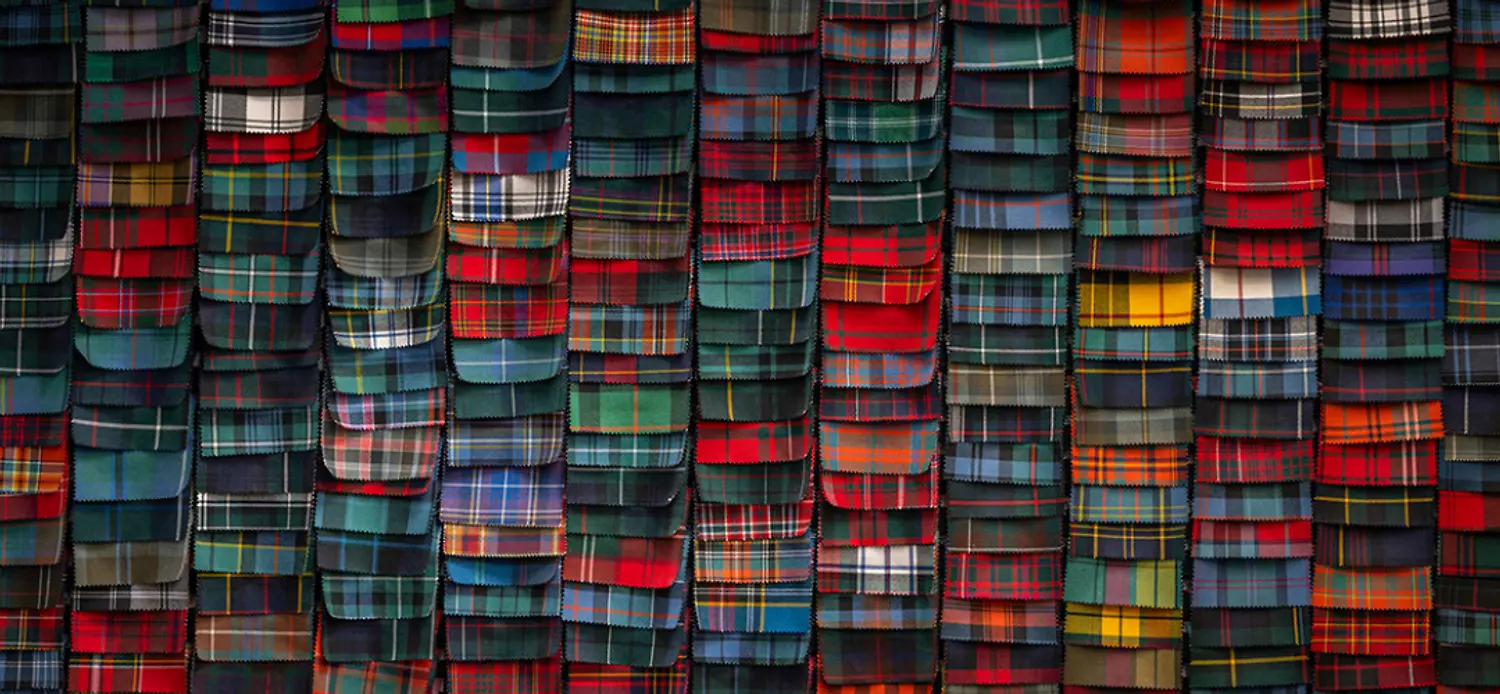 Tartan Wall at Lochcarron of Scotland
Before tartan was asked to carry a national identity, it carried something far more practical: the weather. Wool at its most honest. Not intended to be symbolic, but to be useful. To keep people standing up, moving forwards and working hard. Woven close to home and dyed with whatever the land had to offer. Heather, bark, lichen... browns, greens and greys. Terrain-led colourways that had no idea about the concept of trend.
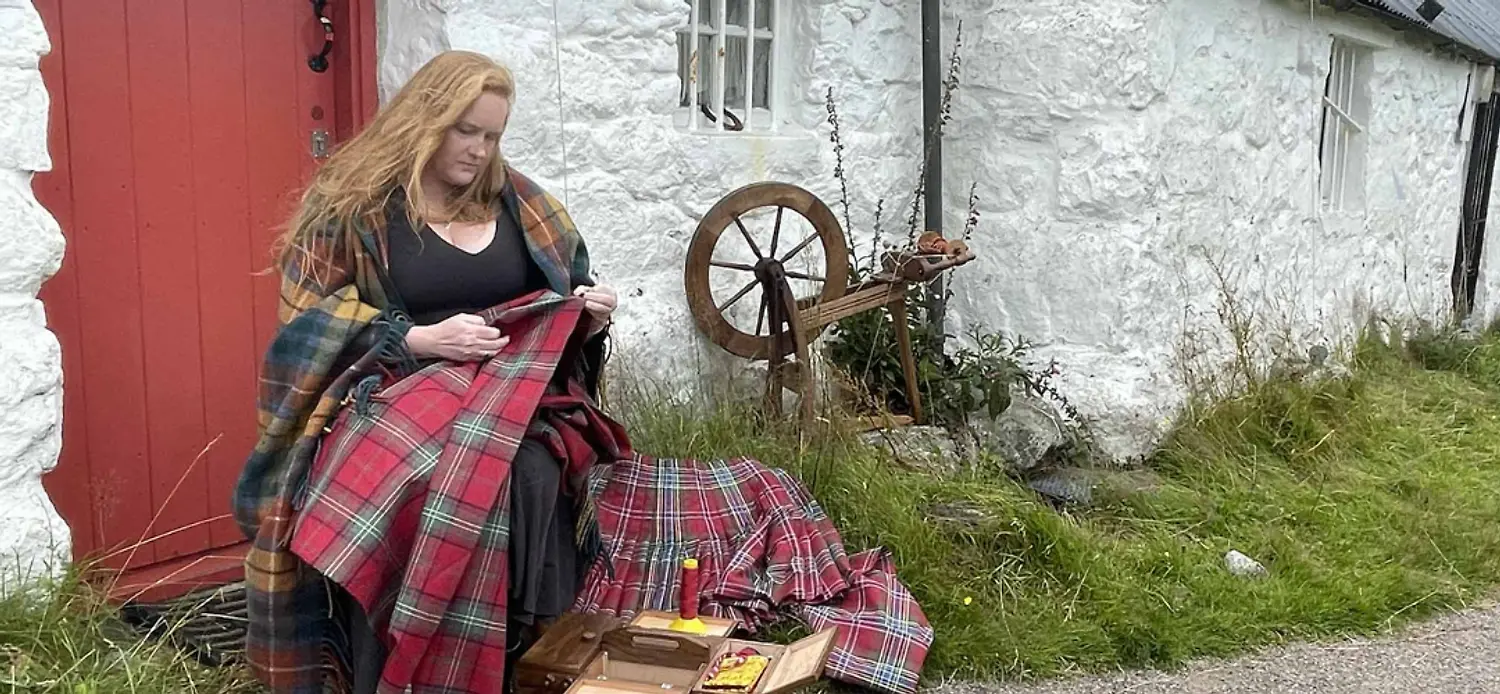 Traditional Scottish tartan being hand-sewn outside a Highland cottage
These patterns arrived through repetition. Not heraldry. Not decree. A loom set up the same way, year after year. A dyer reaching for the same plants simply because they were there. Over time, familiarity turned into recognition, and from recognition, subtly, into meaning.
Only later did these patterns acquire names, their associations settling over time as families and clans began to recognise them as their own. When worn together, they worked as signals. They told you where someone was from long before they got round to telling you who they were.
Then, as it often does, politics intervened.
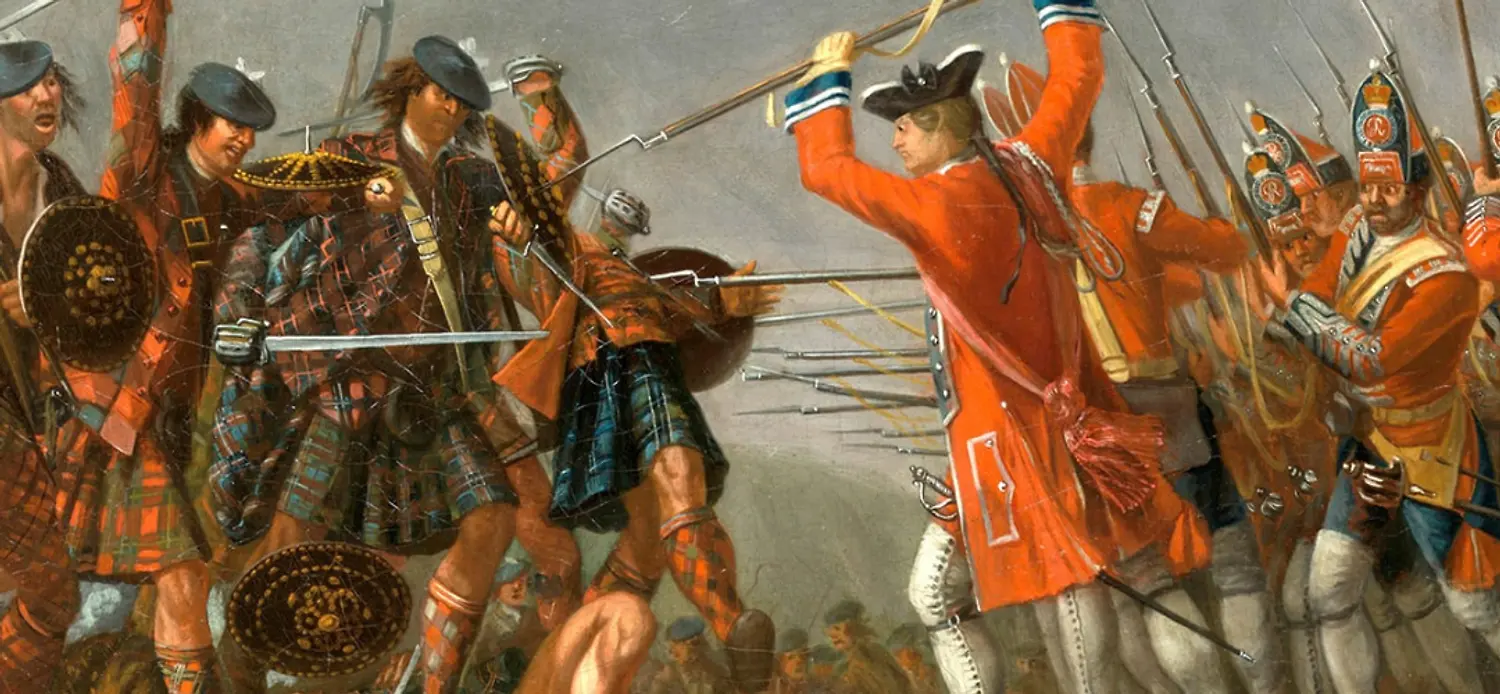 Highland clans wearing tartan clash with British redcoats during the Jacobite uprisings, illustrating the political conflict and cultural suppression that followed the Battle of Culloden in 1746.
The Jacobite uprisings of the late seventeenth and eighteenth centuries were attempts to restore the exiled Stuart monarchy to the British throne. They drew heavily on Highland support, which meant that when the movement was defeated at Culloden in 1746, the response was both swift and pointed. The British government set about dismantling Highland culture at its most visible level. Highland dress was outlawed.
Not just tartan, but the entire system of clothing that defined Highland life: the belted plaid, the kilt, the short jacket, the hose. What had once been everyday dress became illegal overnight. To wear it was to make a political statement, whether you had one to make or not and for nearly forty years, tartan existed largely in absence. And absence (as the Rory Sutherland in us all is well aware) makes for excellent marketing.
When the ban was repealed in 1782, tartan returned changed. What had been ordinary was now symbolic. What had been regional became representative. By the nineteenth century, military regiments had adopted standardised tartans, pattern books began to circulate, and a renewed interest in Scottish history, part scholarship, part revival, set about fixing associations that had once been more fluid. From that point tartan was no longer neutral.
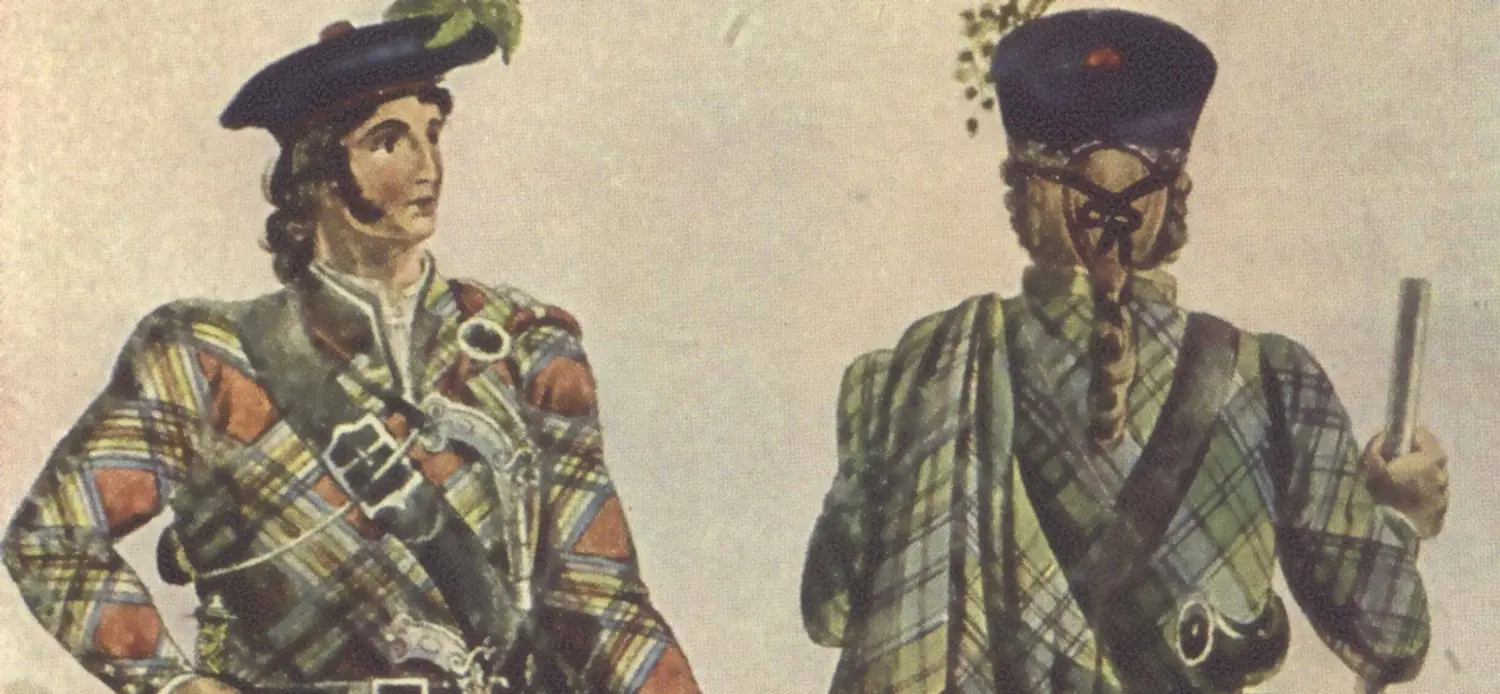 Historical illustration depicting Highland clansmen wearing early tartan dress, showing how tartan functioned as regional and clan identity in pre-modern Scotland.
Clan Tartans - Patterns of Kinship
MacDonald - “Fraoch Eilean!”
MacDonald tartans reflect one of Scotland’s oldest and most powerful clan histories. Tracing their lineage to Somerled, the twelfth-century lord who challenged Norse dominance in the western isles, the MacDonalds emerged as a force defined by land, sea, and independence. The breadth of the clan produced a breadth of tartans. Branches such as Glengarry, Keppoch, Clanranald, and Glencoe developed their own setts, shaped by territory and circumstance, yet bound by a shared visual language. The patterns are bold and assertive, reflecting a lineage forged through conflict, loyalty, and endurance. Less a single narrative than a long continuum, MacDonald tartans carry the weight of a clan accustomed to standing its ground.
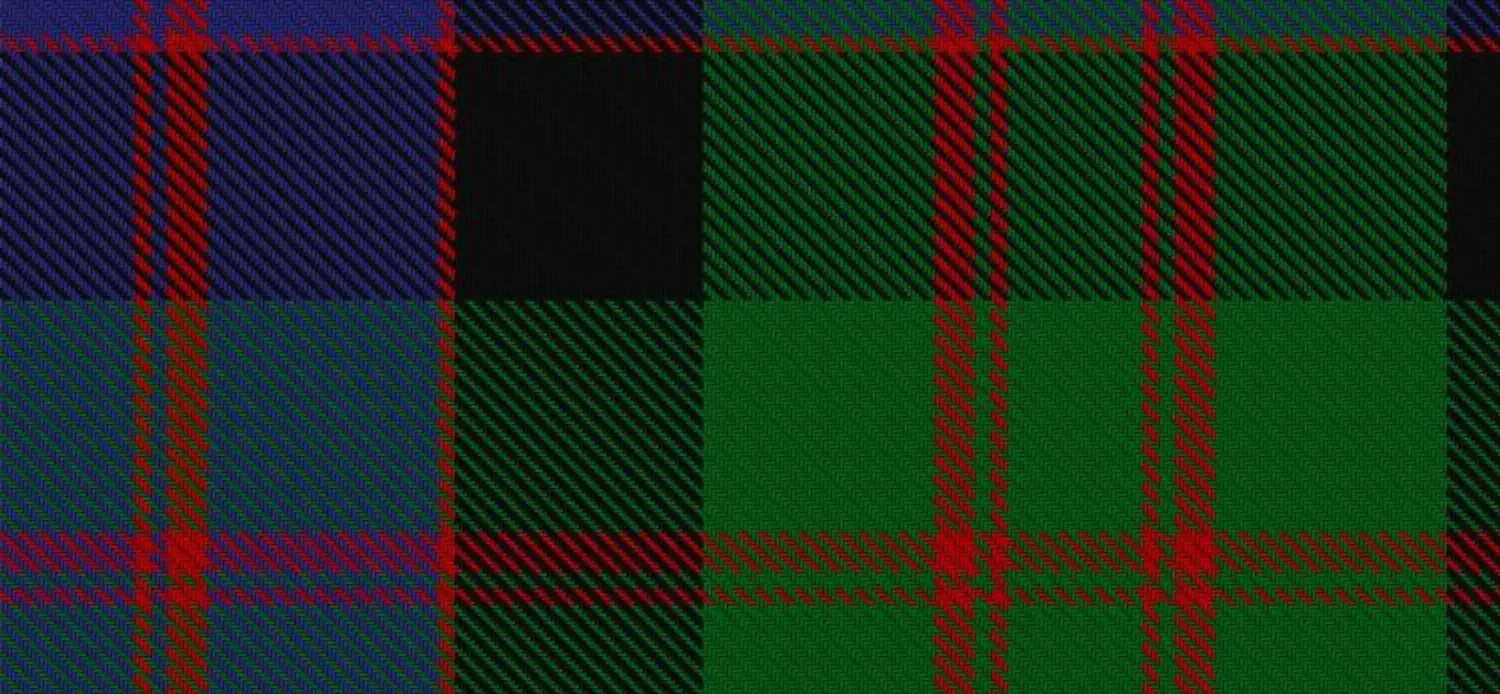 MacDonald tartan, reflecting the scale, power, and geographic spread of one of Scotland’s largest clans.
Campbell - “Cruachan!"
Campbell tartans belong to a powerful clan rooted in Argyll and centred around Loch Awe. The Campbells built influence not through grand gestures but through persistence, administration, and proximity to authority. That temperament shows in the tartans. Deep greens and blues dominate, often darkened, rarely flamboyant. These are patterns shaped by governance rather than romance, worn by a clan more comfortable managing land and allegiance than advertising either. The effect is controlled and deliberate: cloth that reflects a history of staying power rather than spectacle.
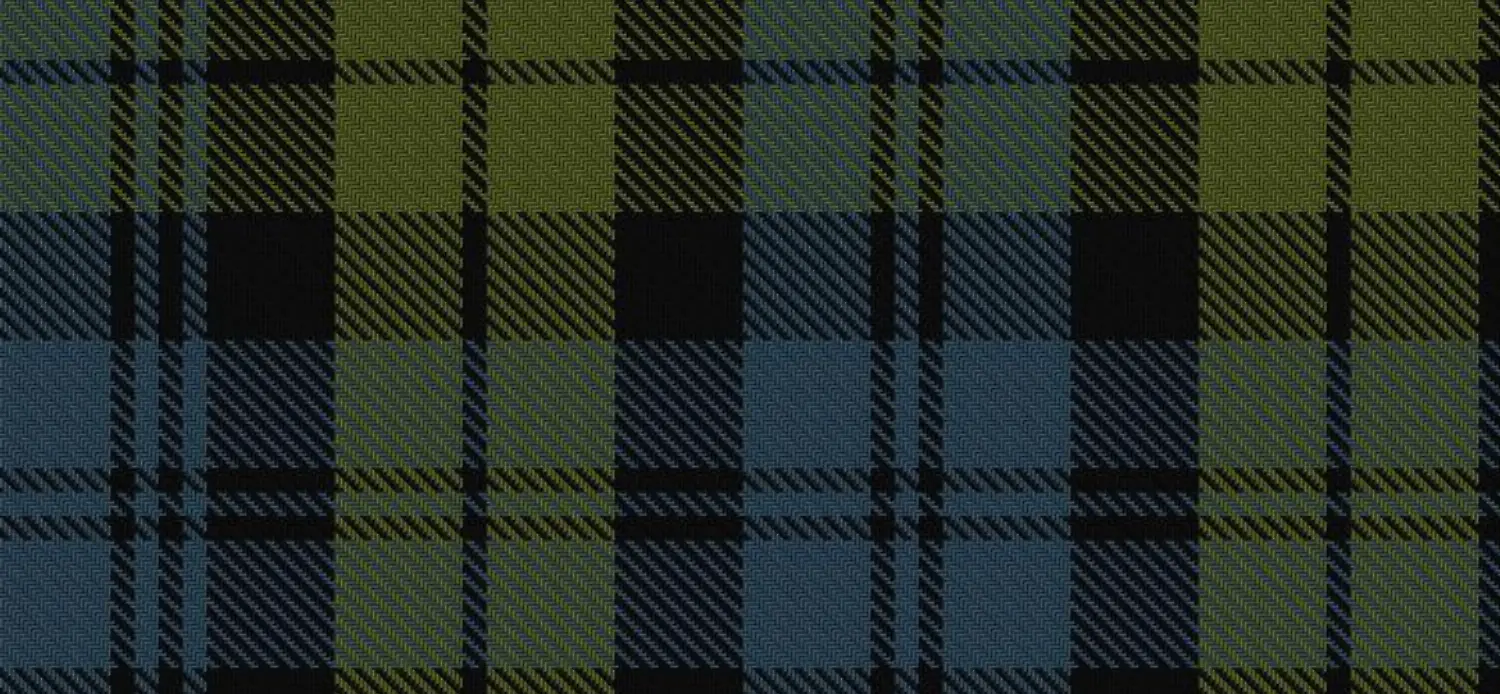 Campbell tartan, defined by deep greens and blues associated with authority, land, and long political continuity.
Gordon - “A Gordon! A Gordon!”
Gordon tartans belong to a clan that understood power early and exercised it often. From their origins in the Merse to their rise as the great house of Huntly, the Gordons were never far from the centre of events, serving kings, fighting borders and holding the north in the Crown’s interest. This long alignment with authority and service is written into the tartans themselves. Balanced, formal and composed. These are patterns shaped by continuity: worn by men who governed land, raised regiments, and returned to the same obligations, again and again. The effect is confident without flourish, a cloth that reflects stability earned over centuries.
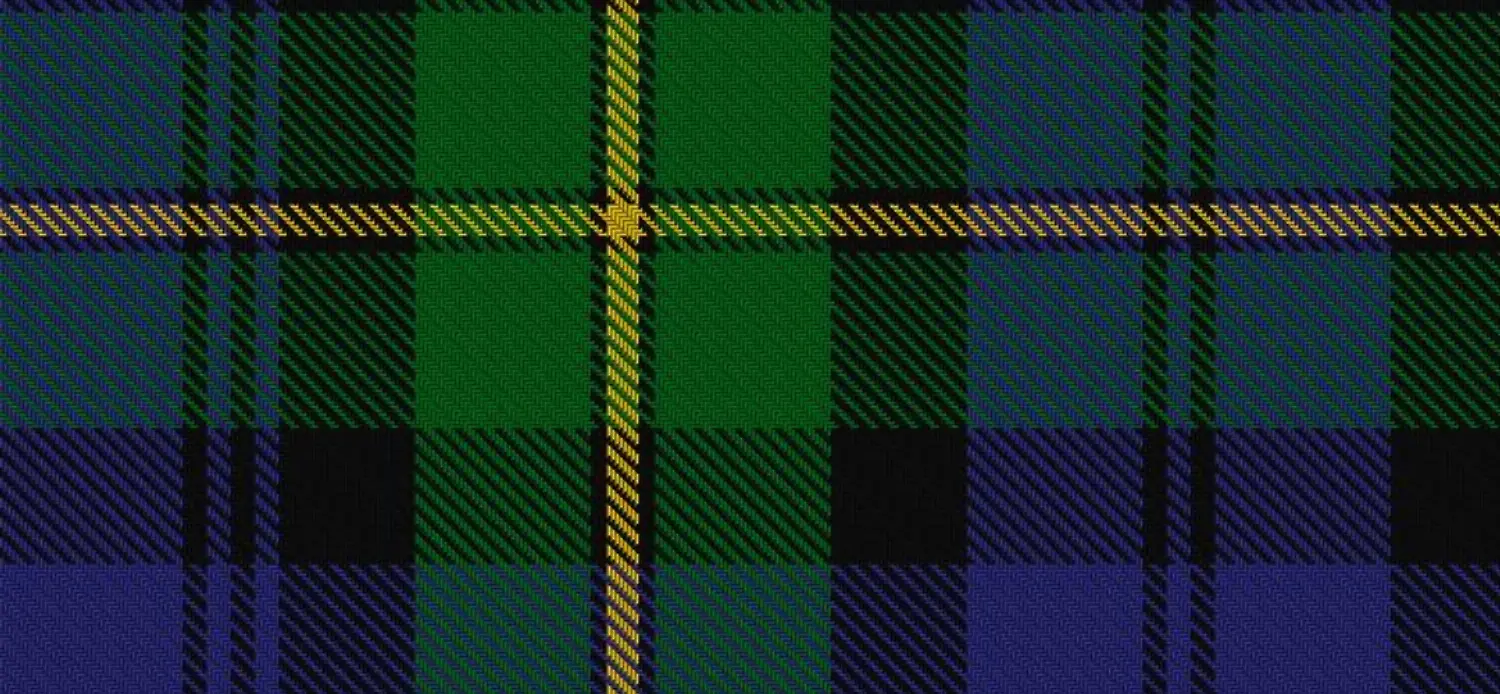 Gordon tartan, balanced and formal, shaped by centuries of service and alignment with the Crown.
MacLeod - “Hold Fast!”
MacLeod tartans reflect a lineage forged by island life and Norse inheritance. Established across Skye and the Outer Hebrides, the clan developed in relative isolation, where visibility, loyalty, and resilience mattered more than diplomacy. The tartans associated with the clan are among the most distinctive in Scotland. Strong contrasts and uncompromising colour choices, including the much-noted yellow and black, create patterns that prioritise recognition over restraint. These are tartans designed to be recognised at a distance, shaped by a clan that would rather die than blend in.
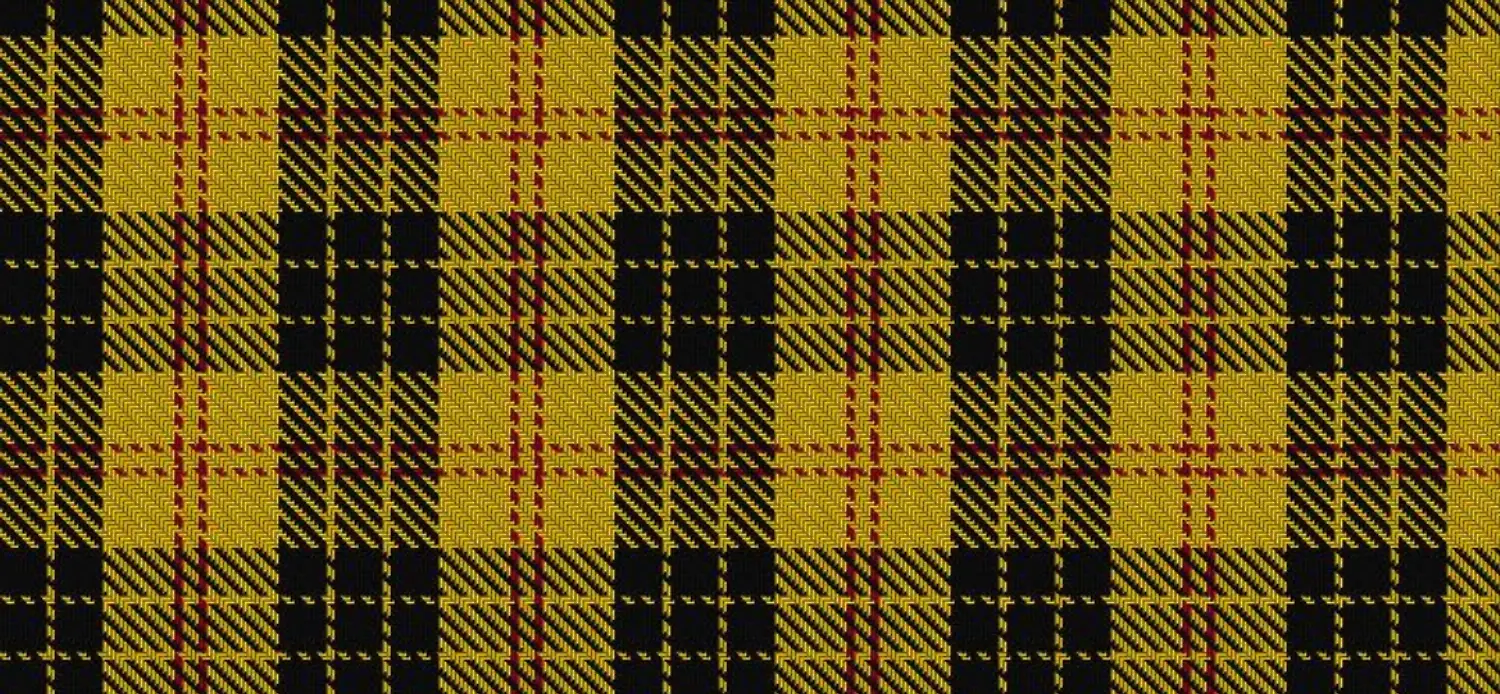 MacLeod tartan, including the bold yellow-and-black variant, rooted in island life and Norse heritage.
Crown and State Tartans - Patterns of Authority
Royal Stewart - By Right of the Crown
Royal Stewart is the tartan everyone recognises, whether they know it by name or not. Saturated red, bold checks, emphatic contrast, it doesn’t exactly ease its way into view. Originally associated with the royal House of Stewart, it quickly outgrew that ownership and entered popular use, worn far beyond court or ceremony. Its success lies in certainty. The pattern doesn’t hedge or soften itself for context. It assumes its place and holds it. Over time, that confidence turned Royal Stewart from dynastic marker into national shorthand.
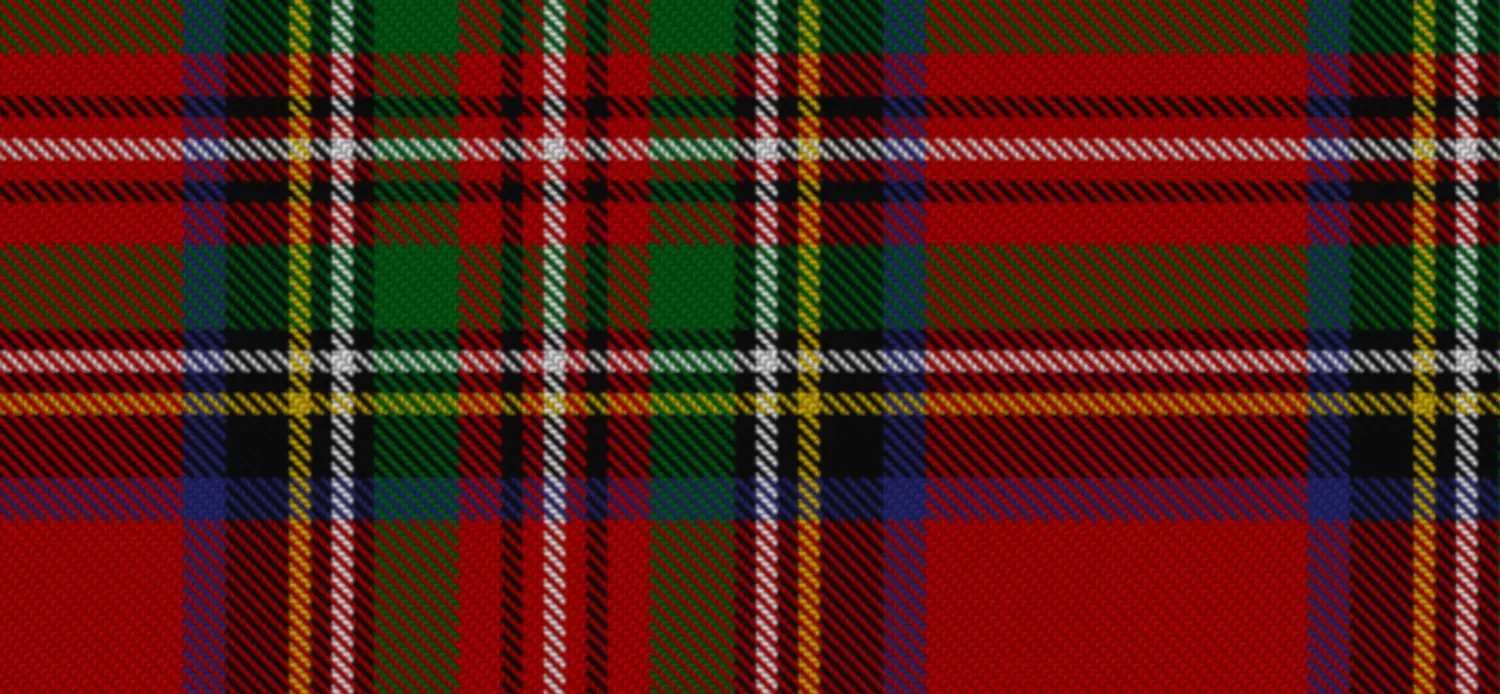 Royal Stewart tartan, originally associated with the Stewart monarchy and now one of Scotland’s most recognisable patterns.
Dress Stewart - Formality, refined
Dress Stewart demonstrates how a single pattern can adapt without losing its identity. By lightening the ground and opening the composition, the tartan shifts register, from declaration to decorum. Historically associated with formal dress, it reflects a culture that understood when restraint mattered as much as visibility. This is not a reinvention, but a modulation. The structure holds but the tone changes. Dress Stewart exists to show that authority, when properly established, needs no introduction.
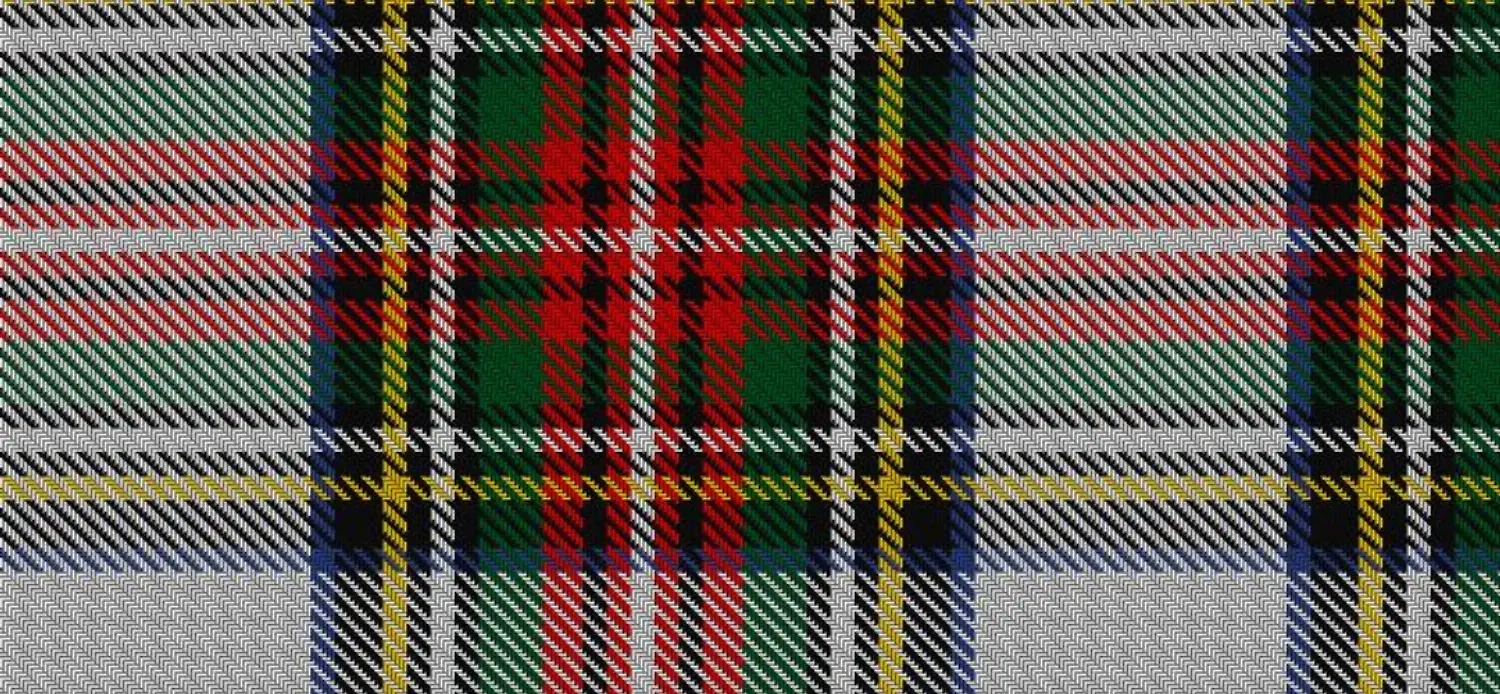 Dress Stewart tartan, a lighter formal variation showing how colour can shift tone without changing structure.
Black Watch - Issued for Service
In the aftermath of the 1715 uprising, a force was raised to patrol the Highlands, enforce peace, and keep the fractious clans in check. These companies became the 43rd (later the 42nd) Highland Regiment of Foot, the Black Watch, and with them came their chequered namesake. Black Watch was practical, intended for uniformity in the field and discretion in the hills, and might just be the most systemic tartan. This very functionality is why it has outlived the battlefields that gave it shape. Today it is worn by many, claimed by none and recognised everywhere.
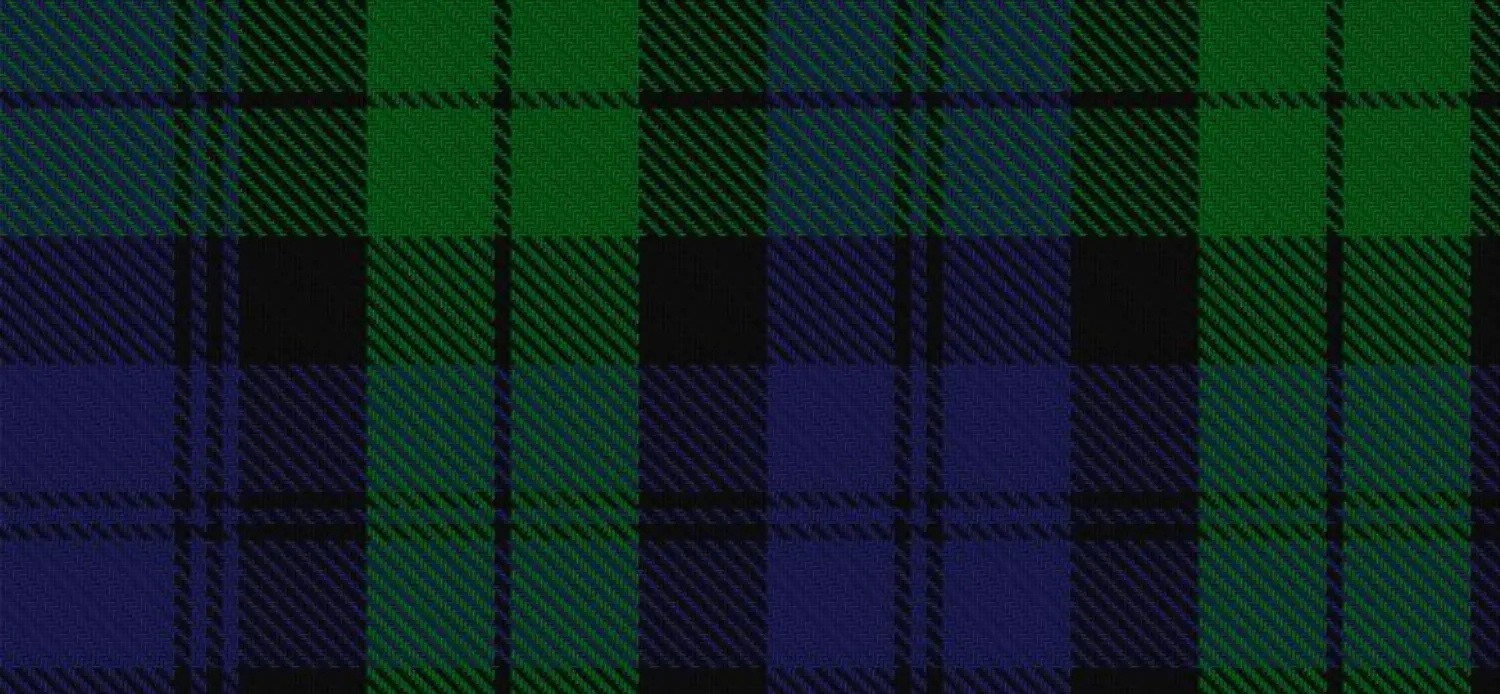 Black Watch tartan, developed for military use and defined by discipline, cohesion, and service.
Variations: the same story, retold
What we’ve looked at here isn’t an exhaustive catalogue. It doesn’t need to be. These examples are enough to show how the system works. Most tartans appear in multiple versions. Not to complicate matters, but to adapt. The structure remains intact while the surface shifts to suit context, use, and time. Modern palettes are saturated and confident, shaped by later dye technologies and a taste for clarity. Ancient versions lighten the same patterns, approximating the softened tones of vegetable dyes worn down by years of use. Hunting tartans mute the palette further, aligning cloth with landscape rather than ceremony. Weathered tartans go further still, deliberately ageing colour to suggest time passed, garments lived in, inheritance rather than novelty.
Contemporary tartans follow the same principles, even when their subjects change. Isle of Skye translates landscape into colour: mist, rock, sea. Designed in living memory but anchored firmly in place. It works because it respects the grammar rather than reinventing it. Highland Granite removes genealogy entirely and replaces it with terrain. A tartan for those who want connection without lineage, place without surname. Memorial tartans (such as those created for firefighters) use pattern to hold grief. They are modern, specific, and deeply traditional in intent. Tartan has always been used to mark service and loss and even if the names change. The function does not.
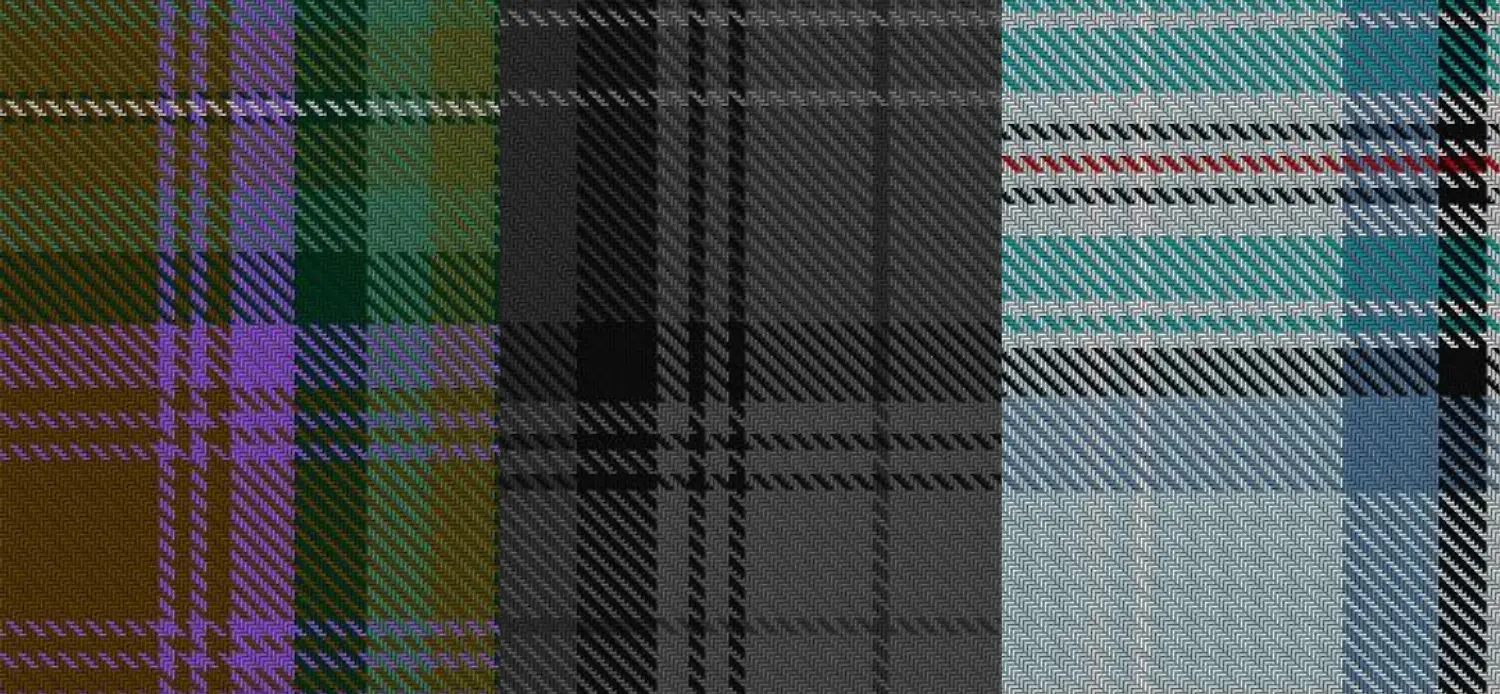 L to R: Isle of Skye tartan, a contemporary pattern inspired by landscape rather than lineage. Highland Granite tartan, a modern design connecting pattern to terrain instead of genealogy. Firefighter memorial tartan, a modern commemorative pattern honouring service and sacrifice.
There are more tartans now than ever before and they survive because they allow people to participate in history. Whether worn ironically or sincerely, daily or ceremonially, tartan is not about looking Scottish, but about understanding how identity is built.