Pillar to Post: The 500 Year Story of Royal Mail and the Scandal That Nearly Broke It
ByJohn B.
The red pillar box really is one of the most timeless symbols of Britishness. It stands on street corners from Lerwick to Penzance, bearing the cipher of the reigning monarch, asking nothing of passers-by except perhaps a glance of recognition. It is so familiar it has become almost invisible - part of the furniture of national life, like the black cab, the zebra crossing and the blind fury of a queue jumper going unpunished. We post letters without thinking. We assume they will arrive. The system, for centuries, has simply worked.
That assumption is the product of 500 years of accumulated effort. And it is also, as we now know, a kind of faith that can be catastrophically misplaced.
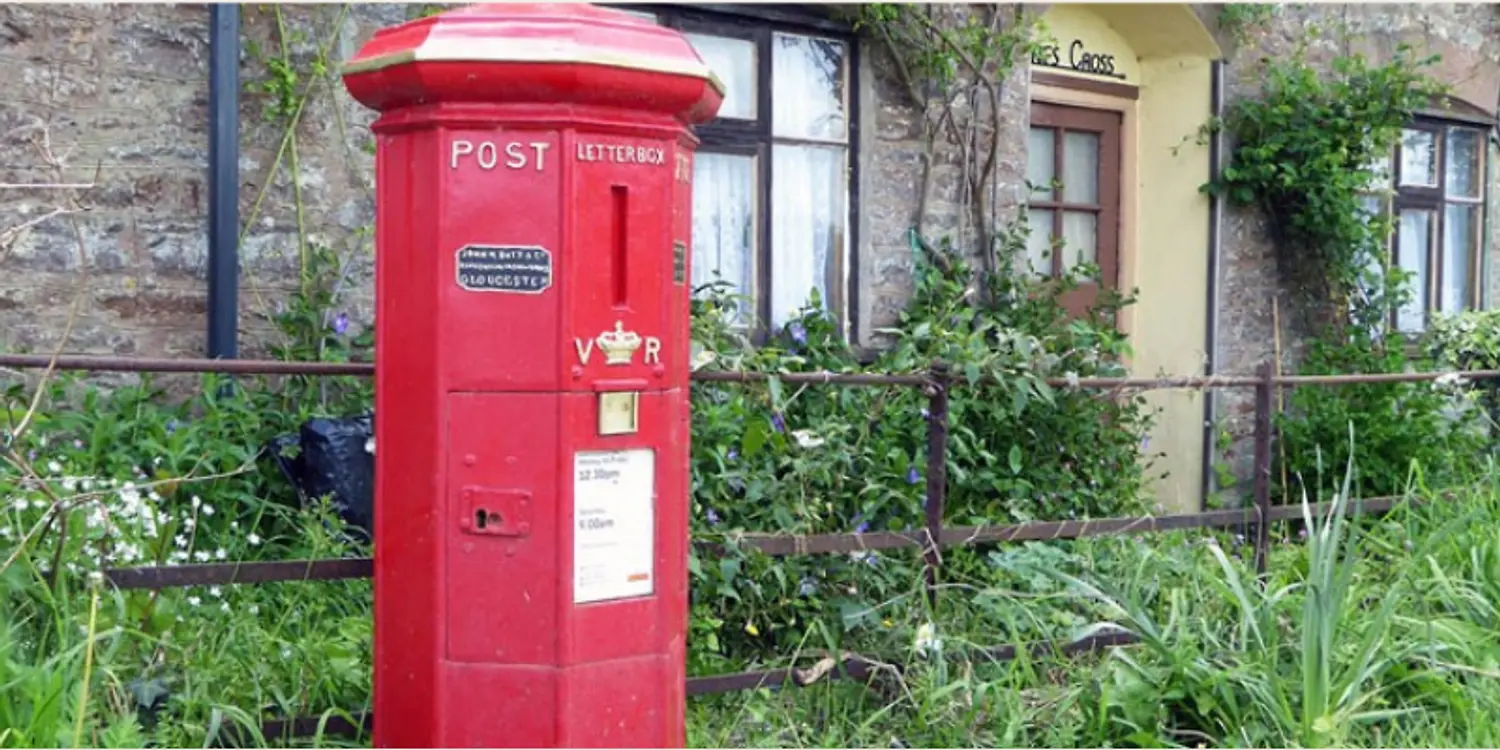 The octagonal pillar structure is the oldest working letterbox in mainland UK, found in Holwell, Dorset.
The Longest Thread
The Royal Mail's origins are older than both the Church of England and Shakespeare. In 1516, Henry VIII established a "Master of the Posts" to manage royal communications (one of his less controversial appointments). By 1635, Charles I had opened the service to the public, allowing ordinary citizens to send letters for the first time, with postage paid on receipt. It was a radical democratisation of connection, even if the motives were partly financial.
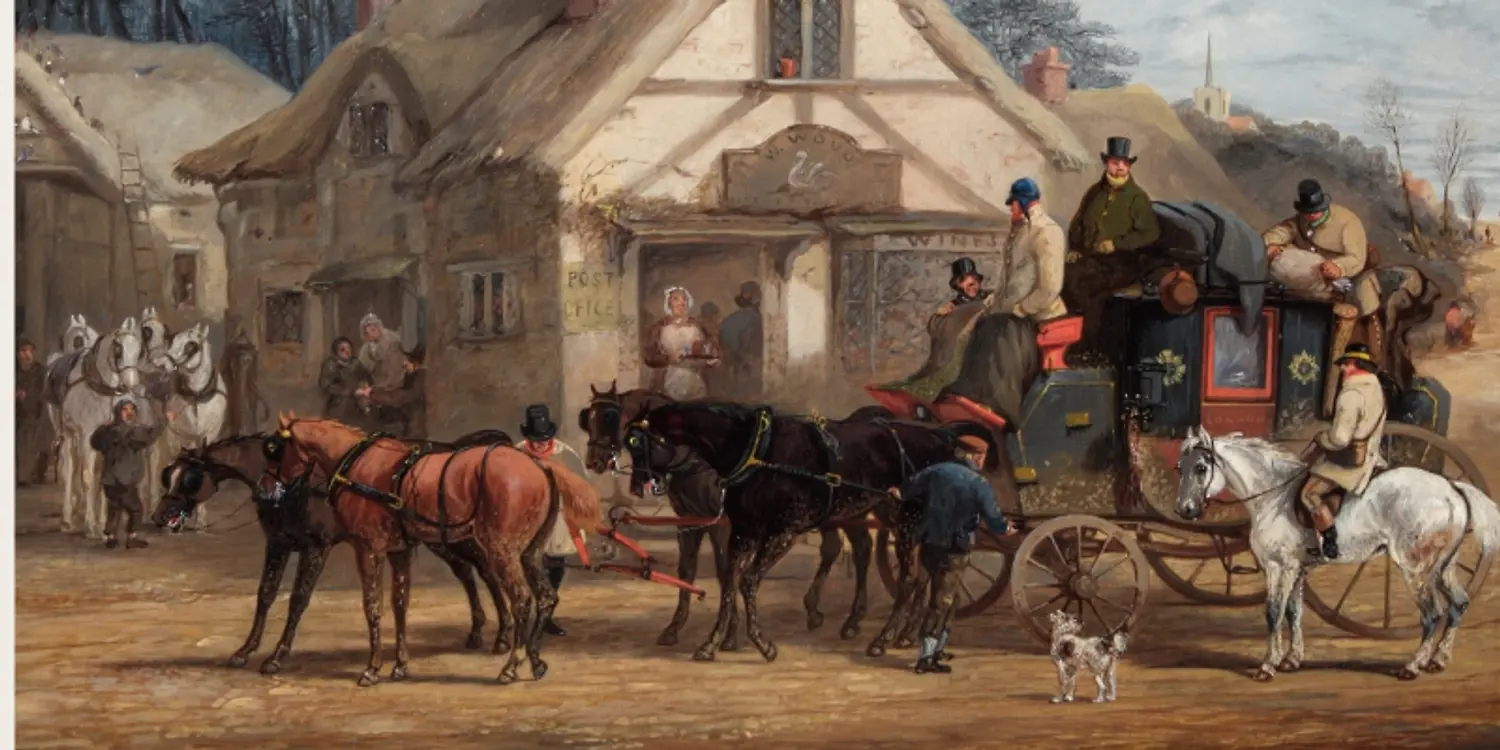 Historical painting of a Royal Mail horse-drawn coach at a coaching inn, showing the changing of horses during a mail delivery route.
What followed was a history of relentless, unglamorous innovation. Mail coaches replaced post-boys on horseback in 1784, running the Bristol to London route with military punctuality. Delivery staff received uniforms in 1793, finally answering the age-old question of what to wear when carrying other people's correspondence through horizontal rain. The first mail train ran on the Liverpool and Manchester Railway in 1830, inaugurating a partnership between post and rail that would define the next century. And in 1840, Rowland Hill's Uniform Penny Post transformed everything: a single price for delivery anywhere in Great Britain, pre-paid by the sender, certified by a small adhesive square of printed paper.
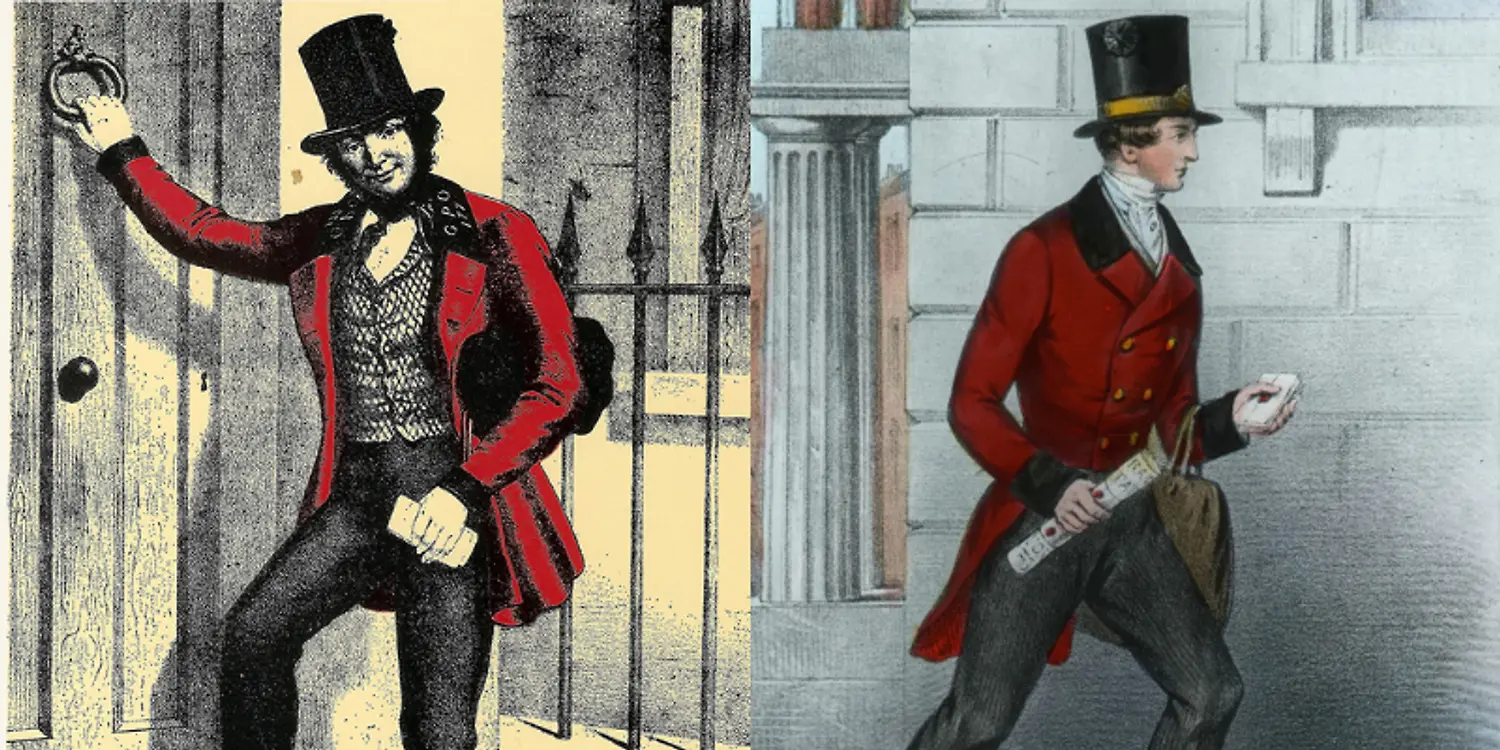 Two illustrations of Victorian-era postmen in red coats and top hats delivering mail in 19th-century Britain.
The Penny Black, issued on 6 May 1840, was the world's first postage stamp. It was so successful, so quickly imitated, that Britain remains the only country in the world whose stamps bear no national name. It doesn't need one. It invented the form, as we do like to remind people.
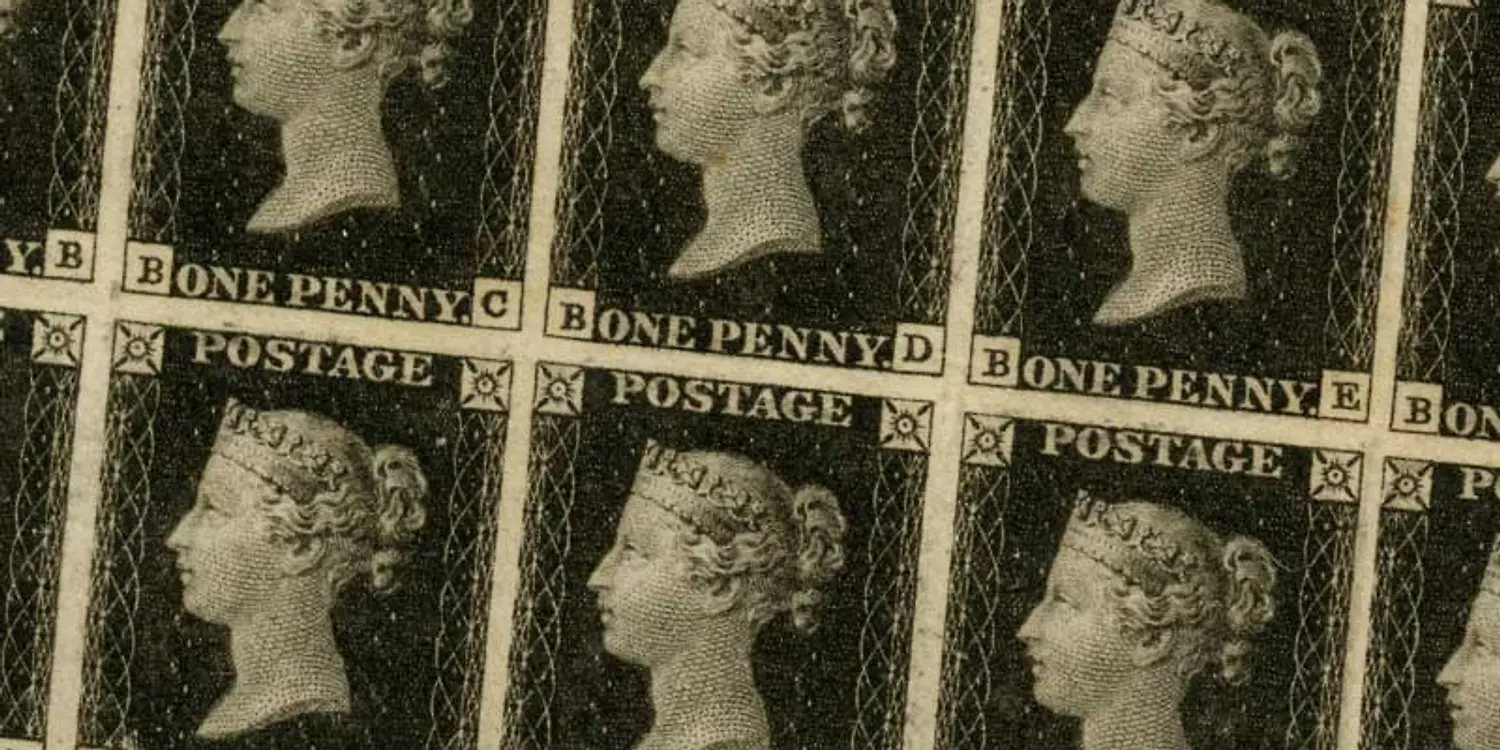 A sheet of Penny Black stamps from 1840 - the world's first adhesive postage stamp, featuring Queen Victoria's profile.
By the late Victorian era, London enjoyed between six and twelve mail deliveries per day. You could post a letter in the morning and receive a reply by teatime… a turnaround that would make modern customer service departments weep. The General Post Office ran pneumatic tubes beneath the city streets, telegraph services across the nation, and eventually a dedicated underground railway, “Mail Rail” that shuttled letters beneath London from 1927 until 2003. It was infrastructure on a scale that boggled the mind yet operated so smoothly that most people never thought about it at all.
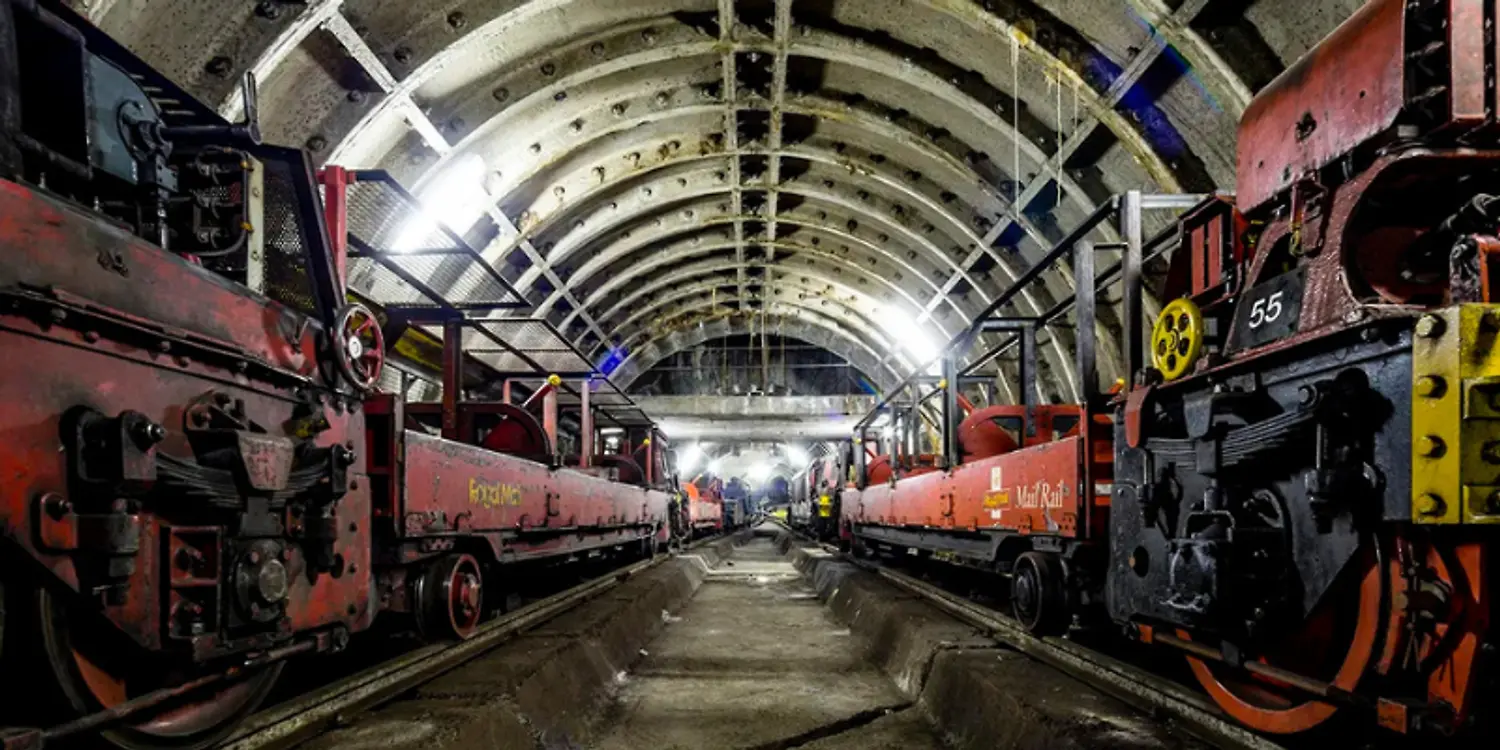 The tunnels of Mail Rail, the Post Office's underground railway that ran beneath London from 1927 to 2003.
The Red Box as Icon
The pillar box itself arrived in 1852, first trialled in Jersey, then rolled out across the British mainland the following year. Early designs were green; the red came later, a conscious choice to make the boxes visible against the grey of British streets and the grey of British skies. Each box bore the royal cipher of the monarch under whose reign it was installed… VR for Victoria, GR for George, EIIR for Elizabeth. To walk through Britain is to walk through postal history, one street corner at a time.
The sub-postmaster, too, became a fixture of national life. Often the heart of a rural community, the person behind the counter was trusted implicitly: cashing pensions, selling stamps, holding parcels, knowing names and maintaining a particular brand of cheerful stoicism. The Post Office was not merely a business. It was a public good, a democratic utility, a thread stitching together the fabric of British society.
This is what makes what happened next so difficult to comprehend.
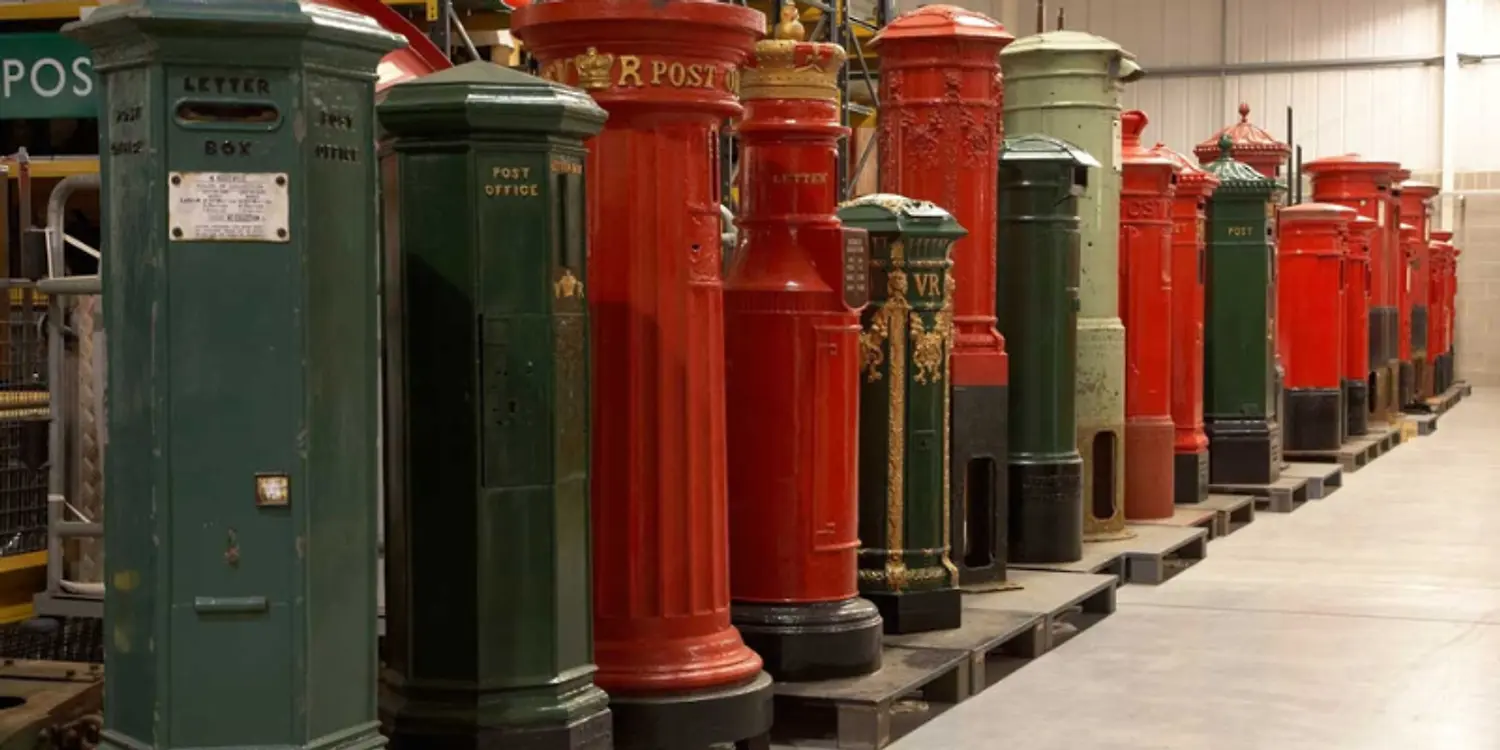 A collection of historic British pillar boxes in red and green, spanning different eras and royal ciphers, displayed at the Postal Museum.
The Unravelling
In 1999, the Post Office introduced a new accounting system called Horizon, developed by Fujitsu. It was supposed to modernise operations, streamline reporting, bring the institution into the digital age. Instead, it generated phantom shortfalls and discrepancies in the books that existed only in the software, not in reality.
Sub-postmasters, contractually liable for any losses in their branches, were told they owed money they had never taken. When they protested, they were told they were alone and that no one else was experiencing problems, that the system was sound, that they must be lying or stealing. They were prosecuted. They were fined. They lost their businesses, their homes, their reputations. Some went to prison. Some took their own lives.
Over 700 people were convicted. Every single one was innocent.
The Post Office knew the system was flawed. Internal documents, surfaced years later, revealed that executives were aware of bugs, glitches, and unexplained errors. They pursued prosecutions anyway. Lawyers drafted intimidating letters. Investigators ignored exculpatory evidence. And the institution's reputation was protected at the cost of the people who had dedicated their lives to serving it.
Professor Richard Moorhead, leading the Post Office Project at the University of Exeter, has described the scandal as "potentially one of the largest set of systemic professional failings in UK legal history." The public inquiry, ongoing since 2021, has exposed a culture of denial, deflection, and institutional self-preservation that defies belief. In January 2024, the government announced blanket exoneration through an Act of Parliament - a historic admission that the justice system itself had failed.
It was the largest miscarriage of justice in modern British history. And it happened under the banner of one of the nation's most trusted institutions.
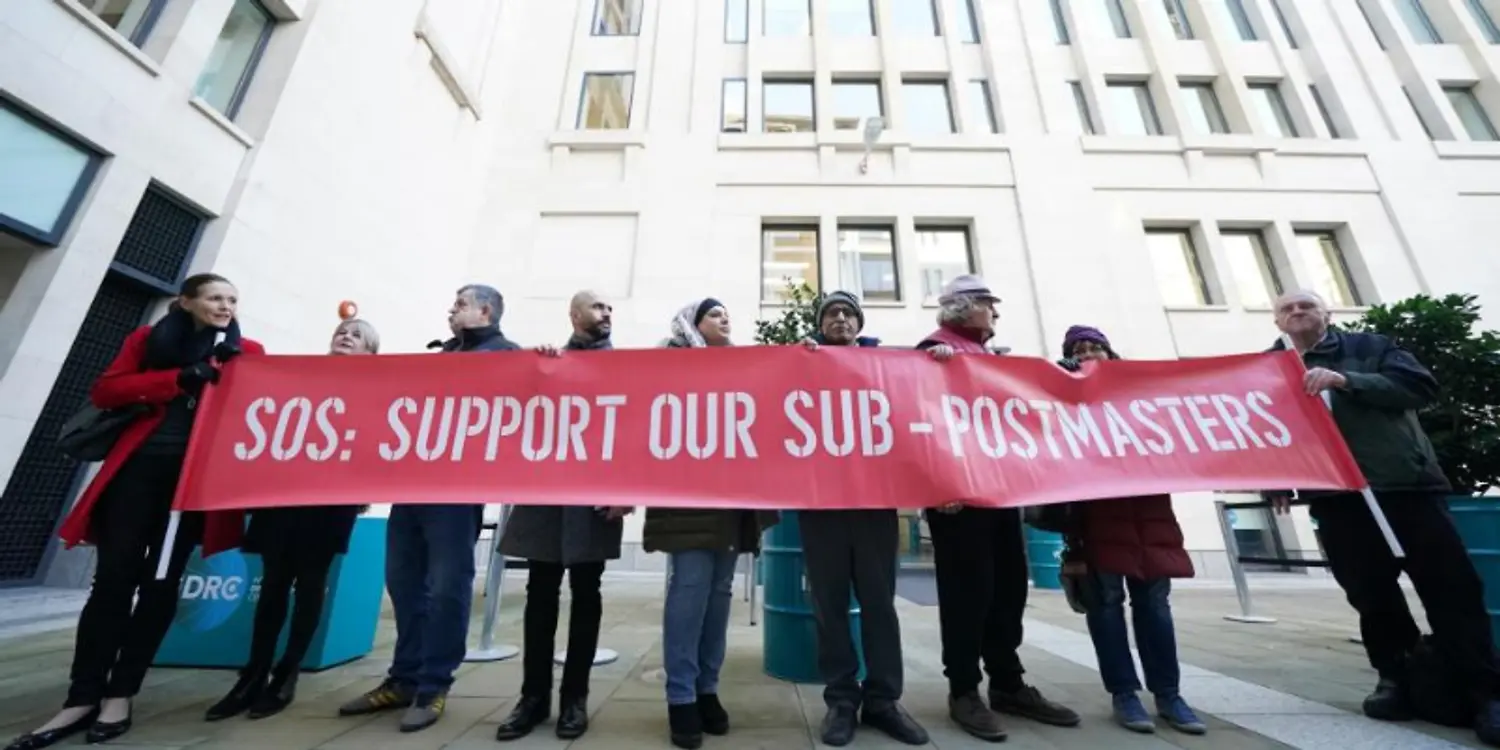 Sub-postmasters holding a banner reading "SOS: Support Our Sub-Postmasters" during a protest over the Post Office Horizon scandal.
The System Made Visible
There is a concept in the study of menswear, articulated by Professor Andrew Groves of the Westminster Menswear Archive, that clothing works best when it disappears into use. A suit succeeds when it stops being remarked upon. A uniform functions when it enforces belonging without demanding attention. The system is invisible when it works. It becomes visible only when it fails.
The Post Office operated on exactly this principle. For centuries, it was infrastructure so embedded in daily life that questioning it seemed absurd. The red box was simply there. The letter arrived. The sub-postmaster smiled. Trust was the currency, and it circulated freely.
Horizon shattered that. The system failed, and in failing it revealed itself not as a neutral utility, but as an institution capable of monstrous cruelty when its authority went unchecked. The very trust that had sustained the Post Office for 500 years became a weapon. Sub-postmasters were disbelieved precisely because the institution was believed. Their word against the machine's. Their lives against the brand.
Foreign Hands, Familiar Boxes
Today, the Royal Mail faces a different kind of reckoning. In April 2025, it passed into foreign ownership for the first time in its history, acquired by Czech billionaire Daniel Křetínský for £3.6 billion. The government retained a "golden share" and secured commitments on the universal service, tax residency, and headquarters location. But the symbolism is hard to ignore. The red box, stamped with the King's cipher, now belongs to a man whose fortune was made in European energy and media. One imagines the irony is not lost on the letter-writing classes.
Letter volumes continue to fall. Ofcom has proposed ending Saturday deliveries for second-class post. The economics that sustained universal service for nearly two centuries - many small transactions, uniformly priced, reliably delivered - are under pressure from forces no amount of heritage can resist.
And yet. The postman still knocks. Tracked 24 still arrives, more often than not, the next working day. The red box still stands on the corner, waiting, unbothered by the existential questions swirling around it.
The Question We're Left With
Josiah Wedgwood, the great Staffordshire potter, built an empire on the belief that beautiful, well-made things could be produced at scale without sacrificing integrity. He mechanised where it mattered and hand-finished where it counted. He understood that industry and craft were not enemies, but partners and that the challenge was not choosing between them, but holding both in tension. His pottery still bears his name. His factory town, Etruria, still stands. He proved that commerce and conscience could coexist, if you cared enough to make them.
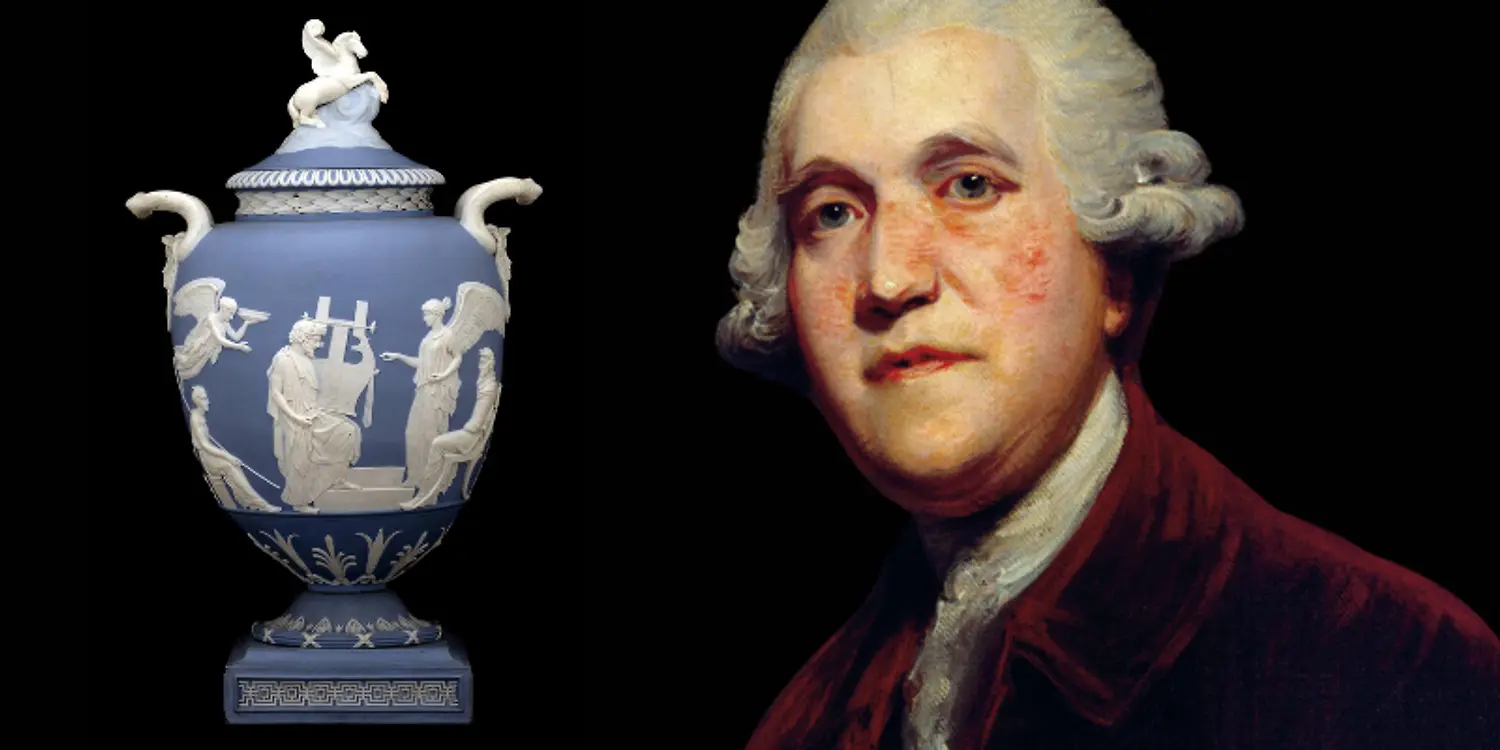 Portrait of Josiah Wedgwood alongside his signature blue Jasperware urn.
The Royal Mail carries its own tension now. Five hundred years of service. Fifteen years of scandal. A system that connected a nation and destroyed the people who ran it. A red box that still stands, still works, still asks for our trust.
Can an institution betray so profoundly and still be redeemed? Can heritage outweigh harm? And when we drop a letter through the slot, are we participating in something noble, or simply choosing not to think too hard about what lies beneath?
The red box doesn't answer. It just waits stoically, keeping calm and carrying on. Whether that's a virtue or a warning depends, perhaps, on which side of the counter you're standing.