Fashion has always relied on modifiers to categorise itself. The recent proliferation of -core aesthetics is simply the latest iteration, a shorthand for complex cultural references, sometimes insightful, sometimes redundant.
That said, British-core somehow feels different, especially to us.
Not because it’s new, but because it articulates something that has long existed without a name. In 2025, it’s been reasserted with particular clarity. Burberry’s recent work is a clear example: an intentional return to British material culture. Landscape and lived experience rather than nostalgia alone.
Waxed cotton, tartan, weatherproof silhouettes… not as costume, but as systems of dress shaped by climate, class and utility. This isn’t heritage as ornamentation; it’s heritage as practice.
While brands like Barbour, Hunter and Holland Cooper naturally sit within this conversation, we appreciate the fact that British-core extends far beyond. What follows is an exploration of some of our other favourite brands that contribute equally to a very distinctly British way of dressing.
Gloverall – The Logic of British Outerwear
Gloverall’s story is one of British outerwear that never sought to be fashion first. Function, durability and real refinement, qualities that have, over more than seven decades, become its defining legacy. Founded in the early 1950s by Harold and Freda Morris, the brand emerged from surplus military outerwear in post-war London and quickly transformed necessity into craft. What began with duffle coats, themselves a civilian evolution of naval and army issue, became a template for some of the more enduring styles we know and love.
Unlike brands that trade in rhetoric, Gloverall’s heritage is anchored in making utilitarian pieces refined through thoughtful detail and British manufacturing rigour. The company didn’t invent the duffle, but it arguably perfected its civilian incarnation, and from there built a coherent vocabulary around outerwear that prioritises serviceability without abandoning proportion or silhouette.
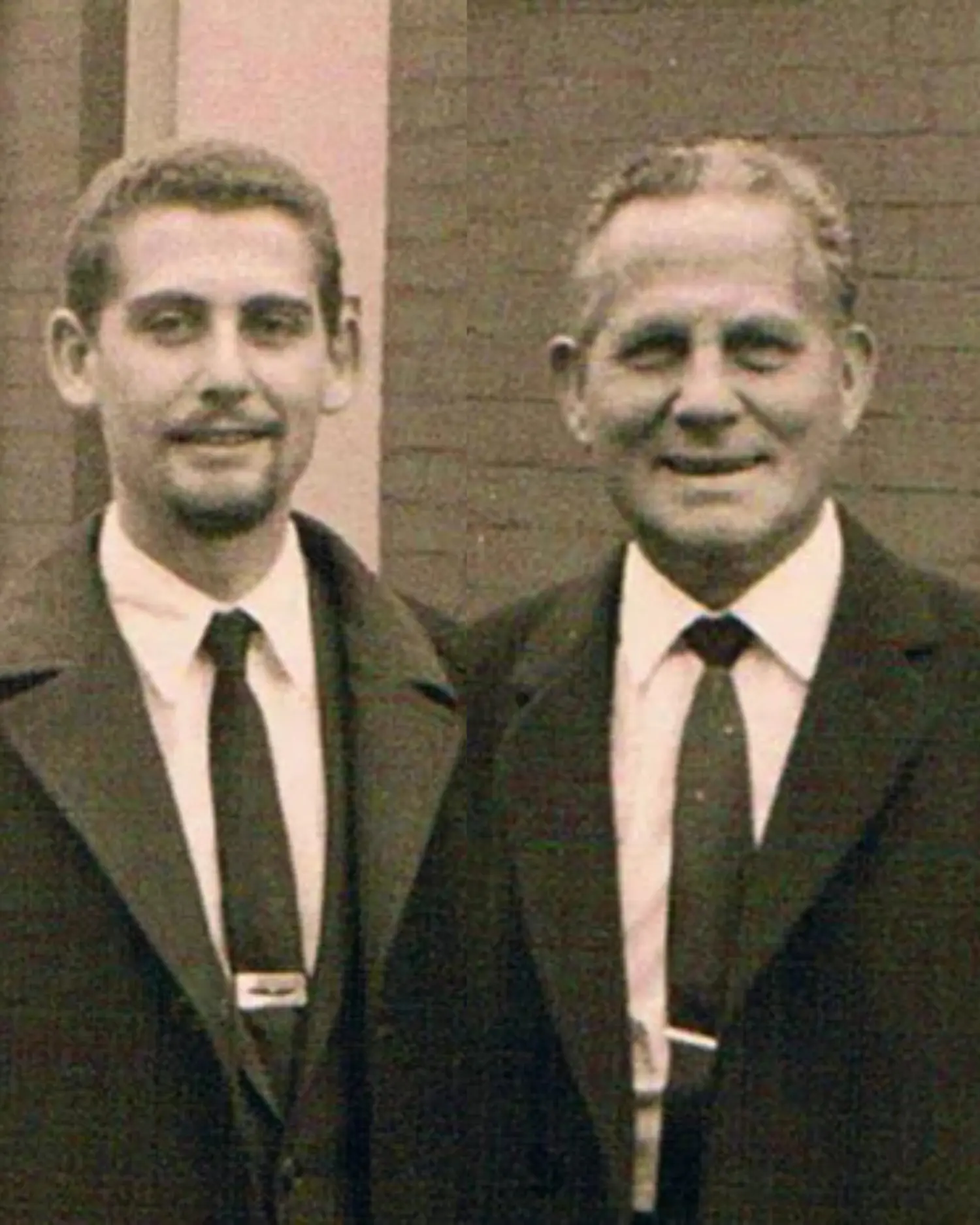 Harold Morris
Shorter. Sharper. Still a Duffle
The Freda Short Slim Fit Duffle is Gloverall doing what Gloverall does best: taking something historically practical and making it look unnervingly good without sanding off the grit. It’s made in England, slim through the body, and unlined, which means it keeps its shape without any Michelin-man theatrics. It’s sharp enough for the city but still built with the countryside’s complete disregard for your forecast apps opinion.
The cloth is a serious one, 80% wool / 20% polyamide, with a reassuring weight and handle. Then there are the details, the bits that make a duffle a duffle. Buffalo horn toggles with leather loop fastenings, the kind you can do up with cold hands and mild irritation. A detachable throat tab, fixed shoulder cape and that brilliantly named pancake hood, ever practical and always weirdly flattering. And the best part? The plain face / tartan reverse. It’s the inside joke: restrained on the outside, full personality when it’s unbuttoned or slung over a chair.
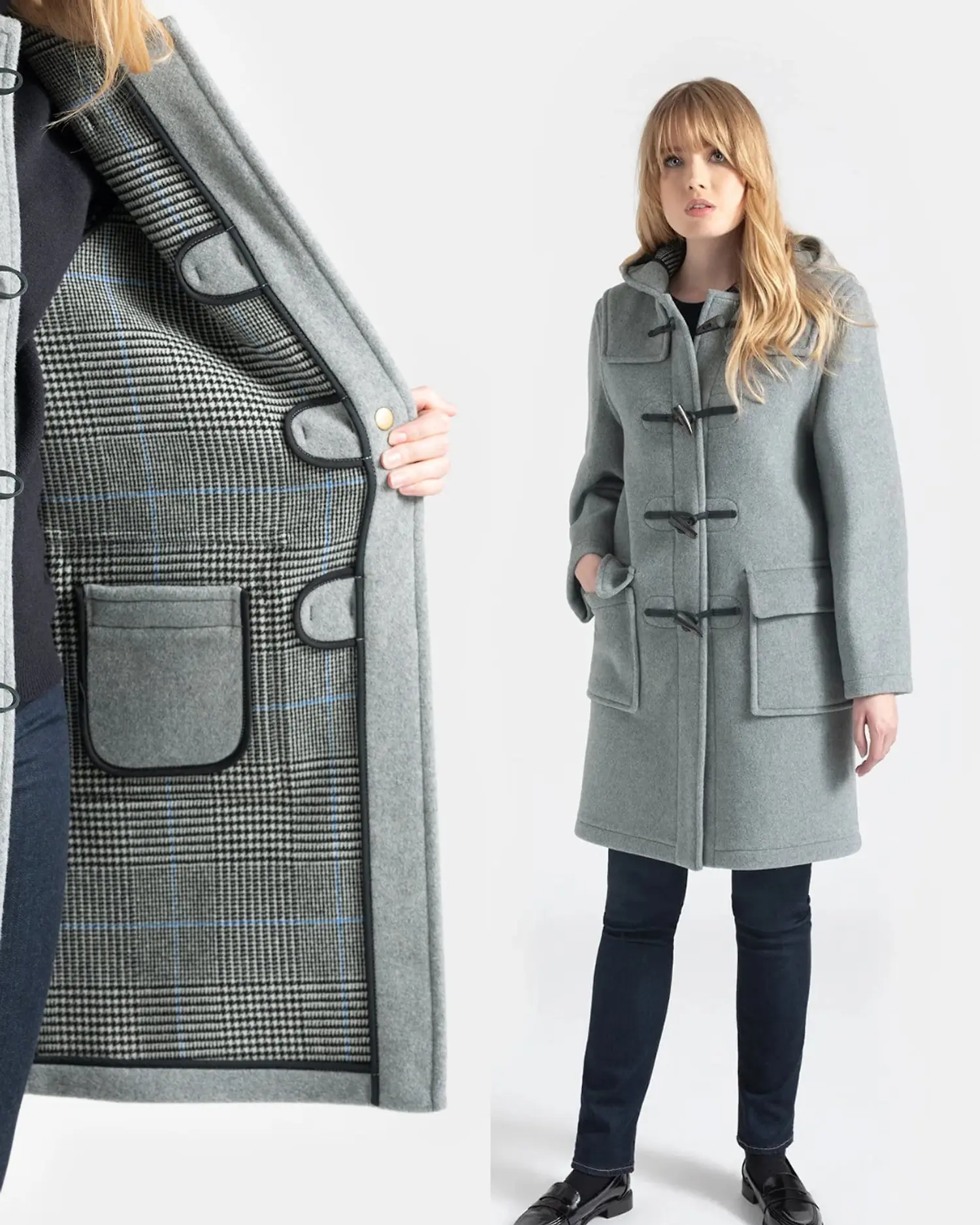 Freda Duffle Coat Silver Prince of Wales
The Perfect Peacoat
Take the Churchill Peacoat in navy, a piece that demonstrates this ethos with exemplary clarity. Crafted from 100% Melton wool and made in England, the Churchill owes as much to the rugged practicality of seafaring garments as it does to the tailoring traditions of British overcoats. The double-breasted reefer silhouette is inherently functional, designed originally to shield sailors against harsh winds, but here it has been given a slightly more refined cadence without compromising on purposeful construction. The notched lapels and waist-heightpockets speak to a lineage of utilitarian coat making, while the anchorembossed button nod to the maritime provenance of the style itself.
In wearing the Churchill, one gets a sense of that long arc: an outerwear piece built to endure rather than trend, cut with respect for the body’s movement, and finished with details that reward inspection rather than shout for attention. It’s not just about the lookof heritage; it’s about the logic.
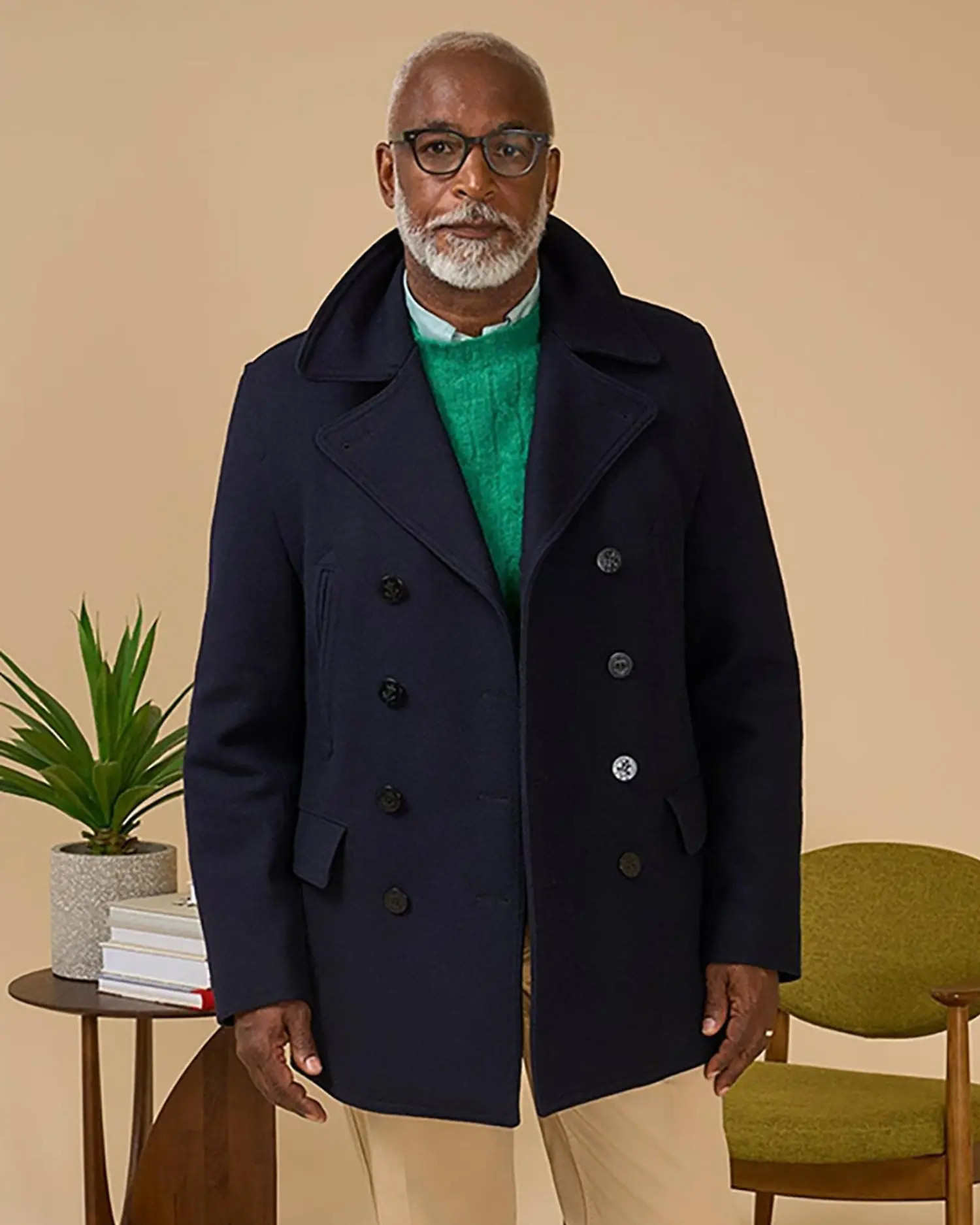 Men's Churchill Peacoat - Navy
Dents – Tradition at Your Fingertips
Dents is one of those rare British manufacturers whose story feels foundational, a genuinely enduring thread in the fabric of British dress. Established in 1777 by John Dent in Worcester, the company quickly became synonymous with luxury leather gloves, its reputation built on craftsmanship that predates much of what we now call “heritage.” From its earliest days in a small wooden workshop to the custom-built factory in Warminster where gloves are still designed and made today, Dents has remained steadfast in its commitment to quality and the hand-of-the-maker ethos. Even as glove making migrated overseas and mass production became the norm, Dents kept its craft local, honouring the tradition of bench cutting, hand stitching and meticulous finishingthat define a truly fine glove.
Recognition of that standard is more than anecdotal. In 2016, Dents was granted a Royal Warrant of Appointment by His Royal Highness The Prince of Wales (and more recently reaffirmed by His Majesty The King), a distinction reserved for suppliers demonstrating sustained excellence to the British royal household. It’s a rare seal of quality that speaks less to marketing and more to centuries of service and precision.
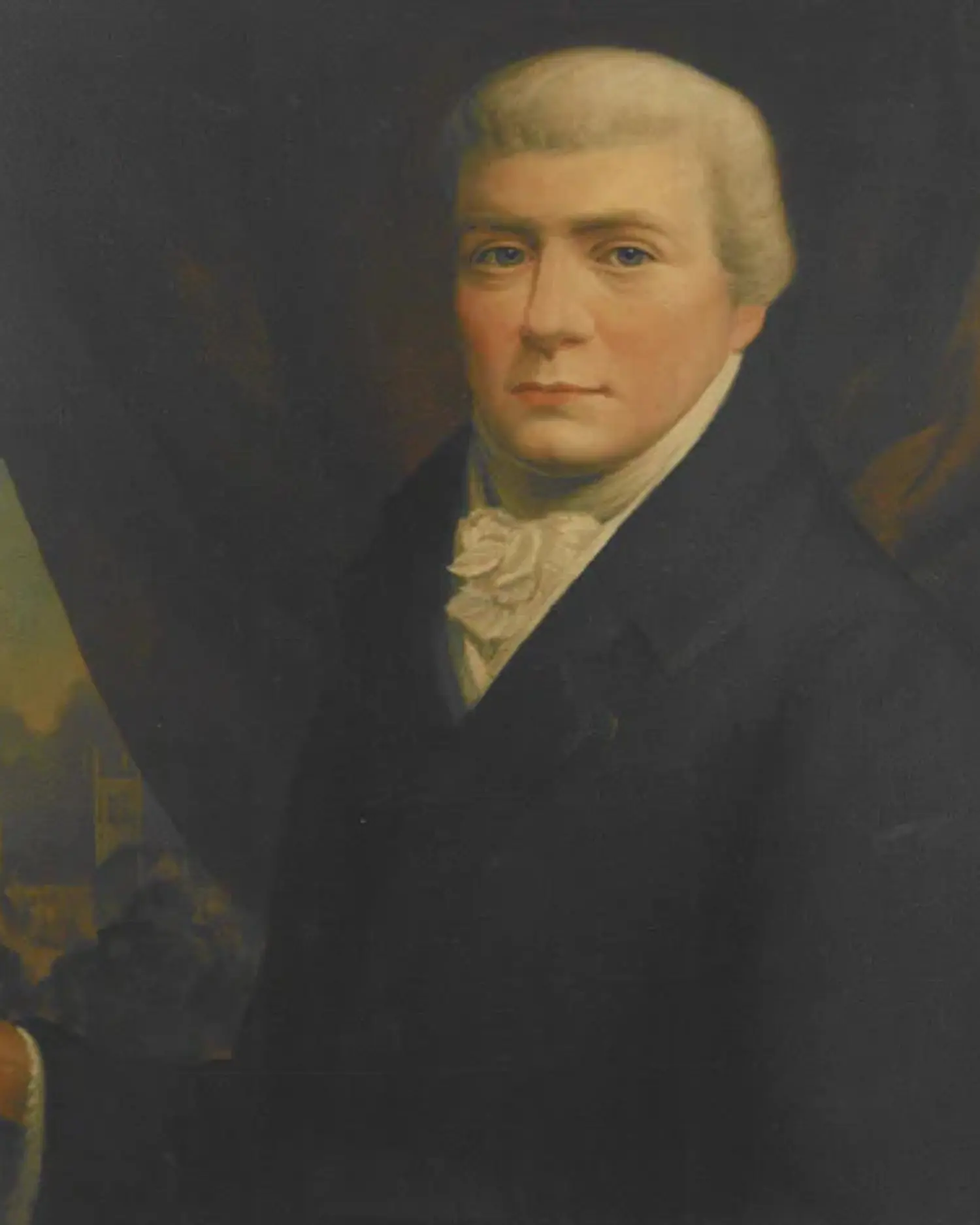 John Dent
Function, with a soft touch.
The Sarah Leather Glove for women sits at on the front row of that long lineage. The silhouette is classically Dents, streamlined, thoughtful and rooted in utility. The touchscreen-compatible leather nods to the modern requirement of staying connected, while the faux fur cuffs add a thoughtful textural counterpoint to the sleek navy hide. The result is a glove that feels British, and is engineered to perform in a climate that never quite settles on one season. These aren’t accessories that announce themselves loudly; instead, they reward proximity, touch and lived experience, much like the brand itself.
In both heritage and execution, Dents does what it has done for almost 250 years, makes gloves that are not just worn, but used, and appreciated. For anyone who understands the value of subtlety and depth in everyday dress, the Sarah is a small but telling example of why this maker endures.
 Sarah Touchscreen Leather Gloves with Faux Fur Cuffs - Chestnut
Oliver Sweeney – Modern Craft, Properly Applied
Oliver Sweeney is a British brand born not out of nostalgia, but dissatisfaction. Founded in the late 1980s by Oliver Sweeney himself, the label emerged from a simple but pointed observation: British men were being offered footwear that felt either overly traditional or entirely disposable. Sweeney’s response was to bridge that gap, combining contemporary design with serious making, and building long-term partnerships with skilled Italian factories where materials, pattern cutting and construction could be controlled properly. From the outset, the brand has focused on footwear as a discipline rather than a trend. It’s about craft, proportion and wearability.
That insistence on doing things properly has become the brand’s defining thread. While many labels have chased novelty or seasonal noise, Oliver Sweeney has refined its approach, producing shoes and trainers that tread comfortably between formal and casual worlds. It’s a philosophy of modern British dress: adaptable, considered, and built for real use rather than spectacle. The result is footwear that doesn’t rely on overt heritage signalling, but earns credibility through construction, material choice and longevity.
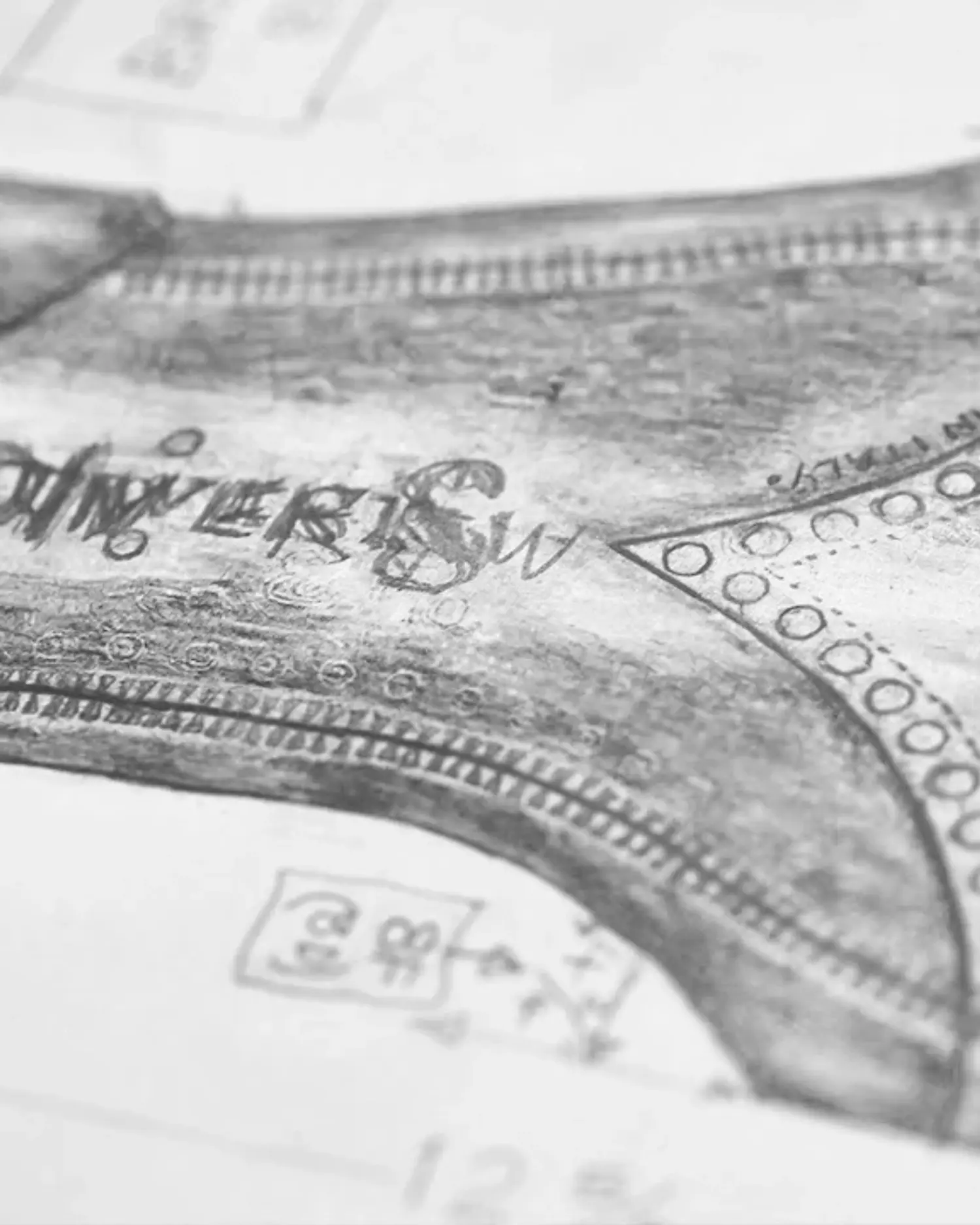 An early sketch by Oliver Sweeney
A Wearable System
The Oliver Sweeney Defeza is a clear expression of that mindset. Its mid-cut silhouette references classic sports footwear, most notably the retro football boot patterning of the toe, but it’s reworked with modern intent. The upper is cut from rich Todi calf leather with a deliberately non-uniform finish, allowing the surface to age naturally rather than remain pristine. Inside, a full leather lining, cushioned insock and padded collar ensure comfort isn’t treated as an afterthought. Underfoot, a natural gum cupsole with a shallow cleat offers grip and flexibility without tipping into overt performance styling.
The Defeza is a shoe designed to move easily between settings, with its thoughtful construction and confidence perfectly reflecting the brand’s wider philosophy. Like the best modern British pieces, it rewards wear, adapts over time, and proves that craft, when applied intelligently, never needs to force its way into the conversation.
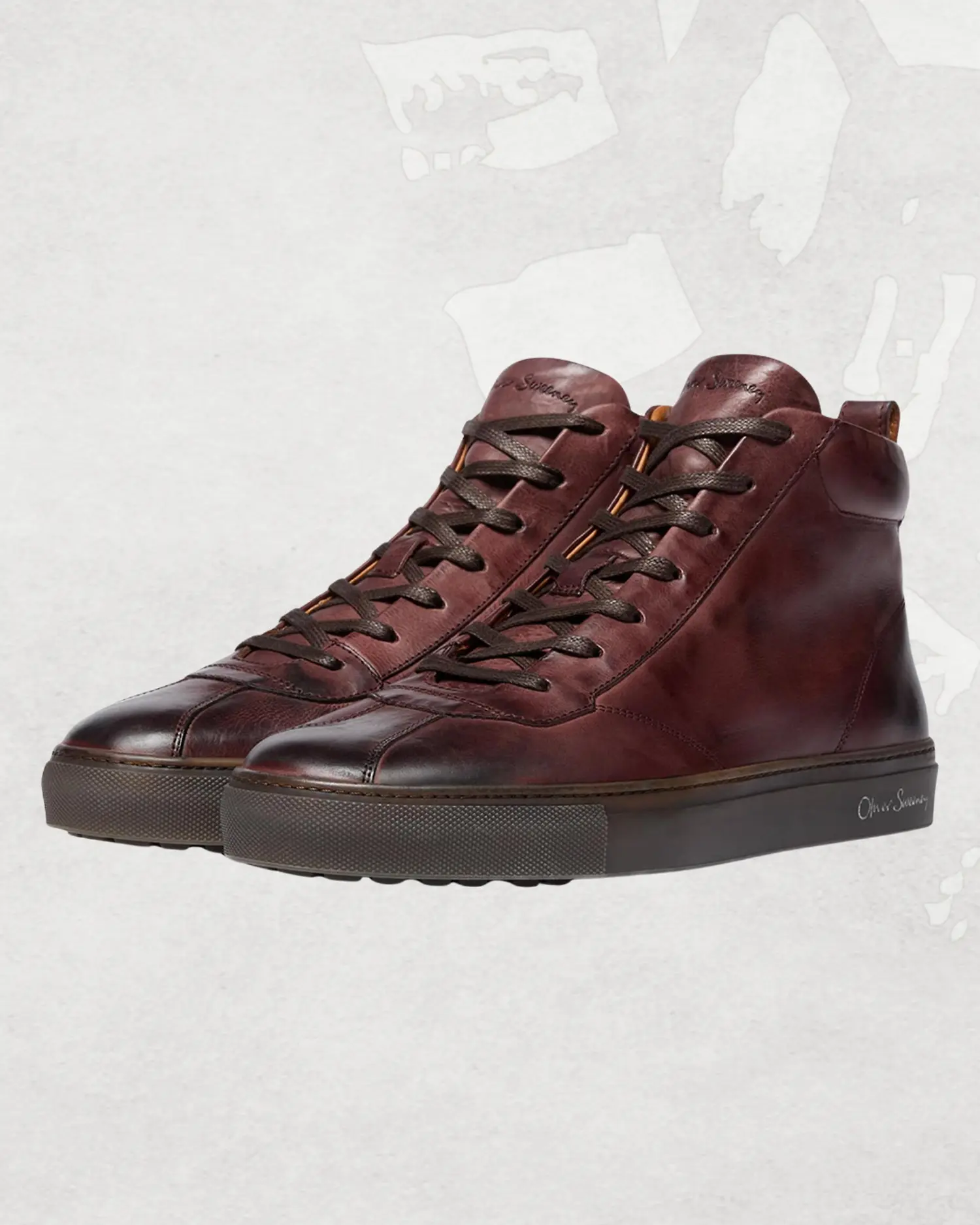 Oliver Sweeney Defeza in burgundy
Penelope Chilvers – The Meaning of Craft
Penelope Chilvers has always designed from the ground up, both literally and culturally. Long before the brand became shorthand for confident, capable footwear, Chilvers was living and working in Spain, absorbing its rhythms, materials and attitudes to craft. That experience shaped not only the look of her work, but its priorities. Spanish shoemaking traditions value construction that is enduring, and accommodates the body without fighting it. Those principles have remained central to the brand ever since.
Rather than chasing seasonal novelty, Chilvers built her label around continuity. Production has long been based in specialist workshops in Spain and Portugal, where handwork still plays a central role and relationships with makers are measured in years, not contracts. There’s a practicality to this approach, but also a certain romanticism, not in the theatrical sense, but in the belief that objects should be shaped by people who understand how they’ll be used. It’s a philosophy that feels closer to lived experience than to fashion cycles.
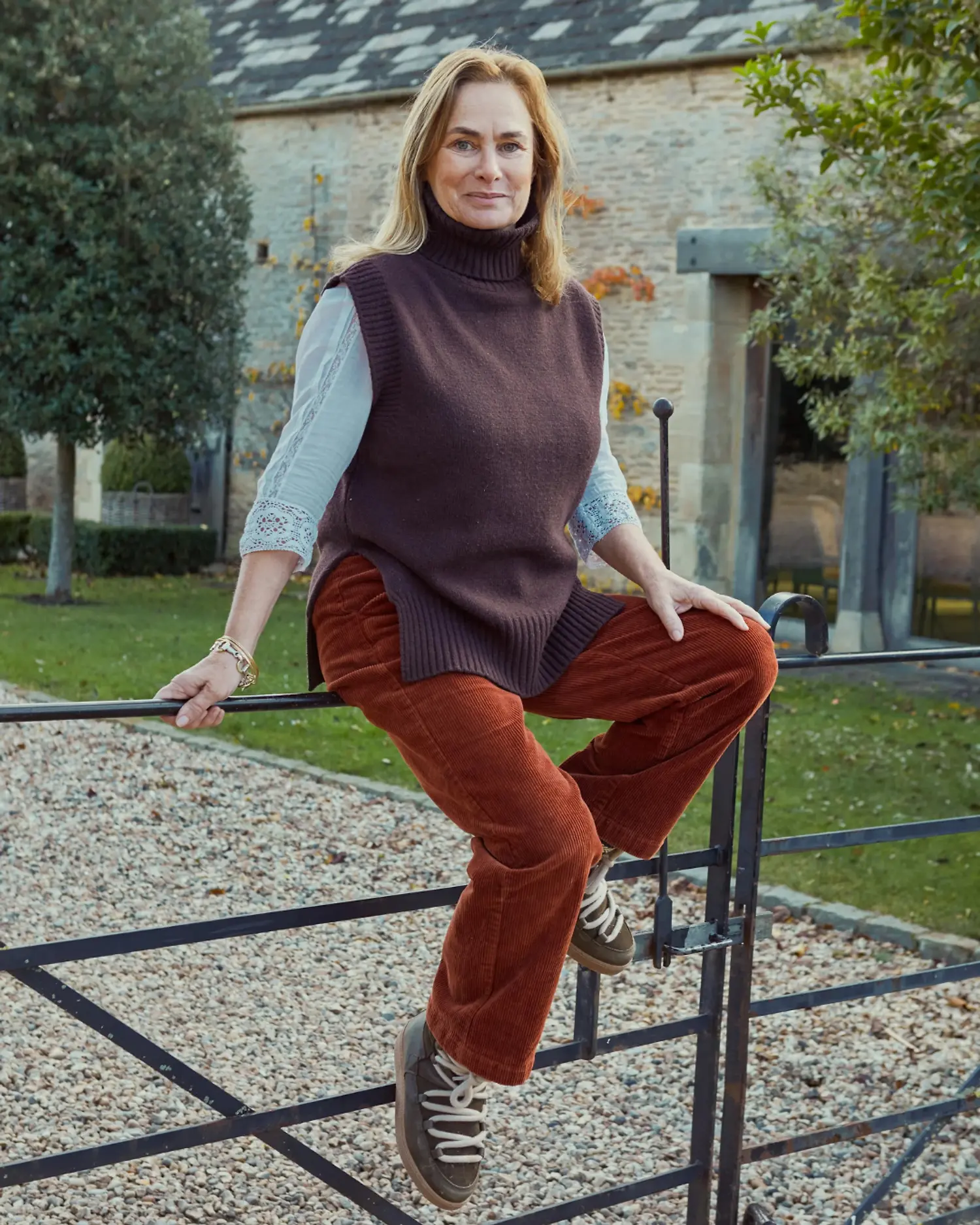 Penelope Chilvers
Designed for more than Display
The Incredible Boot, arguably one of PC’s most impressive styles, is made in Spain. The proportions are settled rather than stylised, a silhouette that assumes it will be worn repeatedly, across weather, rather than rotated for effect. It draws its authority from continuity: a recognisable form refined through use, not rebranded through novelty.
The Gin Tonic leather matters because it isn’t trying to flatten itself into uniformity. It carries tonal variation and a softness that reads as lived-in, even when new — the kind of material that improves through handling. Over time it will crease, deepen, and take on the patina of routine, which is the point. The rubber sole is substantial without becoming “technical”; it gives the boot traction and longevity without turning it into a performance object. Lacing, likewise, is functional before it is decorative: a mechanism for fit, adjustment, and the slow moulding of footwear to the wearer.
Taken together, the boot sits within Penelope Chilvers’ broader logic: design that is less interested in seasonal theatre than in the metrics of good making, comfort, durability, and a certain cultural rightness that comes from understanding where an object belongs.
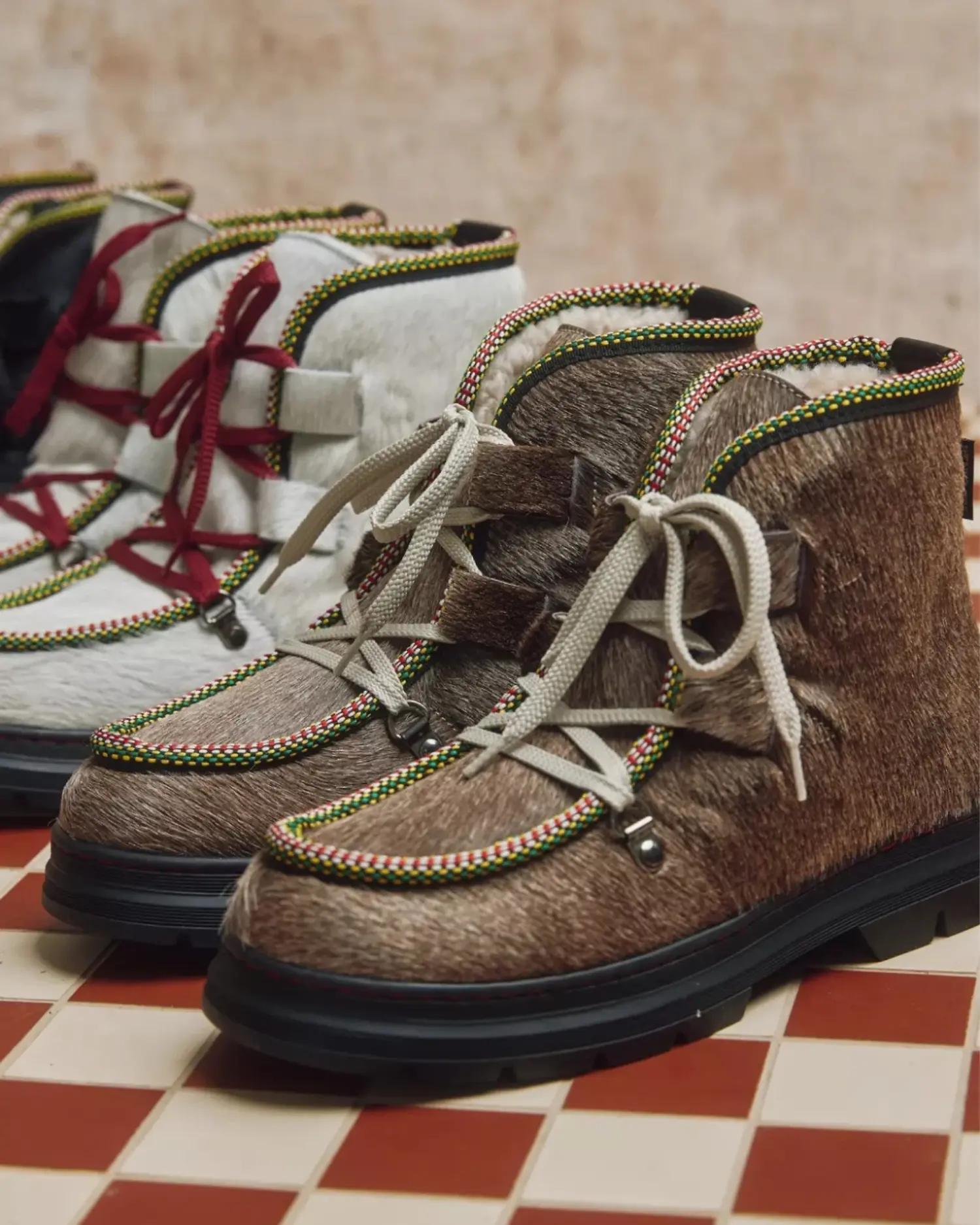 The Incredible Boot in Gintonic
Peregrine – Making, Kept Local
Peregrine is one of the few British brands where “heritage” isn’t a moodboard exercise, it’s an operating model. The story starts in 1796, with Thomas Glover knitting in Leicestershire, and runs forward through eight generations of manufacturing knowledge, right into the present day. What’s striking isn’t the age of the business, but the continuity of practice: wool sourced close to home, garments designed in England, and the majority still manufactured in the UK. It’s the kind of infrastructure most brands now only reference in copy. Peregrine still runs it, without the need to slap EST. 1796 on absolutely everything like a tattoo.
That discipline sharpened in the modern era under Tom Glover, who joined after graduating in design (2003) and re-established Peregrine as a contemporary label built on manufacturing fundamentals. The brand has kept production control as a point of principle… traceability, quality assurance, and British making treated as systems. Even their retail expansion (Regent Street; a Selfridges presence tied to sustainability) reads less like reinvention and more like the logical next step for a manufacturer finally speaking in its own name.
 Tom Glover
The Bexley Jacket - Peregrine’s modern uniform:
This is true functional outerwear, pared back, properly built. Cut from British Millerain 8oz waxed cotton, it understands the British climate in the way only a British garment really can. It’s weather-resistant, but you don’t feel as though you’re armour-plated, finished with a two-way zip and storm flap, and pocketed with the kind of common sense that suggests someone involved in the design has, at some point, been outside: two large patch pockets, a chest pocket, plus an internal pocket, all lined in cotton for comfort.
The fit is tailored, cleaner, sharper, less cosplay countryside, and it’s the sort of jacket that improves once it stops being precious and starts being used. Waxed cotton always does: the marks and creases are less like damage and more appropriately described as evidence. The jacket becomes a record of life’s many decisions and detours.
Peregrine's Bexley isn’t about getting gooey eyed about the past, it simply continues the parts worth keeping and makes them relevant by refusing to outsource the thinking.
 The Bexley Jacket - Black
Consider this a toe in the water — a brief pause in what is otherwise a conversation that could stretch well beyond the limits of good manners, editorial word counts, and common sense. There’s more to say. We’ll come back to it.