The year was 1999, and for what felt like a lifetime, I'd begged and pleaded with my family for what I considered, at the time, to be the holy grail.
I was fourteen, an aspiring musician and producer, and fully submerged in the Manchester music scene. UK garage was starting to mutate into grime and jungle was transforming into DnB (for better or worse). Madchester was also still hanging around in the bloodstream. Wigan Pier, Helter Skelter, Bowlers, Hysteria. My bedroom wall was covered in flyers, I had tape packs instead of books, and the Slamming Vinyl record bag was more a rite of passage than anything else.
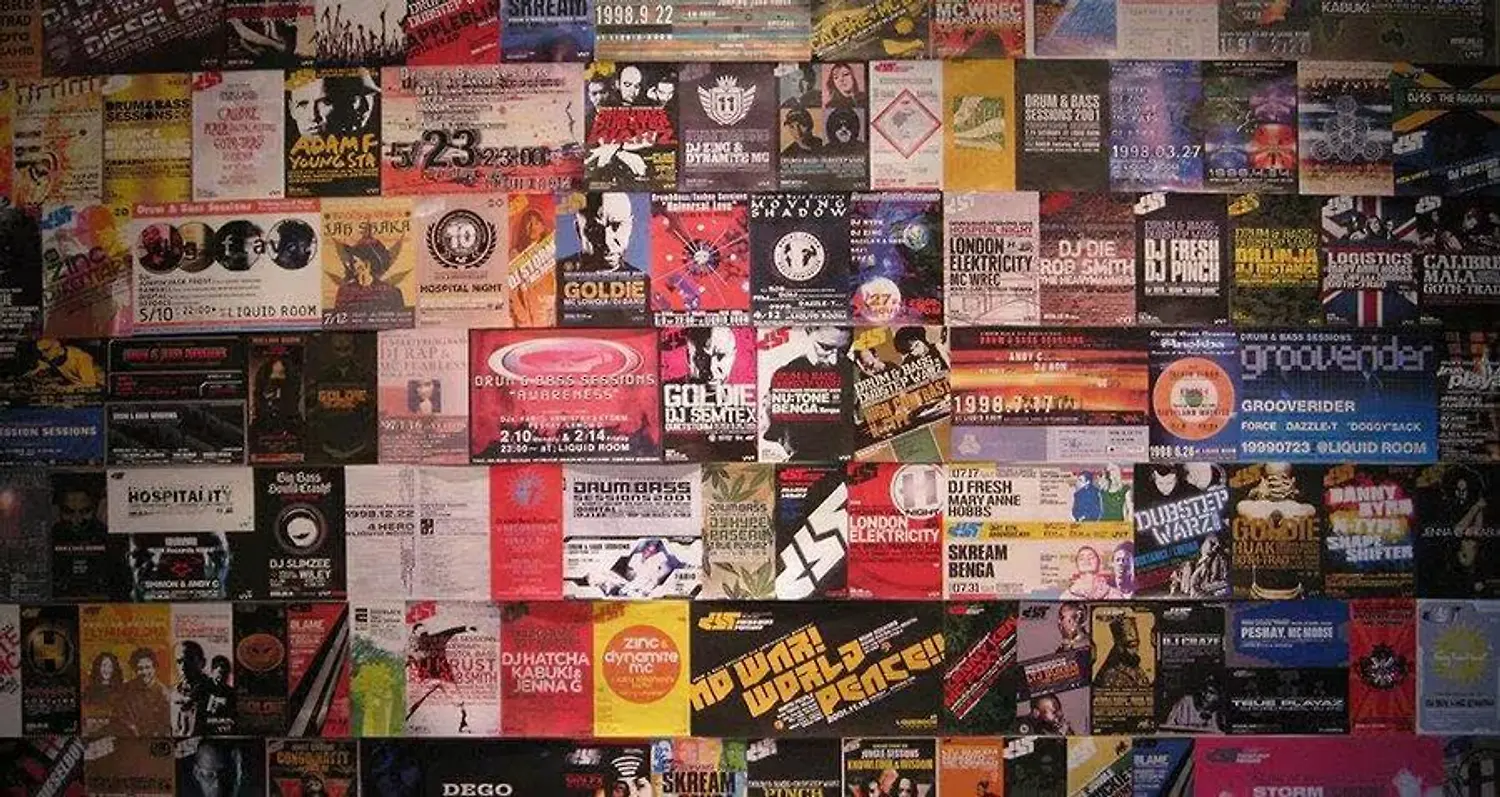 Wall Full of Jungle Flyers
There was one thing everyone in my position dreamed of owning. A Technics 1210 turntable, and I was about to get one. Only one, mind. Working class 'n that, you know how it goes. But even just one, paired with my battered Numark belt drive, felt like I'd arrived. I'd stick a pair of Ortofons on both and everything would be fine. I can honestly say that was probably my favourite childhood(ish) Christmas.
Years later, it is impossible not to draw a line between what we sell at British Attire and products like the 1210. I've started fondly referring to them as Apex Products. Objects that hit the nail on the head first time and break the mould. Put simply, they just get it right.
So let me tell you about the one that started the thought.
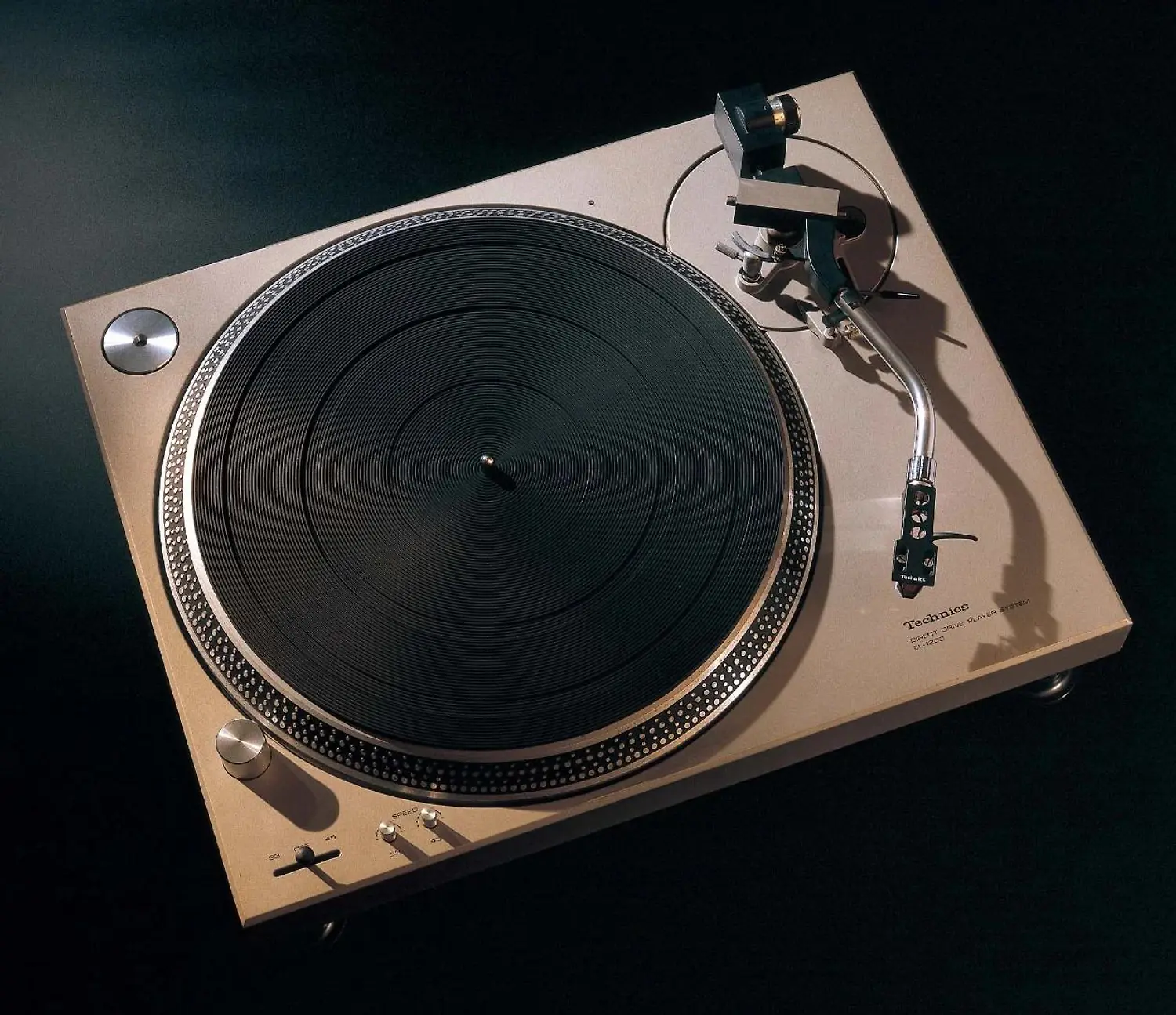 Technics SL-1200 1972
In October 1972, Matsushita, the company we now call Panasonic, released a turntable under its Technics brand called the SL-1200. It was never supposed to be a clubroom icon. In fact, at that time, nobody at Technics was thinking about DJs in the way we understand them today. In 1972, the job wasn't even a job.
This was a very serious hi-fi turntable, designed for the equally, very serious, audiophiles amongst us. Instead of a rubber belt connecting motor to platter, the motor sat directly beneath it and turned the platter itself. It set off smoothly, held its speed with crazy accuracy and could absorb more punishment than any other piece of “domestic” audio. Technics thought it had made an excellent record player for people with mega separates and patient ears, but following a touch of the old market research, they found their product had blown up in a world they knew nothing about.
Imagine dark rooms, deafening volumes and people madly backspinning records. These “decks’ quickly became the industry standard simply because they happened to do all the things DJs needed them to do, despite the fact DJs didn't have a clue what they needed. It was compact, sturdy and capable of surviving what can only be described as physical abuse, (as an aside, to date, I don't think any drunk and disorderly charges have ever been filed, but I'm not saying it's impossible). DJs worked two of them in tandem while a room full of people exploded around them and when the design team asked the DJs what they'd change, by and large they echoed, "nothing".
The 1200 was a hit that nobody, especially Technics, saw coming. It was being used by a market they didn't know existed and became one of the most seminal pieces of equipment in modern music history. To help them navigate these choppy waters, they sent teams to Chicago for more "market research", and after more than a few life-changing moments of euphoria, that research led to the release of the MK2 in 1979, which remained more or less unchanged for a solid 31 years.
The only things they did adjust, were the rotary pitch dials, which became vertical faders, because DJs were using pitch to match tempos and a slider gave them finer, faster control than a knob. The motors gained quartz locks for speed accuracy, and the whole thing was rebuilt to absorb vibration and stop the needles jumping all over the shop. Technics' own tagline for it was straight down the line, tough enough to take a disco beat and accurate enough to keep it. That was it, that was the brief. As a marketer, one can only admire such a defined, single-minded proposition.
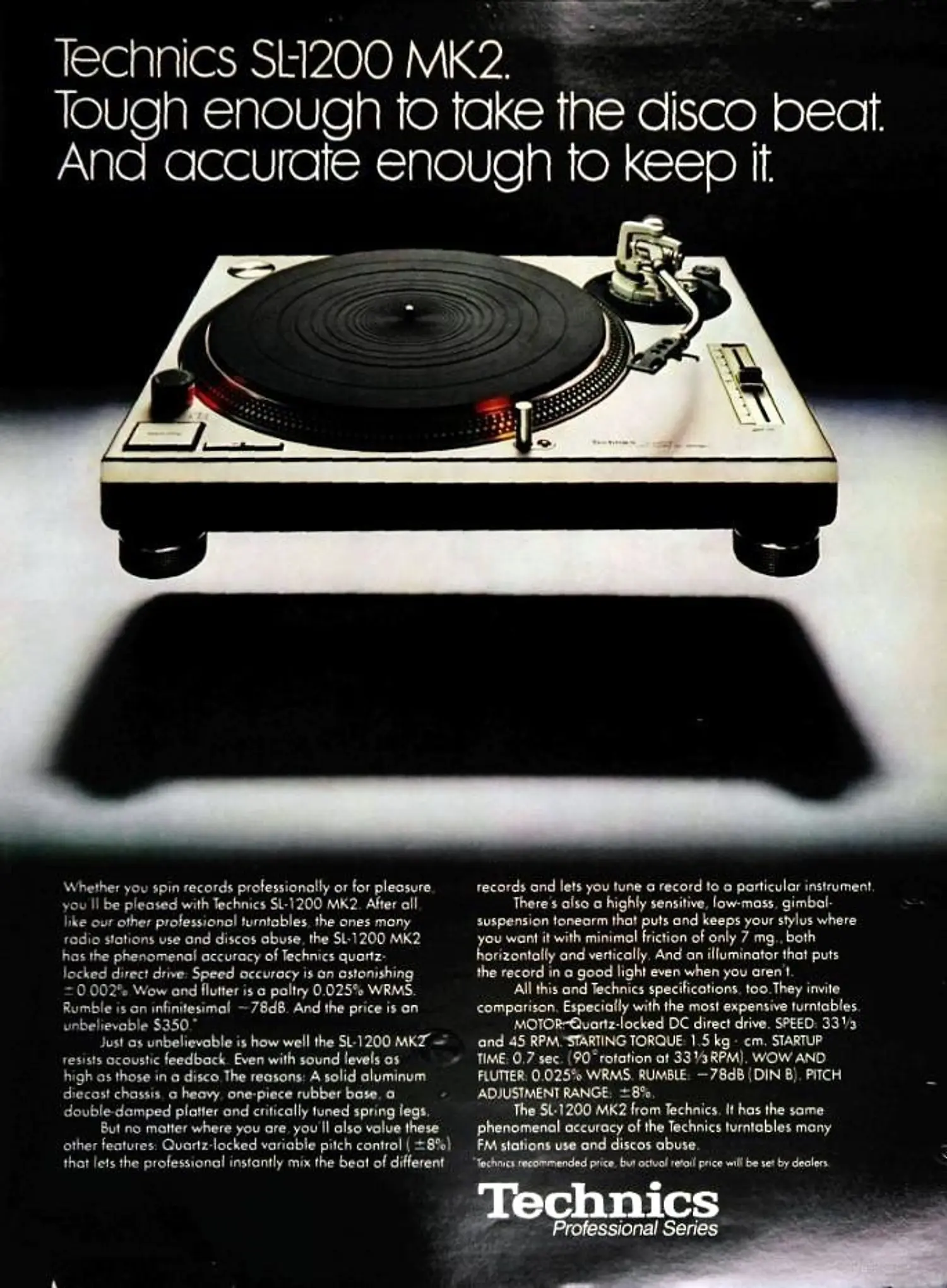 Original Technics 1200 MK2 Promo
Whilst we're here, a quick word on those dots, because everyone who has ever noticed these has at some point wondered what the hell they're actually there to do.
Around the edge of the platter sit four rows of small round dots, machined into the angled rim of the cast-aluminium platter in varying sizes. Inside the on/off switch is a little light that, on the MK2 onward, strobes at a fixed frequency the human eye can't perceive, so it looks like a steady glow. When the platter spins at exactly the right speed, one row appears to freeze, locked in place by the strobe. Nudge the pitch fader and the rows drift, the higher band crawls forward, the lower band slides back. Those four bands are actually four quite technical reference points: plus six percent, plus 3.3, dead zero, minus 3.3. Beat-matching means running two records at exactly the same tempo so one can be mixed into the other. Records are not all cut at the same speed, so you ride the pitch fader to nudge one into line with the other, and the dots tell you instantly where you are. Dead zero is the record's true speed. The 3.3 marks are roughly a quartertone of pitch shift; the six percent band is roughly a semitone, the point at which a trained ear starts to notice the music has changed key.
It is, in effect, a mechanical speedometer that needs no screen and never lies, and on the original 1970s and 80s decks it doubled as a fault light. If the dots wouldn't sit still no matter what you did with the fader, your deck fettling.
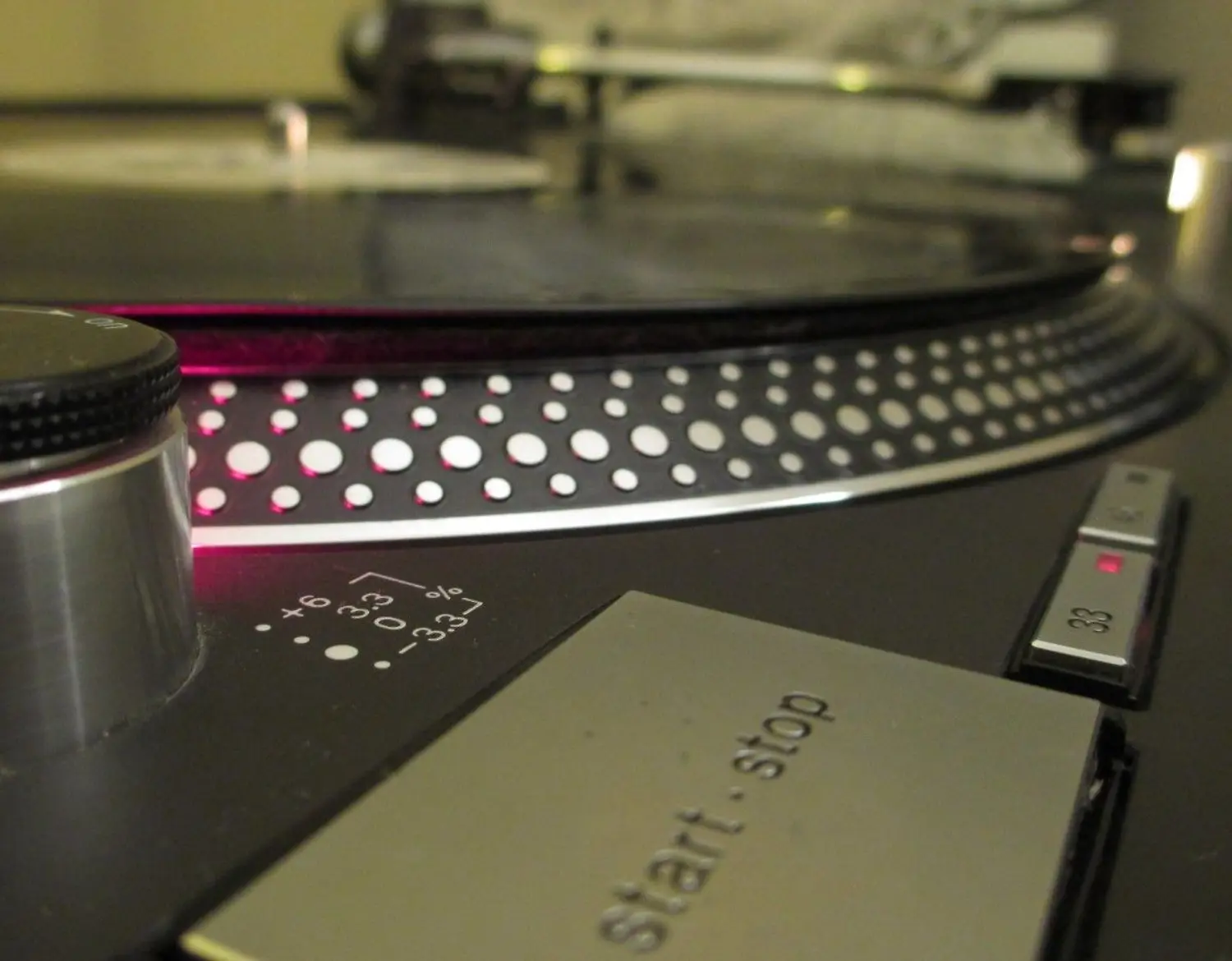 Technics Turntable Platter
Now back to the cultural impact, and it's almost too monumental to hold in one article, but let me give it a go.
Bronx, New York, mid-1970s. DJs including Kool Herc and Afrika Bambaataa used an earlier Technics direct-drive deck, the SL-1100, to loop the instrumental breaks of funk and soul records and stretch them out a bit. Grandmaster Flash took the torque and the responsiveness of those motors and turned cutting and backspinning into a technique, and the technique into an instrument. By the time A Tribe Called Quest, Public Enemy and De La Soul were on the scene, a pair of silver Technics in the video was pretty much expected and even nowadays, we see it popping up. Check out Kendrick Lamar's "Not Like Us" video. Forty years on, iconic as ever.
In Detroit, the Belleville Three built techno on the 1210, its quartz-locked precision matching music made to sound like machines. In Berlin, Tresor ran on them. In Bristol, the Wild Bunch (who became Massive Attack) blended soul, reggae and electro on Technics and laid the floor that Tricky and Portishead would later build on. In Britain especially, the 1210, the black UK-market twin of the silver 1200, became the only thing to have, simply because, as the scene shifted from one resident DJ per club to a different DJ every night, the equipment had to be identical everywhere, or nobody could work. It's the same reason the CDJ3000 is today's digital equivalent.
 Tresor Berlin
It was on these decks, on pirate radio broadcast from London tower blocks to fields and warehouses across the nation, that hardcore became jungle and jungle became drum and bass. The low end those original motors pushed through a sound system is part of why those genres sound the way they do – check out Dillinja and Lemon D’s Valve Sound System for another cool refrence.
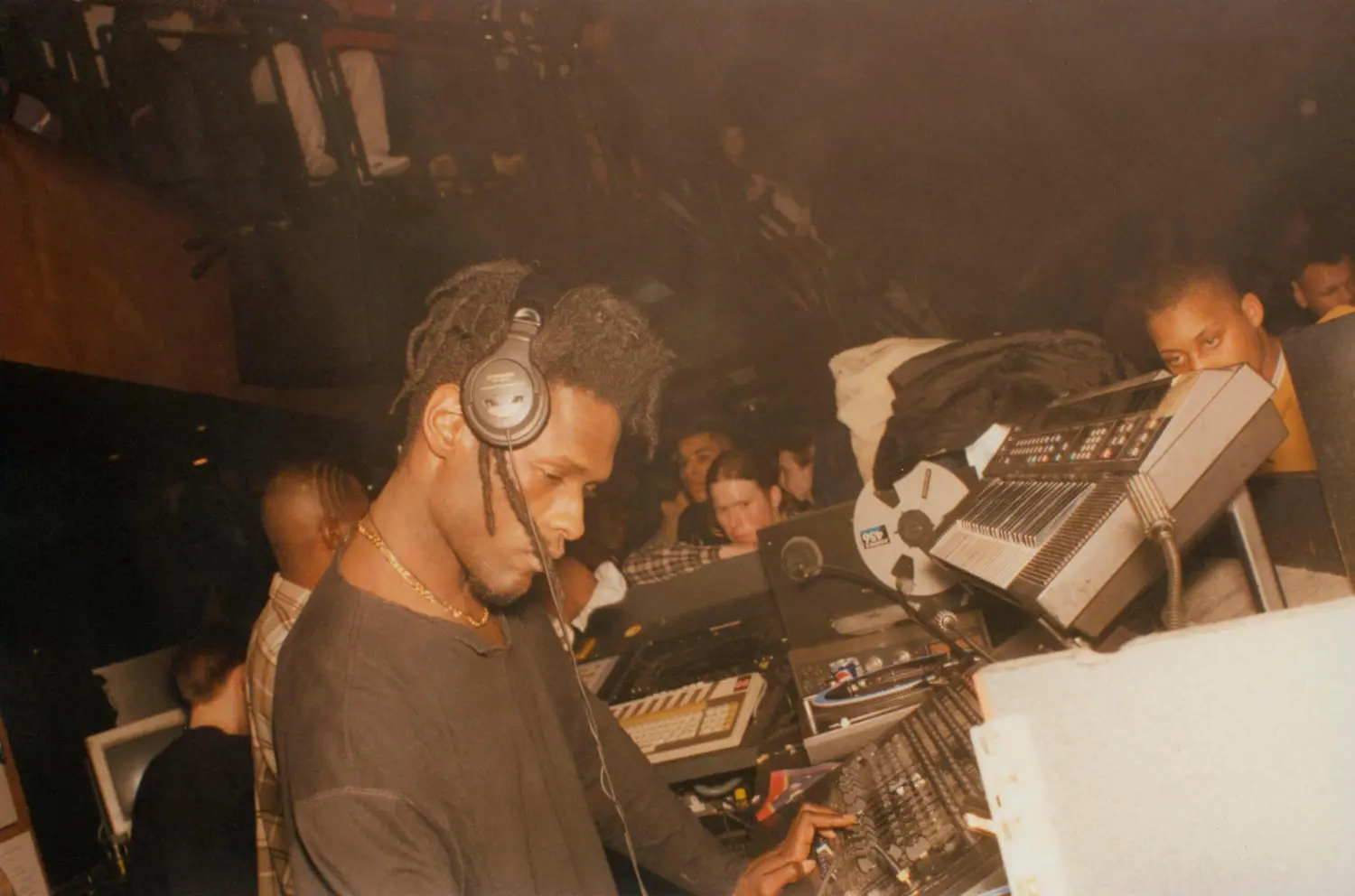 DJ Fabio at an early jungle rave, London, 1990s
The London Science Museum has an SL-1210 on display, listed among the objects that shaped the modern world. In fact, and don't quote me on this, but it might be one of the only products sitting in a museum and still being sold in the same format. If that's true, that's cool by anybody's standards. Which brings me on to the part that makes it an Apex Product rather than just an old favourite.
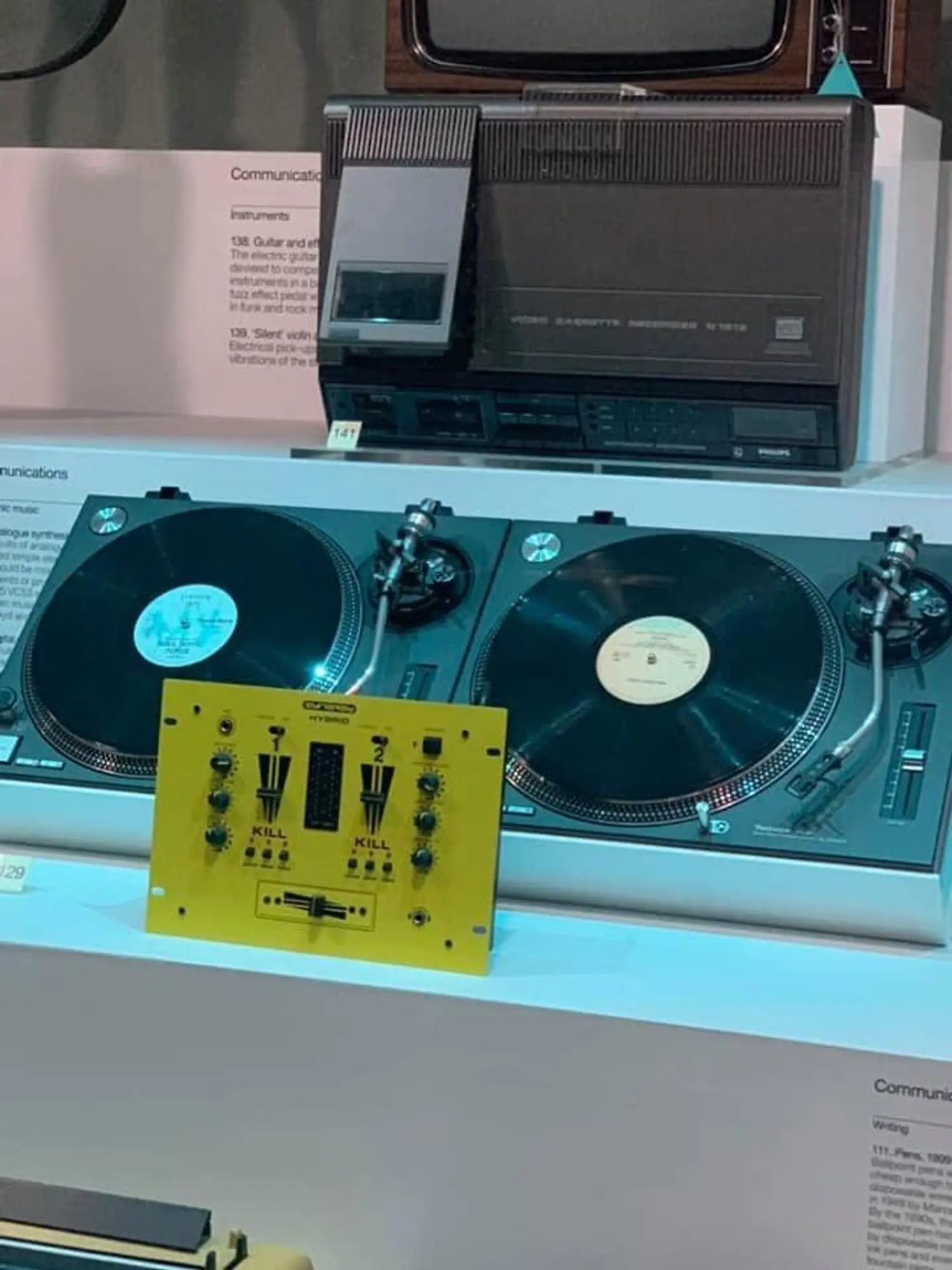 SL-1210 at London Science Museum
In 2010, Panasonic discontinued the entire line. The official reason was something to do with analogue components, sourcing issues and negative economics. Prices of used MK2s climbed to two or three times what they had cost new, then a petition circulated and in 2016, after six years and a great deal of noise, Technics brought the series back. They have since built ever more refined, ever more expensive versions, with one price tag in particular hitting £5,000 for a limited Master Edition, launching this year.
Sit with that, if only to indulge your author. Imagine launching a product in 1972, discontinuing it in 2010 as commercially unviable, and then being forced to reproduce it by adoring fans, without any upgrades or design changes. And don't think technology hasn't tried to sink it, It has. Digital controllers, laptops, sync buttons, streaming. But no, the 1210, resilient and stylish as ever, still exists while the next generation, basically born with a screen in their bib, can’t help but admit they creave the heavy thing with the strobe and the needle. I'm filled with joy imagining a fourteen-year-old of today, just like me, buying or being gifted a 1210, which is essentially the same bit of kit Grandmaster Flash used to help create one of the biggest music genres, in 2026.
When we say buy well, buy once at British Attire, yes, we're talking about clothes. And yes, this idea shapes the curations we build for our customers, but we admire that ethos far beyond our warehouse.
An Apex Product is not the most advanced version of a thing, but the version where the advancement is no longer needed. You see the same logic in a waxed jacket that has been made the same way for a century, or a pair of boots that get handed down. This isn't nostalgia, because that's typically more akin to things that are actually worse than our rose tinted memory remembers.
I still have a 1210 and guess what, it still works. It will outlast the laptop I'm writing this Thread piece on and, maybe, it'll outlast me. In a weird way, I hope it does, and you have to admit, that's a pretty special compliment for what is essentially a basic commodity.