The more I write for British Attire, the more I find myself circling a single word: culture.
It appears in almost every piece I pen, from how we describe brands or when justifying our taste, to how we explain why certain things stick around while others fade away. Its casual use assumes the meaning is settled.
Let me try something. Pause for a moment and try to define it… I'll wait.
The dictionary offers something sort of serviceable:
"the customs, beliefs and way of life of a particular group of people at a particular time."
Accurate enough I suppose, but still pretty incomplete. This might be what culture looks like, but it's certainly not how it works, nor why it matters.
We use it to explain decisions and to signal our belonging, to separate what feels right from what does not. Entire industries, especially ours, lay their head on the assumption that culture is something real, which we all share and is somehow transferable.
So, this raises what I consider to be a few unavoidable questions.
What exactly are we inheriting when we talk about culture? And what, if anything, are we adding to it? If culture is simply about repetition, then what is the direction?
This accumulation might be the closest thing we have to a definition of what it is to be human.
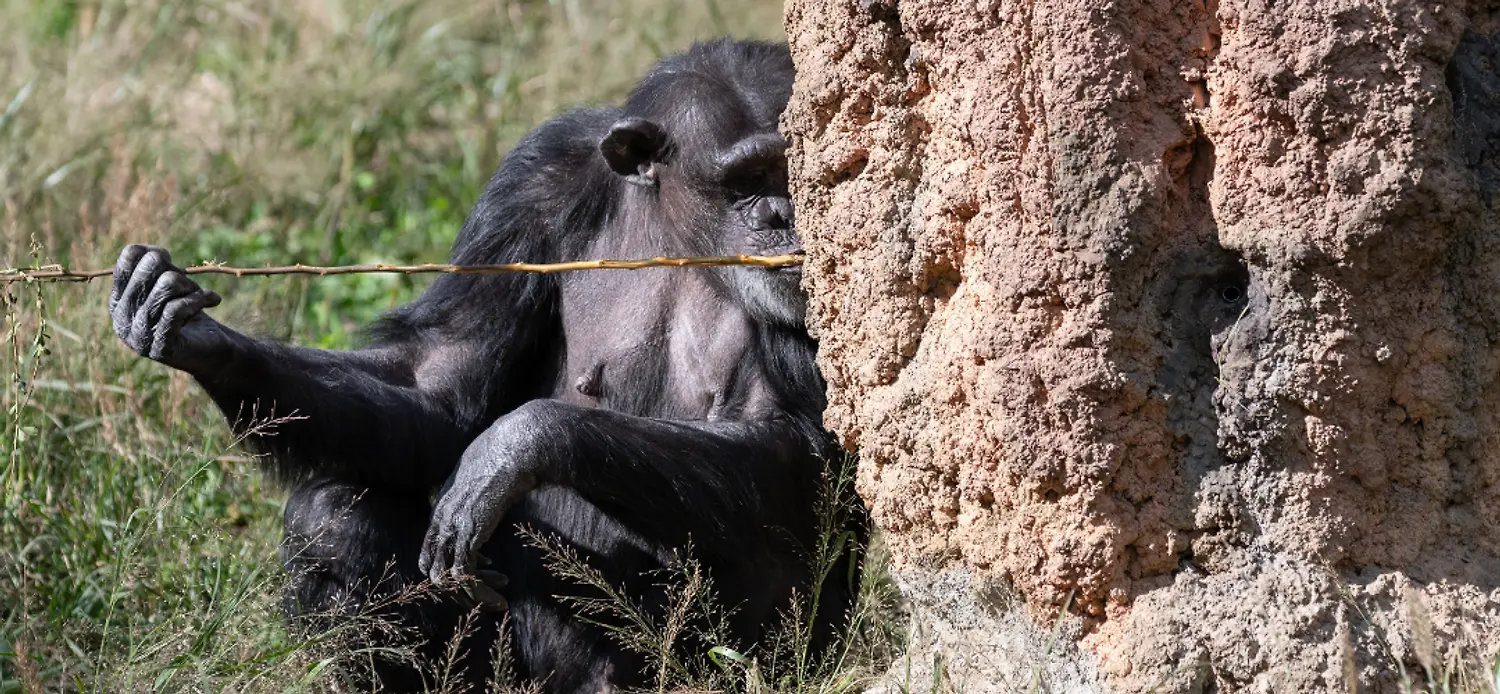 A Chimpanzee Fishing for Termites
The Ratchet
A chimpanzee in the Gombe forest strips a twig, licks the end to make it sticky and pokes it confidently into a termite mound. She then waits, withdraws and is presented with a new version, completely covered in insects – feeding time! Her mother did this, as did her grandmother and the generations of Chimps that will follow thousands of years from now.
This in its essence, is culture. Learned then shared, passed down and understood on an instinctual basis. But for Chimps, nothing changes.
For us humans, culture works differently, (despite how much one might crave a termite kebab!) Humans don't so much as merely pass things down; we must insistently add to them with each generation inheriting what came before, adjusting it and then handing it on down the lineage. The anthropologist Michael Tomasello called this the ratchet effect, meaning the mechanism by which knowledge accumulates rather than resets.
Over time, small changes stick and compound, becoming the foundation for the next small change. As time goes by, the faithful ratchet turns and what began as animal skin, becomes gabardine, Gore-Tex or "insert trend here".
Don't get me wrong, we do see versions of this in other species. The crafty Crow also uses tools to extract insects from trees and Dolphins teach their young in ways that we couldn't possible comprehend. We also know that Whales have regional dialects, which is wild when you think about it! Yet none of them, build in this way... as far as we understand. Their cultures seem to persist whereas ours appears to accumulate.
Nothing Starts Here
If culture is something we inherit and then add to, you could argue that clothing is one of its most visible layers. It would be wrong to call it anywhere near the most important, but perhaps the easiest to read. If you look around, you'll see we wear our history daily, most of the time without even noticing.
Take the suit, if you will. Two simple pieces of tailored cloth, a jacket and pair of trousers draped over a buttoned shirt. Pretty familiar, right? Maybe even a little inevitable? But nothing about it started in the here and now.
The structured jacket descends from military dress and has the needs of men on horseback to thank for its shape. Beyond function, it was also a way of displaying rank amongst the many. The shirt started life as nothing more than an undergarment linen worn close to the body to protect the more expensive outer layer and the necktie, which hops in and out of fashion depending on the decade, traces back to Croatian mercenaries in seventeenth-century France, their knotted scarves adopted by a court that found them worth copying. And to save the best for last… the buttonhole on the lapel? Designed originally to hold a flower to mask the smell of the streets in the pre-sanitation era.
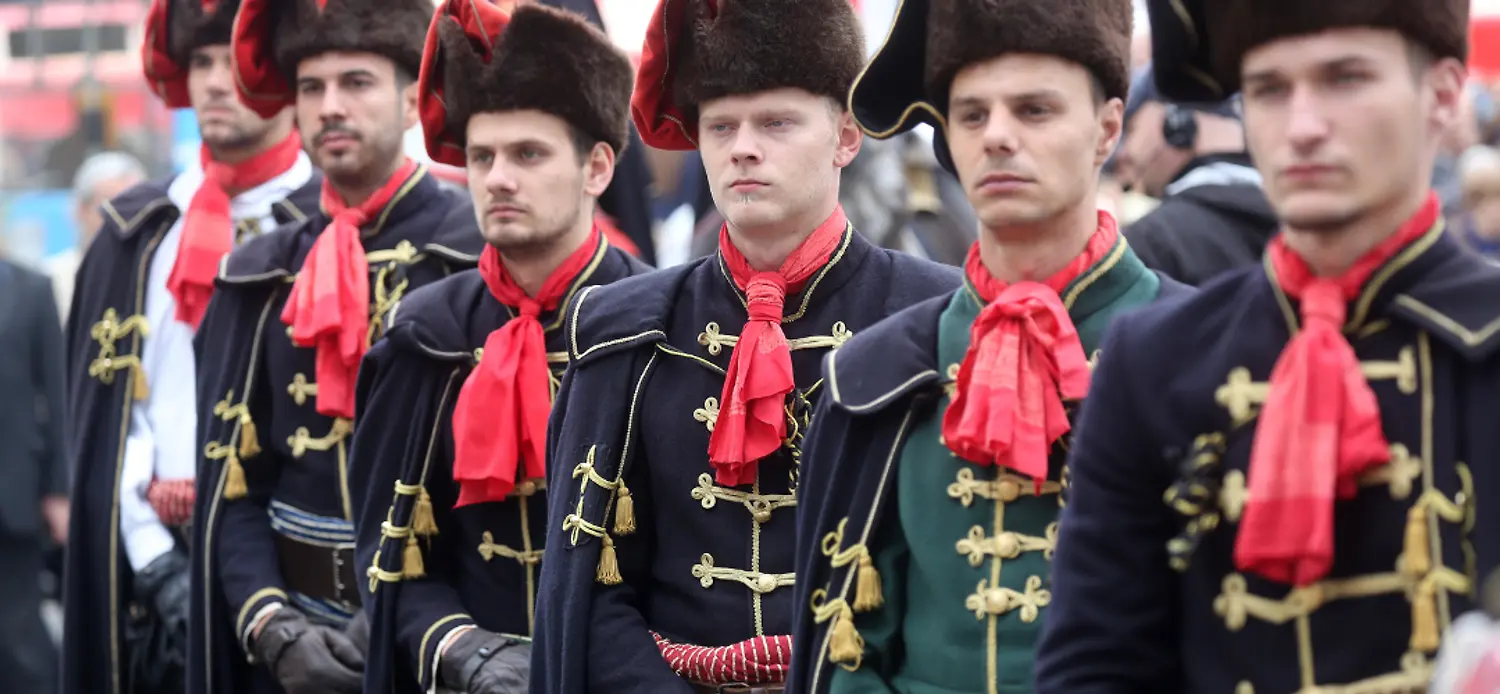 Croatian Military Cravat
Built From Elsewhere
Britain has never been a single culture. Perhaps it's our instinct, if you can call it that, to confidently absorb something and, over time, forget it was ever foreign.
The Romans brought roads, baths and something resembling the pub. The Anglo-Saxons brought a language that would eventually absorb Latin. The Vikings left us words we still use daily such as skirt, window, husband and knife, along with a certain tonal restraint later claimed as native. The Normans brought French, layering it over English and leaving us with two vocabularies for the same thing: pig and pork, cow and beef. The animal raised by one group, the meat consumed by another.
None of this was seamless by any means, absorption rarely is, but there's a sequence we can't ignore.
Britain is not a fixed culture, more an accumulation of influences, broken down and recombined into something that appears unified from a distance.
From our perspective, clothing seems to follow the same pattern. The waxed cotton jacket, now shorthand for Britishness, emerged from Scottish weather and techniques borrowed from sailcloth. The trench coat began as military kit for officers in mud. The duffle coat came from Belgium, via the Royal Navy. The brogue was an Irish solution to wet ground. Fair Isle knitting owes as much to shipwrecked Spanish sailors as it does to the island itself.
To dress British is to wear a record of contact, of influence moving in both directions.
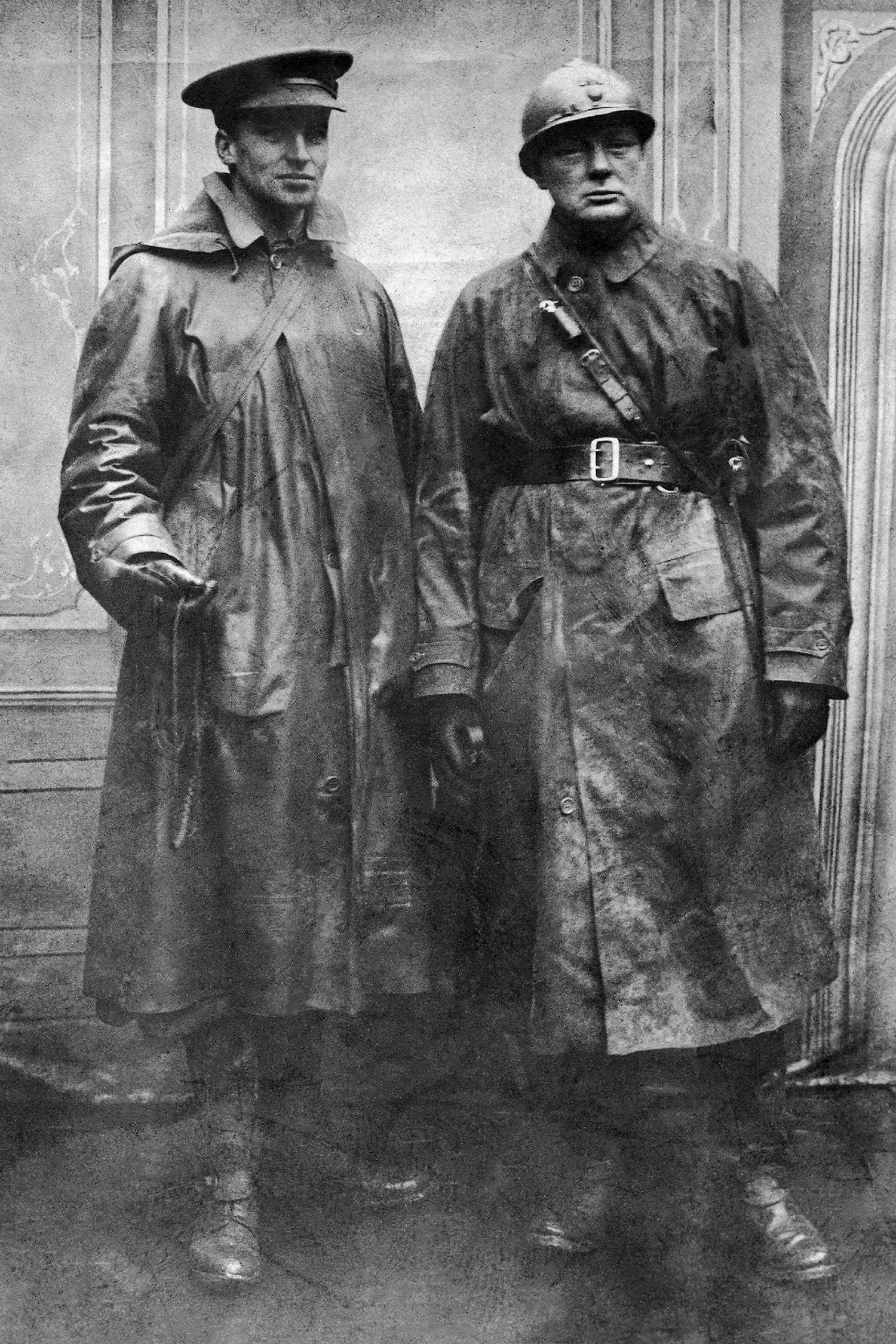 Winston Churchill wearing a Burberry Trench Coat
What Arrived with Them
The most concentrated example of this docked at Tilbury in 1948 on one single ship, the Empire Windrush. Her Jamaican passengers would help to rebuild our country and what followed would shape us forever. A transfer of music, language and dress.
A particular way of dressing stepped off that ship, from sharp suits and narrow trousers to polished shoes and pork-pie hats. Deliberate style, drenched in controlled assertion.
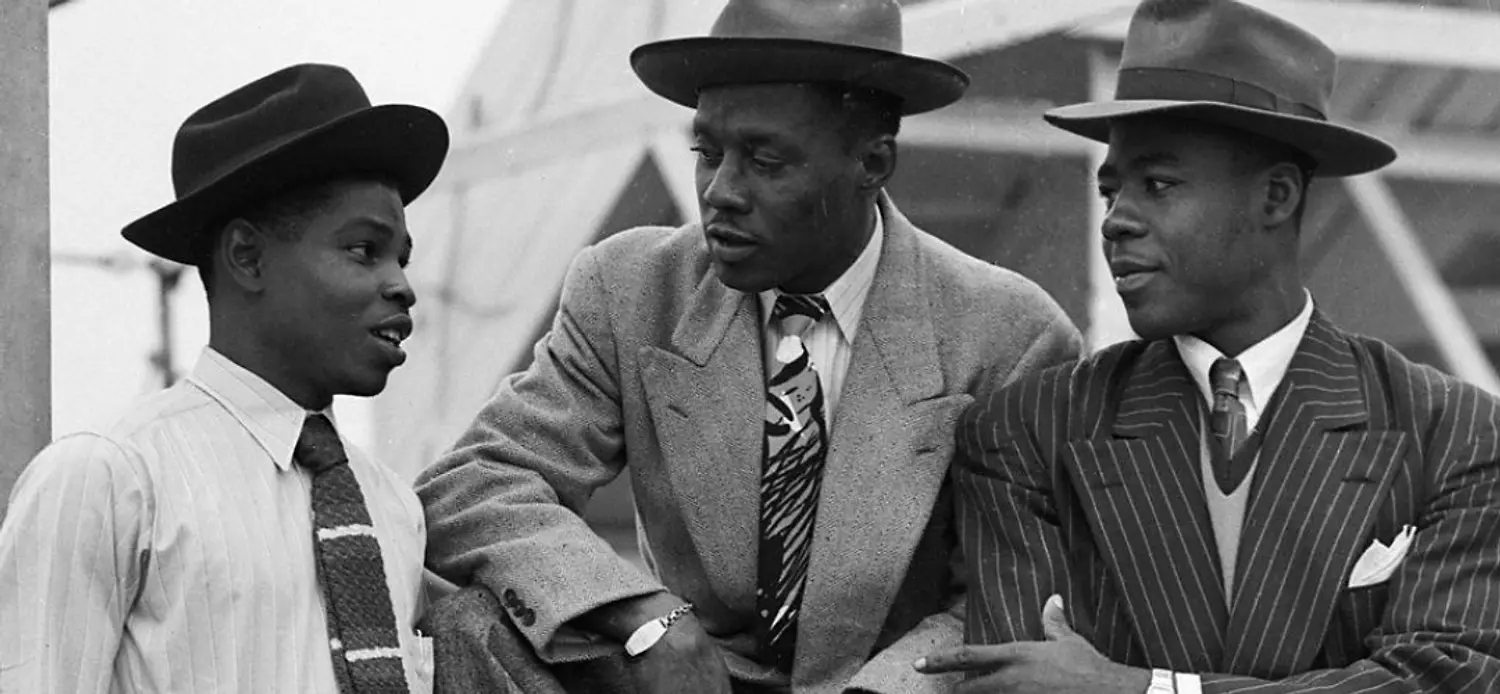 Empire Windrush 1948 passengers
Within a single generation it had completely crossed over. White working-class teenagers in London went on to adopt the look, not to imitate but as a result of proximity. As a result of shared spaces, music and time.
From there, we saw the overlap of early skinhead movement (before it became politicised), with British workwear meeting Jamaican tailoring for the first time, belts and braces!
Ska and rocksteady on the same sound systems – what a time to be alive!
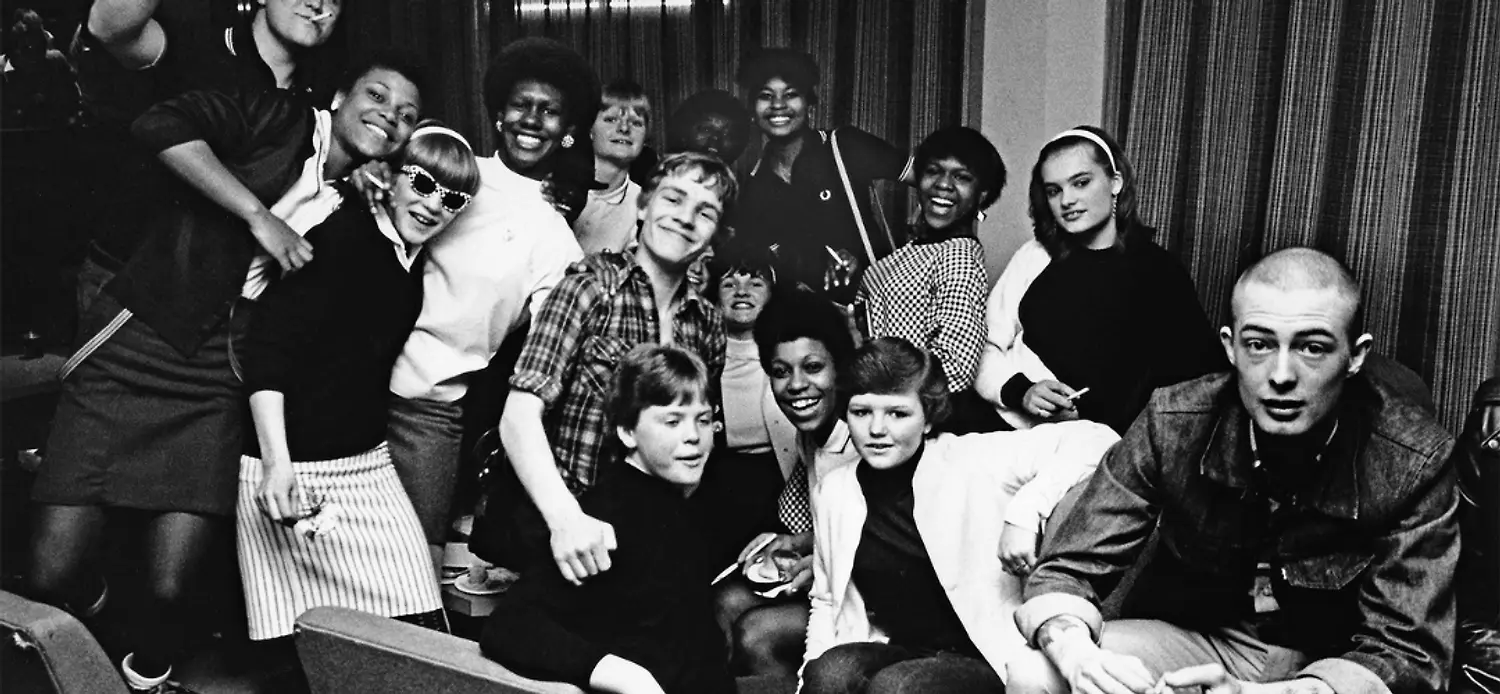 Skinheads, Hippies and Rudeboys
The Dr. Martens boot also walks in these footsteps. Designed in Germany, manufactured in Northamptonshire, worn by workers, then subcultures, then reabsorbed into fashion. A brand whose origin now matters less than its movement. The same applies to the Clarks Wallabee, from Jamaican dancehalls to New York hip-hop, then to British wardrobes that would never think to explain why it feels so bloody familiar!
Borrowing is far from a flaw in culture. It is the mechanism that turns the ratchet, so that we can learn from each other with unusual precision. It's not as simple as copying, but a matter of refinement. We teach, correct, learn and remember – this is what allows the knowledge to accumulate, but accumulation by nature, requires variation.
Someone has to change something and most of those changes disappear.
A few do remain and those that do, become inheritance.
This is why culture can feel safe and stable yet strangely unsettled. Almost everything we see, say and do, is inherited. But at the edges, things shift and over time and slowly those shifts become visible. Over longer periods, they become defining.
There is No Original
In that sense, Britishness is not something to preserve. It is something that we all can continue.
There's an instinct to fix it in place and point to a single moment we call authentic, but that really does miss the point, does it not? There was no stable version before influence and so therefore influence is the constant.
The clothes make this visible. A jacket shaped by sailcloth or a boot that passed through multiple countries and meanings. A pattern standardised long after it began or a coat designed for war, later sold as "heritage."
What we inherit is not a fixed wardrobe, but a way of working, adapting, absorbing and moving forward.
As the ratchet turns, the chimpanzee cracks on with the same old stick.
We, do not.
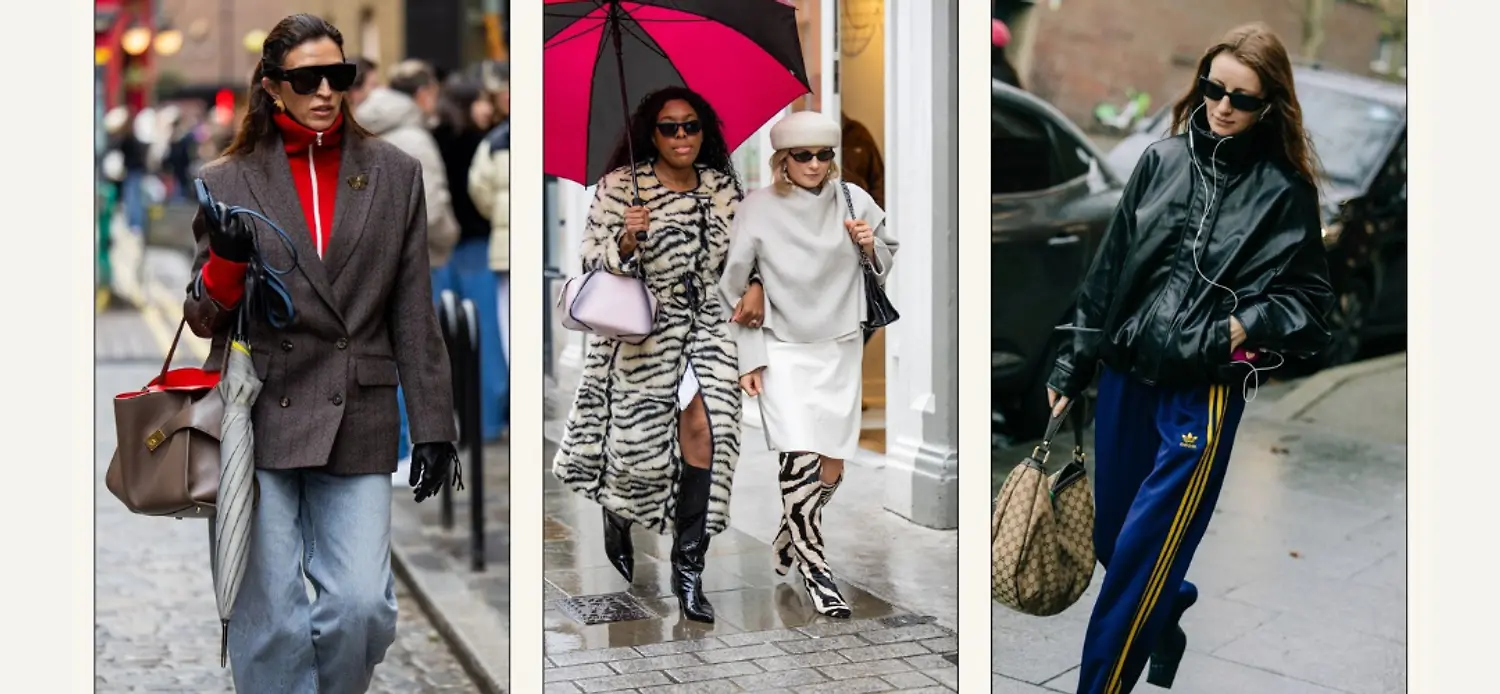 2026 Street Style