We Like Your Look: Che-san — Head of Design, Snow Peak
There are few brands that capture the outdoor experience, weave in their own urban interpretation, and carry a sense of understated luxury quite like Snow Peak.
When we're building our collections, one of the most important things we look for is DNA. We want to see it, feel it, understand what sits beneath the surface. There's a Japanese concept, 以心伝心 (ishin-denshin), or heart to heart, unspoken understanding that feels fitting here. The philosophy omnipresent. In each seam and choice of material, every piece designed to disappear into the experience rather than demand attention.
Che-san is the person responsible for keeping this idea intact. As Head of Design, he carries the legacy of founder Yukio Yamai into a modern context. We sat down with him to talk influence, process and the discipline of designing for nature.
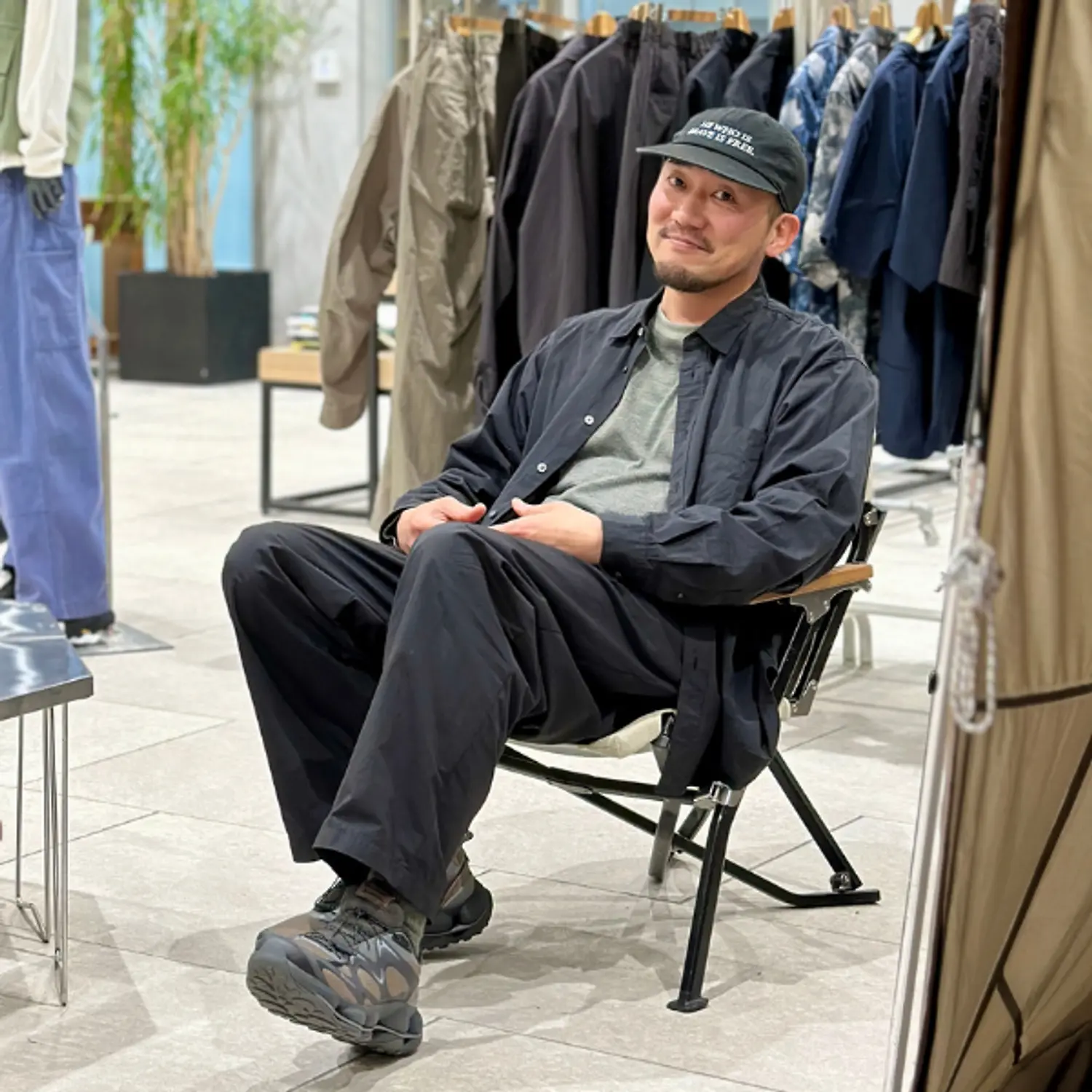 Che-san - Head Designer at Snow Peak
First things first, would you like to talk us through what you’re wearing today? Not just the pieces themselves, but why you chose them this morning.
今日は一日中雨なので、Merrell x Snow PeakのSPEEDARC MATIS GTX X SPを履いて、ボトムはScyeのナイロン素材のパンツを合わせている。トップスのインナーはSummer Wool Stripe T-Shirt、シャツは去年のモデルを合わせたよ。Widthが広く袖にはタックが入っていてとても動きやすく気に入っている。キャップは古着のものを。
Since it's been raining all day, I'm wearing Merrell x Snow Peak SPEEDARC MATIS GTX X SP shoes and pairing them with Scye nylon pants. For the top, I'm wearing a Summer Wool Stripe T-Shirt underneath and layering it with a shirt from last year's collection. I really like how the shirt has a wide width and tucks at the sleeves, making it super easy to move in. The cap is a vintage piece.
How does this outfit relate to how you’ll be spending your day today?
毎朝、犬と散歩してから仕事に出かけていて、今日も小雨の中、散歩に行ってきた。今日はファブリック商談で外回りが多いからGORE-TEXのシューズと濡れてもすぐ乾いて気にならない素材のパンツをピックしている。あと、俺は暑がりだからWool素材のカットソーと何か羽織れるアイテムを合わせるスタイルが好き。体温調整がしやすいし、雨の日も蒸れにくい。
Every morning, I walk my dog before heading to work, and today I went for a walk in the drizzle. Since I have a lot of outside appointments for fabric negotiations today, I picked GORE-TEX shoes and pants made from a material that dries quickly and doesn't bother me even if it gets wet. Also, since I tend to get hot easily, I like pairing a wool knit top with something I can layer over it. It makes it easy to regulate my body temperature and keeps me from feeling stuffy even on rainy days.
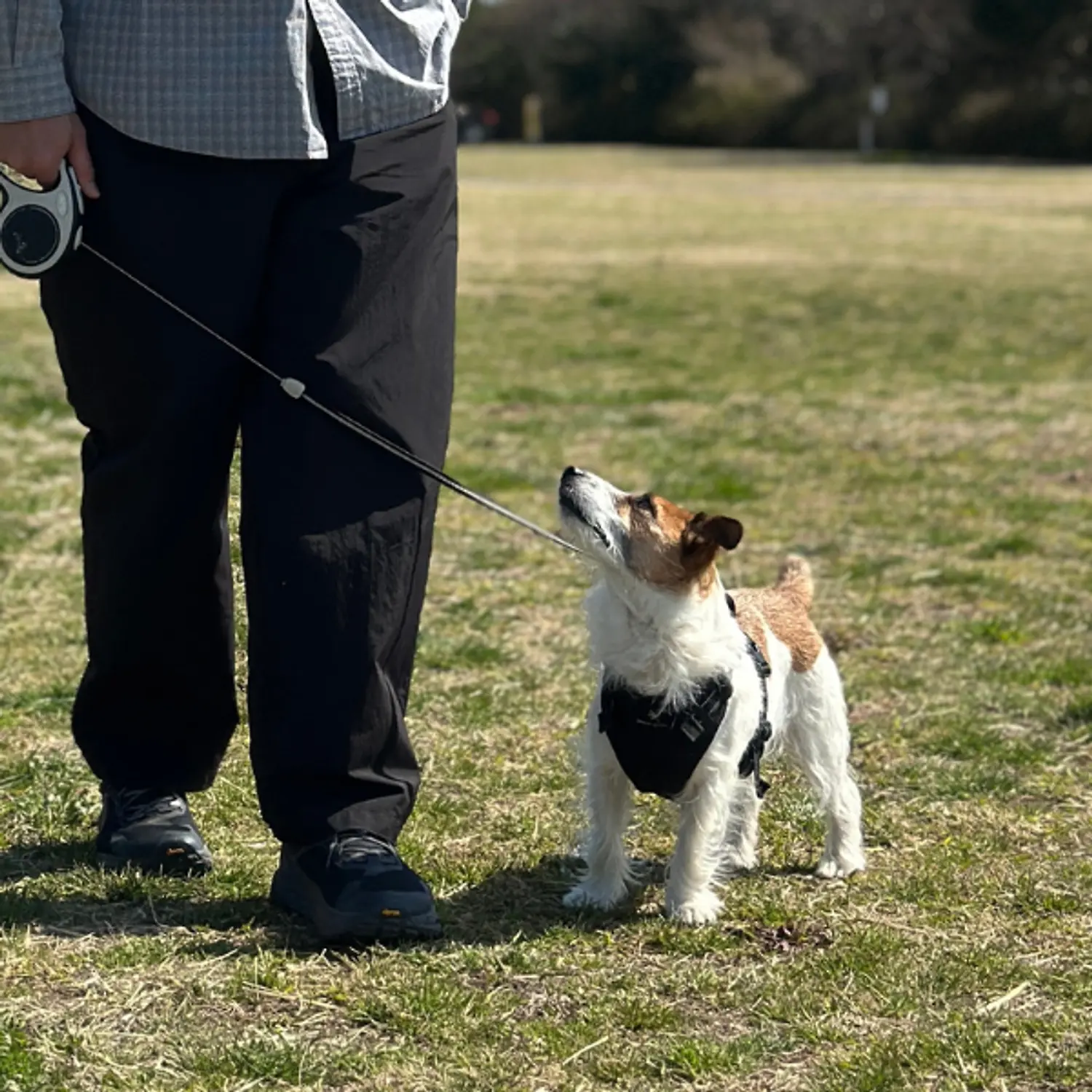 Che-san Walking His Dog
Before Snow Peak, what were your earliest influences? Were there particular places, materials, or moments that shaped how you think about design?
人生で初めてスタイルというのを気にし出したのは確か俺が中学生のときにでた「Jamiroquai - Virtual Insanity」のVideoを見たときあたりから。音楽はその時の気分に合わせてどんなジャンルでもきくんだけど、若い時は音楽の好みに左右されたりしたかも。 大人になるにつれて、目的がはっきりしていて、機能性でデザインされたような、不変的なものが好きになってきて。自然にミリタリーや、アウトドア、ワークウェアに詳しくなってきたかな。
The first time I ever started caring about ‘Style’ was definitely around when I saw the video for “Jamiroquai - Virtual Insanity” back in middle school. I listen to any genre depending on my mood, but when I was younger, my taste in music probably influenced my style. As I grew up, I started liking things with a clear purpose, designed for functionality—things that are timeless. I naturally became more familiar with military, outdoor, and workwear styles.
Snow Peak has a long lineage… from Yukio Yamai’s time in the mountains, through Tohru Yamai’s expansion in the 1980s, to a more contemporary, fashion-aware audience today. As Head of Design, how do you ensure that this DNA remains present in the garments you create?
Snow PeakのDNAは、自然の中で実際に使われる道具から始まっていると思ってる。
創業者の山井幸雄氏はクライミングに必要な、自分が欲しいものを作ることからスノーピークを始めていて、山井太氏はまだ日本にはなかったオートキャンプシーンを新しいギアとともに提案してきた。
なので、私たちの服づくりでもまず「どういう環境で、どういう使われ方をするのか」という視点を大切にしている。
機能や用途から考えると、自然とデザインの形が決まってくる部分がある。
そういう意味では、無理に“らしさ”を作ろうとするというより、自然や道具との関係性をきちんと考えていくことが、結果としてSnow Peakらしさにつながるのではないかと思っている。
I believe Snow Peak's DNA stems from tools actually used in nature.
Founder Yukio Yamai started Snow Peak by making the climbing gear he needed himself, while his son, Futoshi Yamai, pioneered the car-camping scene in Japan introducing new gear along the way.
That's why, in our clothing design too, we first prioritize the perspective of “what environment will it be used in, and how will it be used?”
When you consider a product’s functions and intended uses, certain aspects of its design naturally fall into place. In that sense, rather than trying to force a particular ‘style’, I believe that carefully considering the relationship between nature and the tool itself is what ultimately links to the distinctive ‘Snow Peak
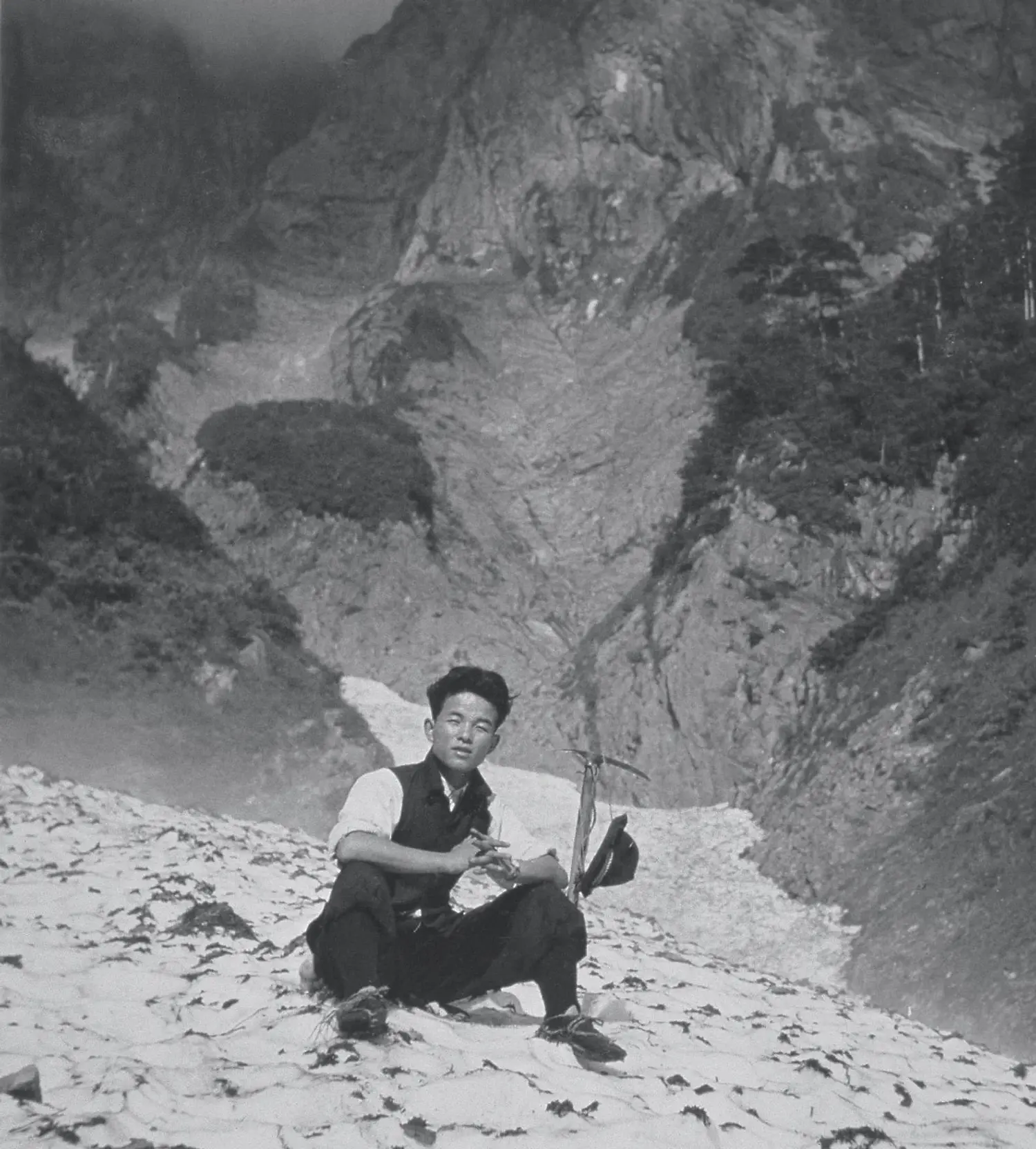 Snow Peak Founder Yuhio Yamai
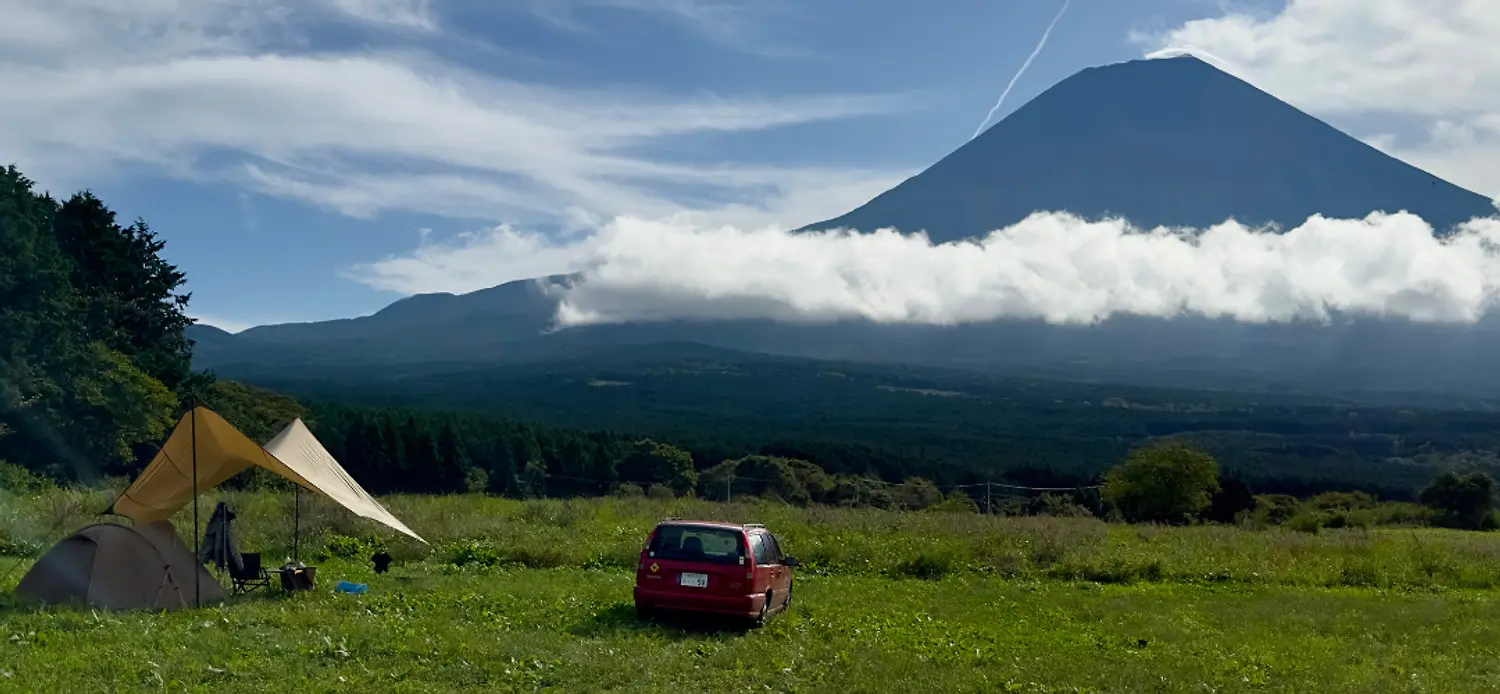 Car Camping Below Mount Fuji
Snow Peak designs are often tested in real environments before they reach customers. How important is personal use and lived experience in your design process? Do you travel or camp in your own designs?
実際に使う体験はとても重要だと思っている。
机の上で考えたことと、自然の中で実際に使ったときの感覚は、やはり違うことが多いから。
自分でもキャンプや旅に出るときには、試作の服や自分が関わった服をよく試している。
そうすると、小さな違和感や改善点に気づくことが多い。
服は見た目だけでなく、動きやすさや温度の感じ方、それぞれが持たせたい機能性など、体験の中で初めて分かることが多いので、そういう時間はデザインのヒントになることも多いからね。
I believe that actually using something and hands-on experience is incredibly important.
After all, there’s often a difference between what you imagine at your desk and how it actually feels when you use it out in nature.
When I go camping or travelling myself, I often try out prototype garments or clothes I’ve worked on. That's when I often notice small discomforts or areas for improvement. With clothing, it’s not just about how it looks; there’s so much you only realise through experience—such as how easy it is to move in, how temperature is perceived, and the specific functionalities you want to incorporate. So, that time spent experiencing the garments often provides valuable insights for the design process.
There’s a sense of restraint and calm that appears to run through the collections. How would you define the design language that Snow Peak is known for?
個人的には、「主張しすぎないこと」がSnow Peakのデザインの特徴だと思っている。
自然の中では、人間が主役というより、環境の中に溶け込む感覚が大事だと思っていて、服も同じように、必要以上に目立つものではなく、静かに機能する存在であるほうが自然だと感じている。
結果として、削ぎ落とされたデザインや落ち着いた色、シンプルな構造になっているのだと思っているよ。
ただ、最近はSnow Peakの服を着る楽しさ、ときめきを感じてもらえるようにシーズンごとにテーマカラーを入れるようにしている。
Personally, I believe that ‘not being too assertive’ is a defining feature of Snow Peak’s design.
In nature, I feel that rather than humans taking centre stage, it is important to blend into the environment; similarly, I feel it is more natural for clothing to be a quiet, functional presence rather than something that stands out unnecessarily.
I think this is why the designs are understated, the colours subdued, and the construction simple.
However, recently we have been incorporating a theme colour each season to help people experience the joy and excitement of wearing Snow Peak clothing.
Snow Peak has its roots in Japanese metal craftsmanship and rigorous material testing. What role do materials play today… do they lead the design, or respond to it?
どちらか一方というより、両方の関係に近いと思っている。
良い素材に出会うと、その素材の特性から新しいデザインの方向が見えてくることがあるし、逆に「こういう機能が必要だ」というデザインの考えから素材を探すこともある。
Snow PeakはGearのブランドでもあるので、素材の信頼性や機能性はとても重要。
素材とデザインが互いに影響し合いながら形になっていく感覚かな。
Rather than one or the other, I see it as closer to a relationship between both.
When I encounter good materials, their characteristics sometimes reveal new design directions. Conversely, I sometimes search for materials based on a design concept like “this functionality is needed.”
Since Snow Peak is also a gear brand, the reliability and functionality of materials are extremely important.
It's a sense of materials and design mutually influencing each other as they take shape.
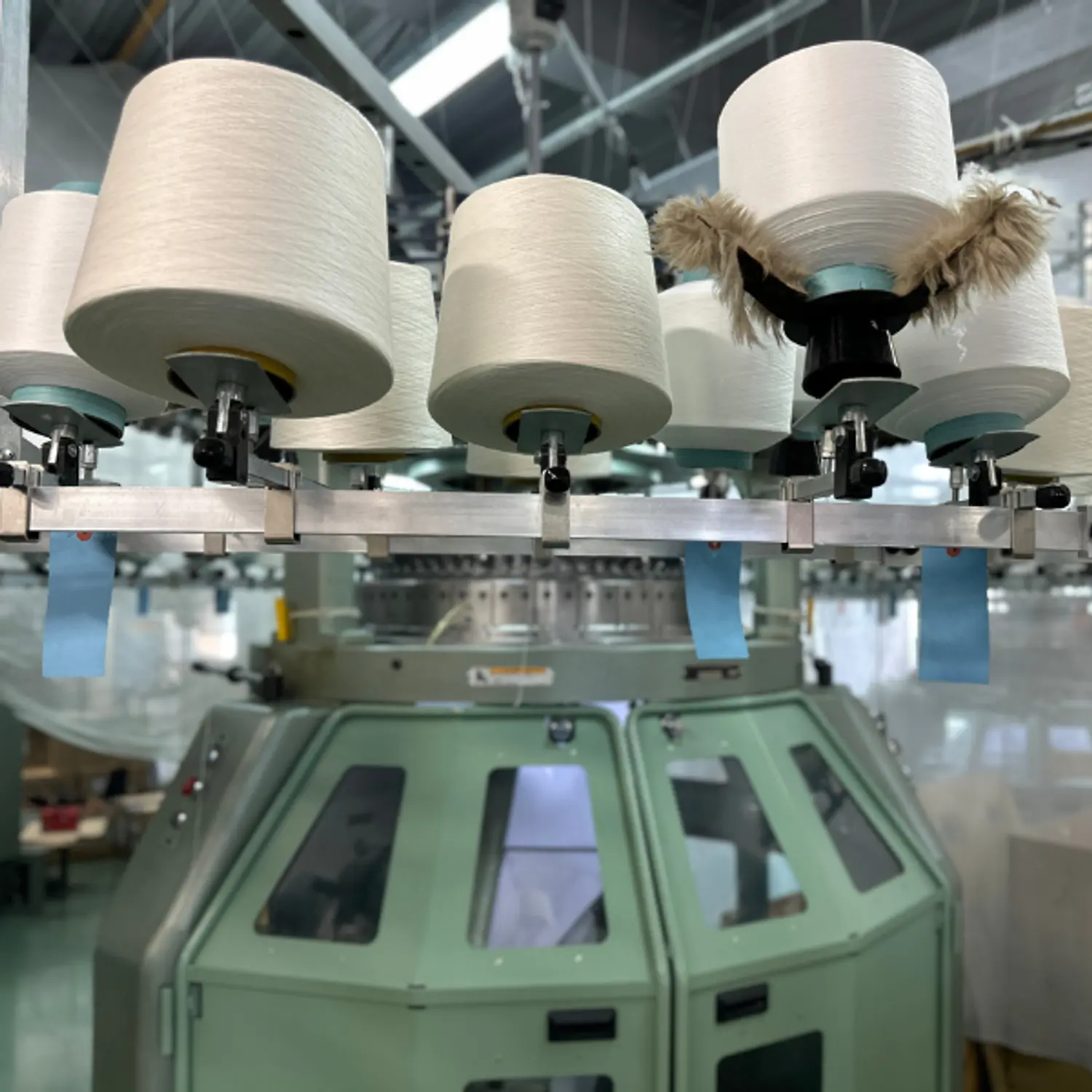 Snow Peak Materials in Production
 Snow Peak Materials in Production
Snow Peak now speaks to a global audience, with very different relationships to nature and clothing. How do you balance designing from a Japanese perspective while allowing space for interpretation elsewhere?
日本的な価値観を無理に説明しすぎないことが大事。
「日本らしいことが一番グローバルなこと」、自分がよく言う言葉なんだけど、
例えば、機能性や静かなデザイン、長く使えるものづくりなどは、日本的な感覚から生まれている部分もあると思うけど、それ自体は世界のどこでも理解される価値でもあると思う。
なので、日本らしさを強調するというより、普遍的な価値として表現することで、それぞれの文化の中で自由に解釈してもらえる余白を残したいと思っている。
It’s important not to over-explain Japanese values.
‘What is quintessentially Japanese is, in fact, the most universal thing’—that’s something I often say.
For instance, whilst I believe that functionality, understated design and craftsmanship focused on longevity are born in part from a Japanese sensibility, I also think these are values that can be understood anywhere in the world.
So, rather than emphasising what is uniquely Japanese, I want to present these as universal values, leaving room for them to be freely interpreted within each culture.
And what factors do you think make something feel undeniably Japanese?
私にとっての日本的な感覚は、どちらかというと「引き算」に近いと思っている。
必要以上に装飾しないことや、素材や形そのものの良さを大切にする姿勢は、日本のものづくりに共通する考え方だと思うし、そういう静かなバランス感覚が、結果として日本らしさとして感じられるのかもしれないよね。
I feel that, for me, the Japanese sensibility is, if anything, closer to the concept of ‘subtraction’.
I believe the approach of avoiding excessive ornamentation and valuing the inherent qualities of materials and forms is a philosophy common to Japanese craftsmanship, and perhaps it is this quiet sense of balance that ultimately gives rise to that distinctively Japanese feel.
We at British Attire completely agree with Snow Peak’s philosophy around the healing power of nature and time outside. What role do you feel clothing plays in that idea of healing?
服は自然を楽しむための「道具」の一つだと思っている。
自然の中では天候や気温など、環境が常に変わるので、それに対応できる機能が必要ですし、同時に心地よく過ごせることも大切。
日本には四季があって、季節ごとの特徴もわりとはっきりしていて、服が快適であれば、人はより自然に意識を向けることができる。
そういう意味で、服は自然との距離を少し近づけてくれる存在だと思っている。
In the natural world, the environment—including the weather and temperature—is constantly changing, so clothing needs to be functional enough to adapt to these conditions, whilst also ensuring comfort.
Japan has four distinct seasons, each with its own fairly distinct characteristics; if one’s clothing is comfortable, one can focus more fully on nature.
In that sense, I believe that clothing serves to bring us a little closer to nature.
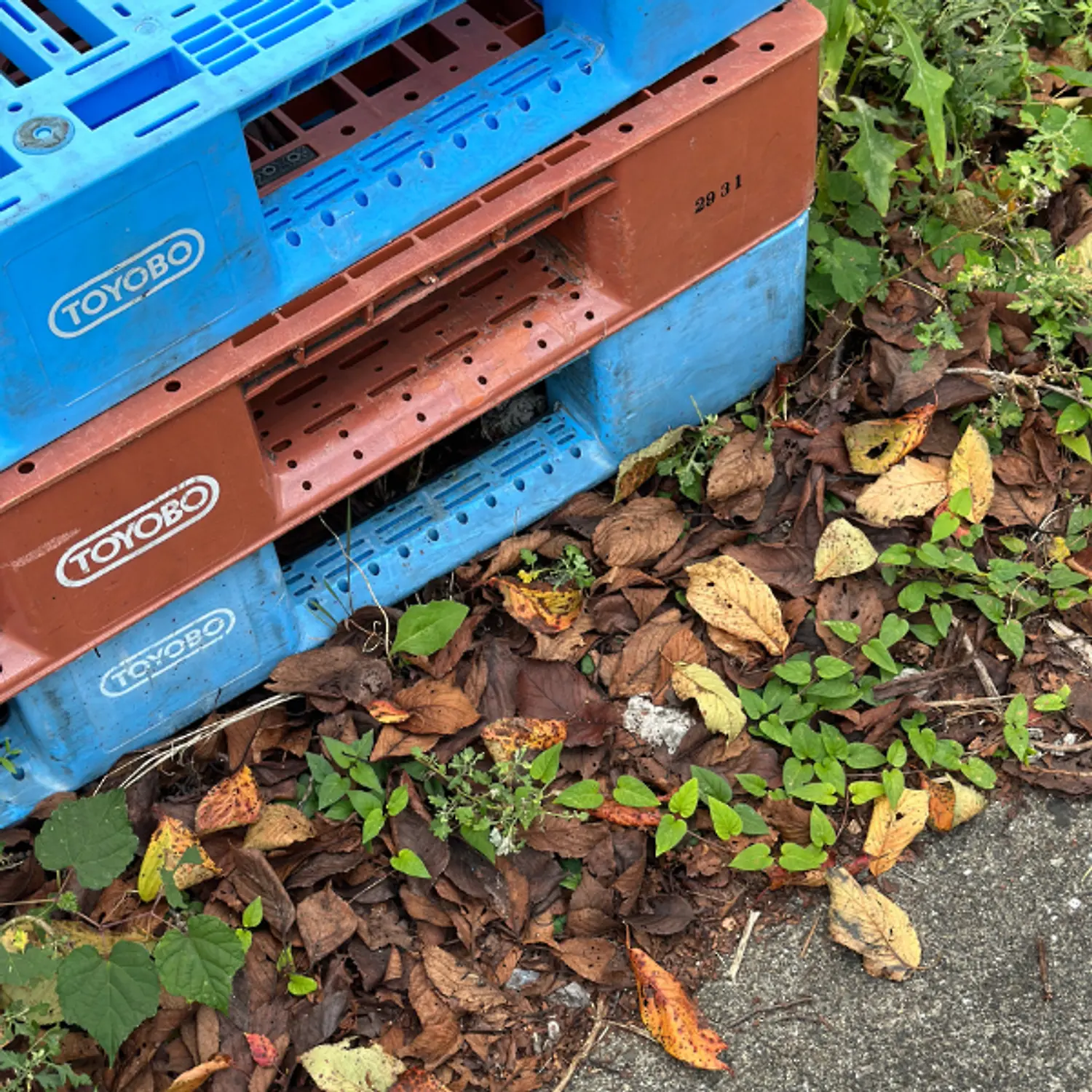 Autumn Leaves in Japan
Is there a Snow Peak product, past or present, that feels particularly meaningful to you? Not necessarily the most successful, but the one that carries a story.
特定の一つというより、長く続いている定番の製品には特に思い入れがある。
例えば、TAKIBI Vest、Flexible Insulated シリーズね。
そういうものは、ただデザインされたというより、多くの人が実際に使いながら少しずつ改善されてきた歴史があるからね。今でも常に進化し続けているし。
時間をかけて形が磨かれていくプロセスには、Snow Peakらしいものづくりの姿勢が表れていると思う。
Rather than any single specific item, I have a particular fondness for long-standing staple products.
For example, the TAKIBI Vest and the Flexible Insulated series. These items aren't just designed; they have a history of being gradually improved through actual use by many people. They continue to evolve even now. I believe the process of shaping them over time reflects Snow Peak's characteristic approach to craftsmanship.
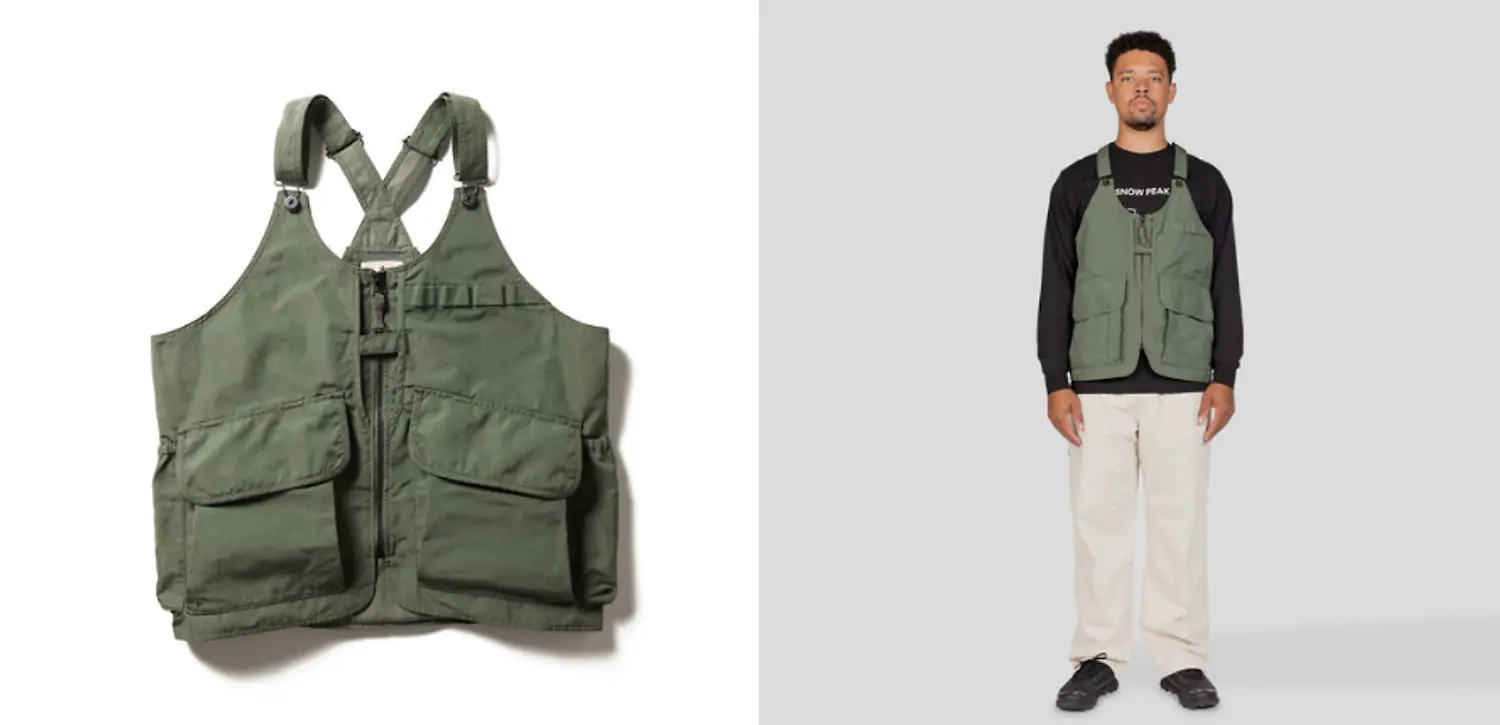 Snow Peak TAKIBI Vest
When you think about the future of Snow Peak, what feels most important to protect? And what feels open to change?
守るべきものは、自然との関係性を大切にする姿勢と自らユーザーであるという立場をわすれないこと。
それは創業当初から変わらないSnow Peakの根本的な考え方だと思うよ。
一方で、表現やプロダクトの形は時代とともに変わっていく余地があると思っている。
新しい素材や新しいライフスタイルに合わせて、柔軟に進化していくことも大切だと思うよ。
What we must protect is an attitude that values our relationship with nature and never forgetting that we are users ourselves. I believe that has been Snow Peak’s fundamental philosophy since the very beginning.
At the same time, I think there is room for our expression and the form of our products to evolve with the times.
It is also important to evolve flexibly in response to new materials and new lifestyles, I think.
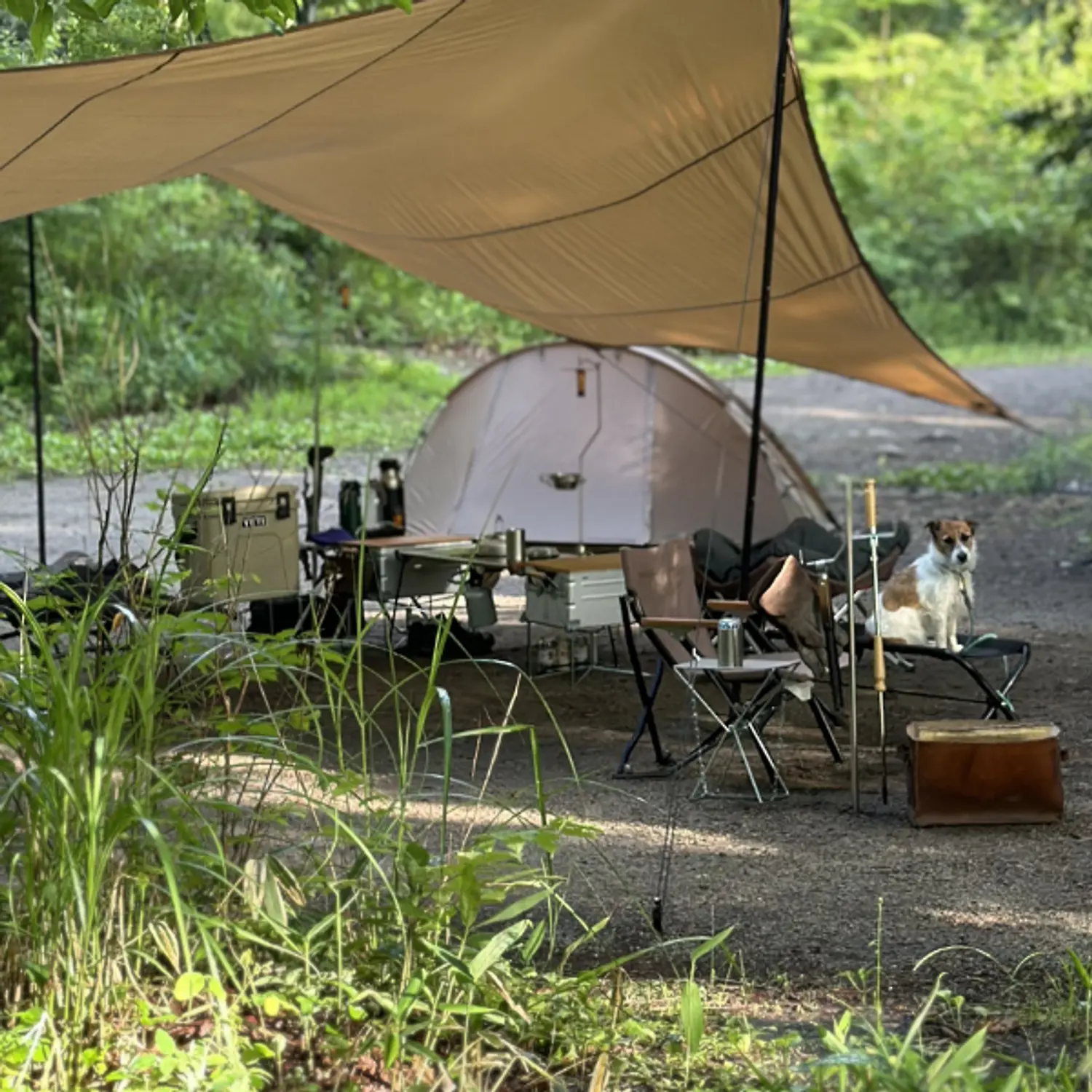 Camping with Snow Peak
Finally, what does “a good garment” mean to you today? And has that definition changed over time?
若い頃は、服で自分のスタイルを表現することに興味があったんだよね。音楽とかカルチャーの影響も大きくて、その時々の気分に引っ張られてた部分もあったかな。
でも音楽と一緒で、だんだん「なんでこの服はこの形なんだろう」っていう表面では見えない背景のほうに興味がいくようになった。機能とか環境とか、そういう理由から生まれてきたデザインって、やっぱり自然な説得力があるんだよね。
ミリタリーとかアウトドア、ワークウェアに惹かれるようになったのもその流れだと思う。そういう服って流行とは関係なく長く使われてきたものが多くて、時間の中で形が磨かれてきている。
今の自分にとって良い服っていうのは、静かで、目的がはっきりしていて、長く付き合えるもの。着る人の生活の中に自然と馴染んで、時間が経つほど良くなっていくような服に魅力を感じるかな。
When I was younger, I think I was quite interested in expressing my personal style through my clothes.
Music and culture had a big influence, and I suppose I was partly swayed by my mood at the time.
But as I’ve got older, I’ve gradually become more interested in the background behind things, like asking, ‘Why does this garment have this particular shape?’
Designs that have emerged from practical considerations or environmental factors simply have a natural persuasiveness about them.
I think that’s why I’ve come to be drawn to military, outdoor and workwear styles.
Many of these garments have been in use for a long time, regardless of trends, and their forms have been refined over time.
For me now, good clothing is something that is understated, has a clear purpose, and is built to last.
I’m drawn to clothes that blend naturally into the wearer’s daily life and seem to improve with age.
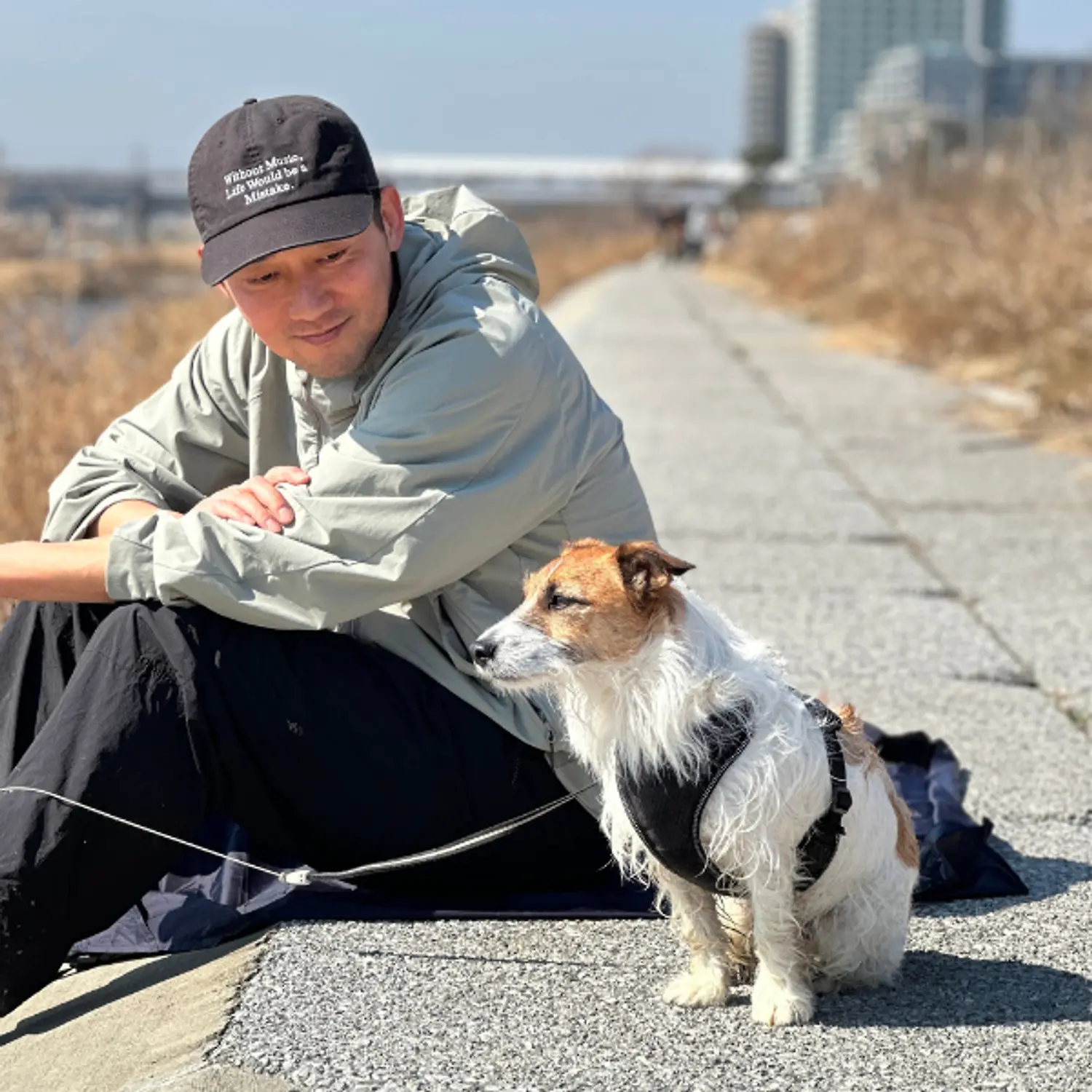 Che-san and His Dog